
A deployed model in SAS Viya shows concept drift — the relationship between features and the target has changed but the input distributions remain stable. Which monitoring approach best detects concept drift (as opposed to data drift)?
Select an answer to reveal the explanation.
Short Explanation and Infographic
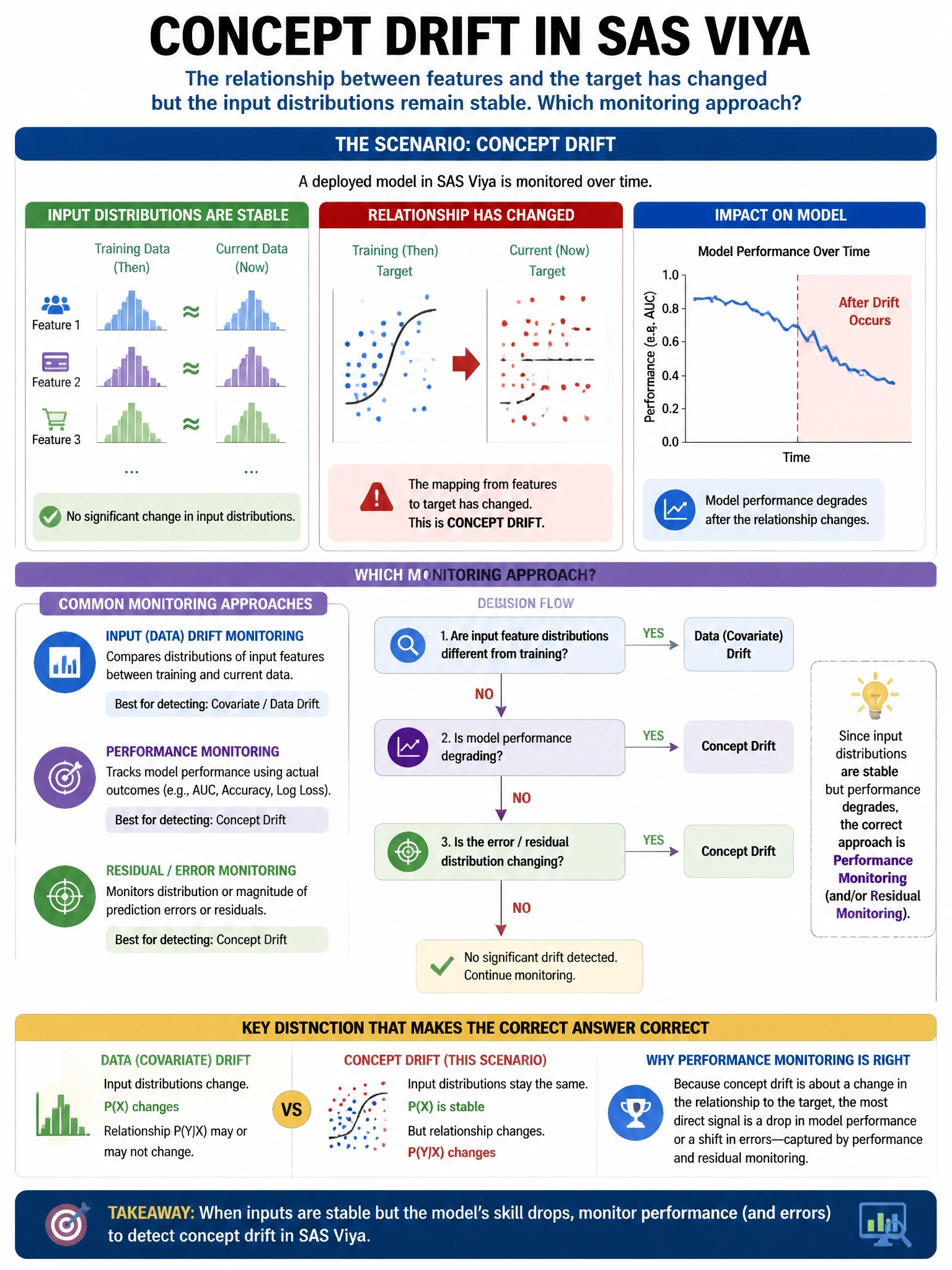
Here's the deal — b is correct because concept drift manifests as degradation in predictive accuracy — the model's predictions become less aligned with actual outcomes even though input distributions appear stable. Monitoring outcome-based metrics (KS, Gini, AUC) on labeled data (where outcomes are eventually known) directly measures concept drift.
Full explanation below image
Full Explanation
B is correct because concept drift manifests as degradation in predictive accuracy — the model's predictions become less aligned with actual outcomes even though input distributions appear stable. Monitoring outcome-based metrics (KS, Gini, AUC) on labeled data (where outcomes are eventually known) directly measures concept drift. A monitors data (input) drift, not concept drift. C monitors data quality issues, not predictive relationship changes. D monitors operational traffic, not model accuracy.