
A data scientist in SAS Viya runs PROC HPREG and gets a Type I SS (Sequential Sum of Squares) and Type II SS (Partial Sum of Squares) table. When do the Type I and Type II SS values differ for a predictor?
Select an answer to reveal the explanation.
Short Explanation and Infographic
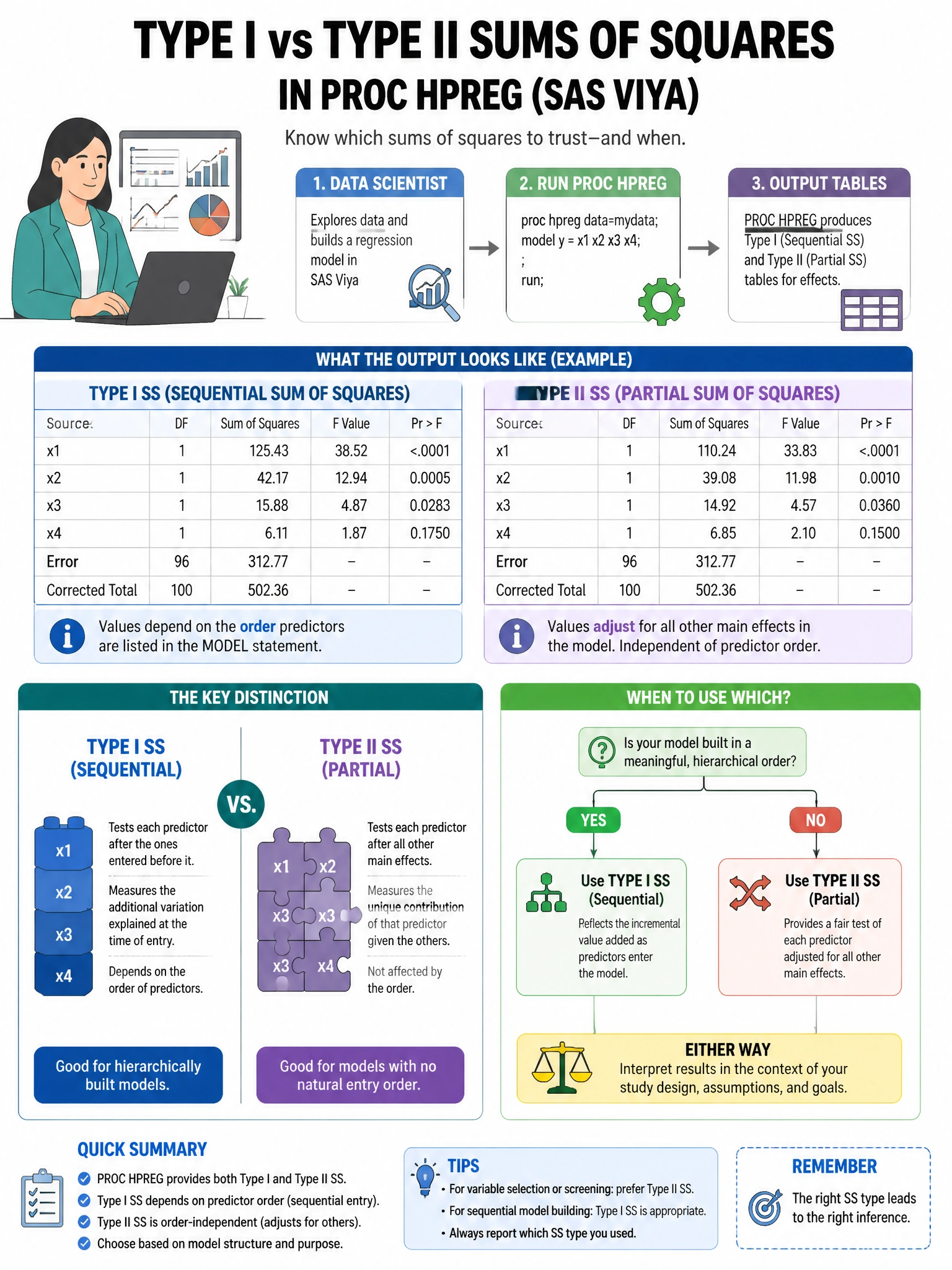
Here's the deal — b is correct because Type I (sequential) SS is computed by adding each predictor in the order listed in the MODEL statement, so each variable's SS is adjusted only for preceding variables. Type II (partial) SS adjusts for ALL other predictors in the model simultaneously.
Full explanation below image
Full Explanation
B is correct because Type I (sequential) SS is computed by adding each predictor in the order listed in the MODEL statement, so each variable's SS is adjusted only for preceding variables. Type II (partial) SS adjusts for ALL other predictors in the model simultaneously. When predictors are correlated, the order of entry matters for Type I and the two SS values differ. When predictors are completely orthogonal (uncorrelated), Type I and Type II SS are identical. A and D are extremes that misrepresent the relationship. C is wrong because sample size does not determine whether the SS types differ.