
Which cross-validation strategy is most appropriate when the dataset contains a strong time dependency, such as stock price data?
Select an answer to reveal the explanation.
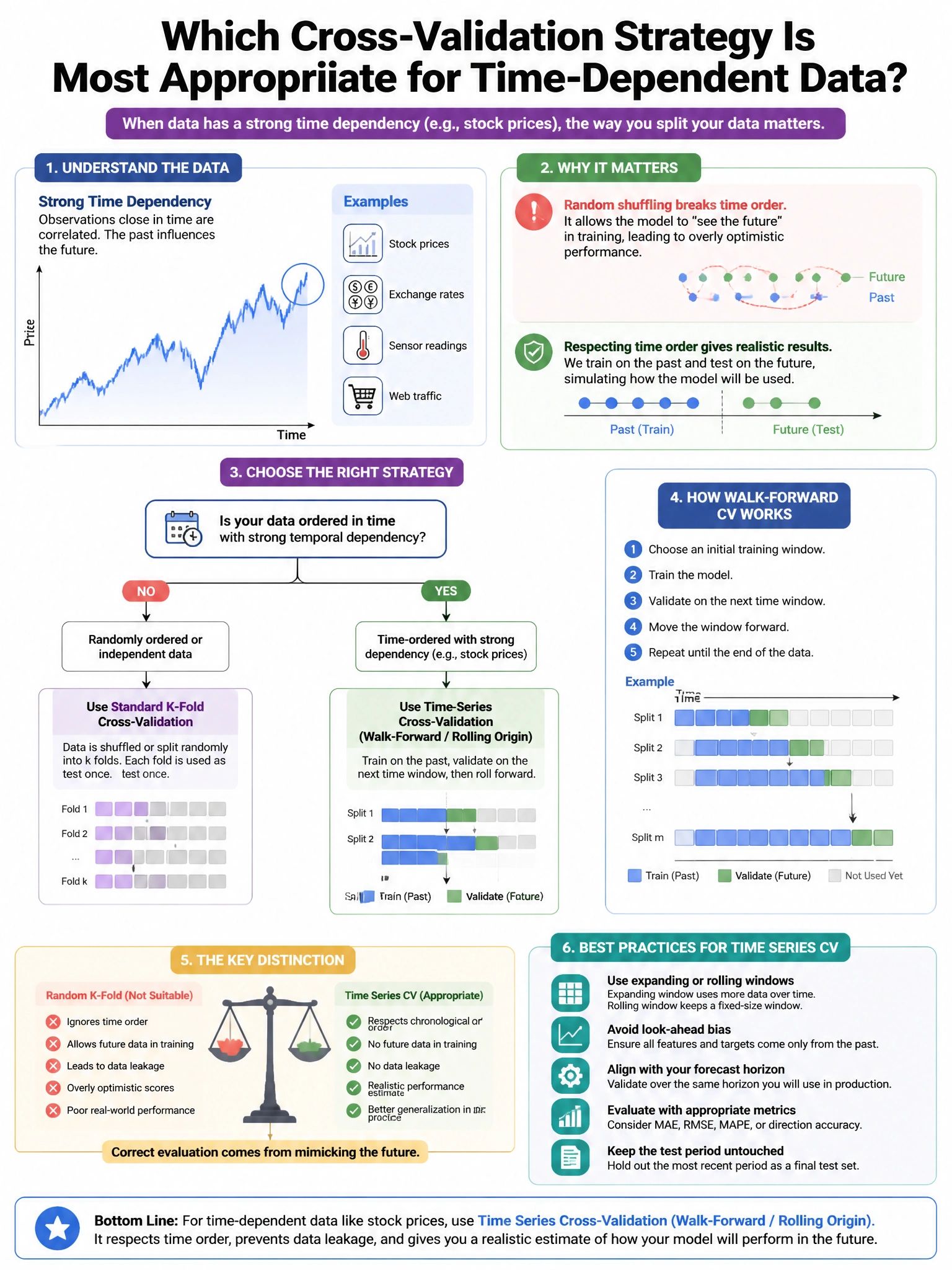
Short Explanation and Infographic
Here's the deal — c is correct because time-series walk-forward validation ensures that future data never leaks into the training set; the training window always precedes the validation window. A is wrong because stratified k-fold shuffles observations, allowing future data to appear in training.
Full explanation below image
Full Explanation
C is correct because time-series walk-forward validation ensures that future data never leaks into the training set; the training window always precedes the validation window. A is wrong because stratified k-fold shuffles observations, allowing future data to appear in training. B is wrong for the same data-leakage reason. D is wrong because shuffling destroys temporal ordering and causes look-ahead bias.