
A multi-account public-health program is replacing a sticky-session SQL table that stores field-kit device IDs and inspection-app session tokens that are keyed lookups with bursty write rates. Which target datastore should architects select?
Select an answer to reveal the explanation.
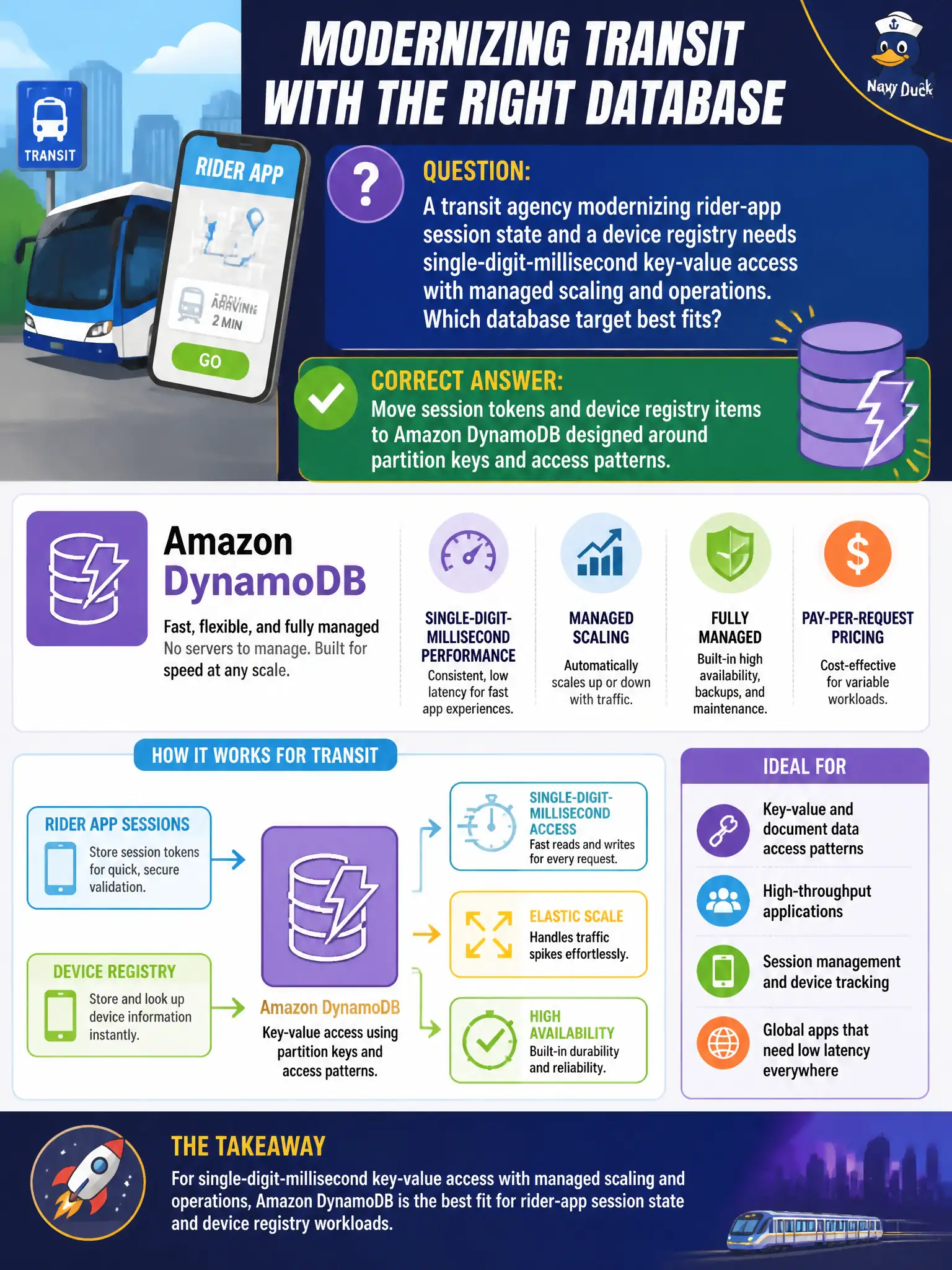
Short Explanation
Session tokens and device IDs are lockers with labels, not a novel you page through. DynamoDB is built for that key-value slam without running a SQL night shift. Glacier and laptop files are not a live registry.
Full Explanation
A multi-account public-health program replacing a sticky-session SQL table that stores field-kit device IDs and inspection-app session tokens—keyed lookups with bursty write rates—should select Amazon DynamoDB for the device registry and session state because the access pattern is key-value at scale with managed operations. That fits bursty keyed civic device traffic better than a single relational box. A single Amazon RDS for Oracle instance in one Availability Zone as the only session store fails HA and overfits relational OLTP to a key-value pattern. Amazon S3 Glacier Flexible Retrieval as the live session cache fails latency for session tokens. Local text files on each inspection laptop with nightly sneakernet merges fail consistency and governance for regulated health inspections. Exam caveat: key-value session/device registries map to DynamoDB. Operational check: model partition keys for device ID and session ID, enable PITR and encryption, set capacity or on-demand for bursts, integrate inspection apps via AWS SDK, and retire the sticky SQL session table after dual-write validation. Document the decision in the municipal architecture decision record and re-verify controls after the first production wave so auditors see continuous improvement, not one-time tribal knowledge.