
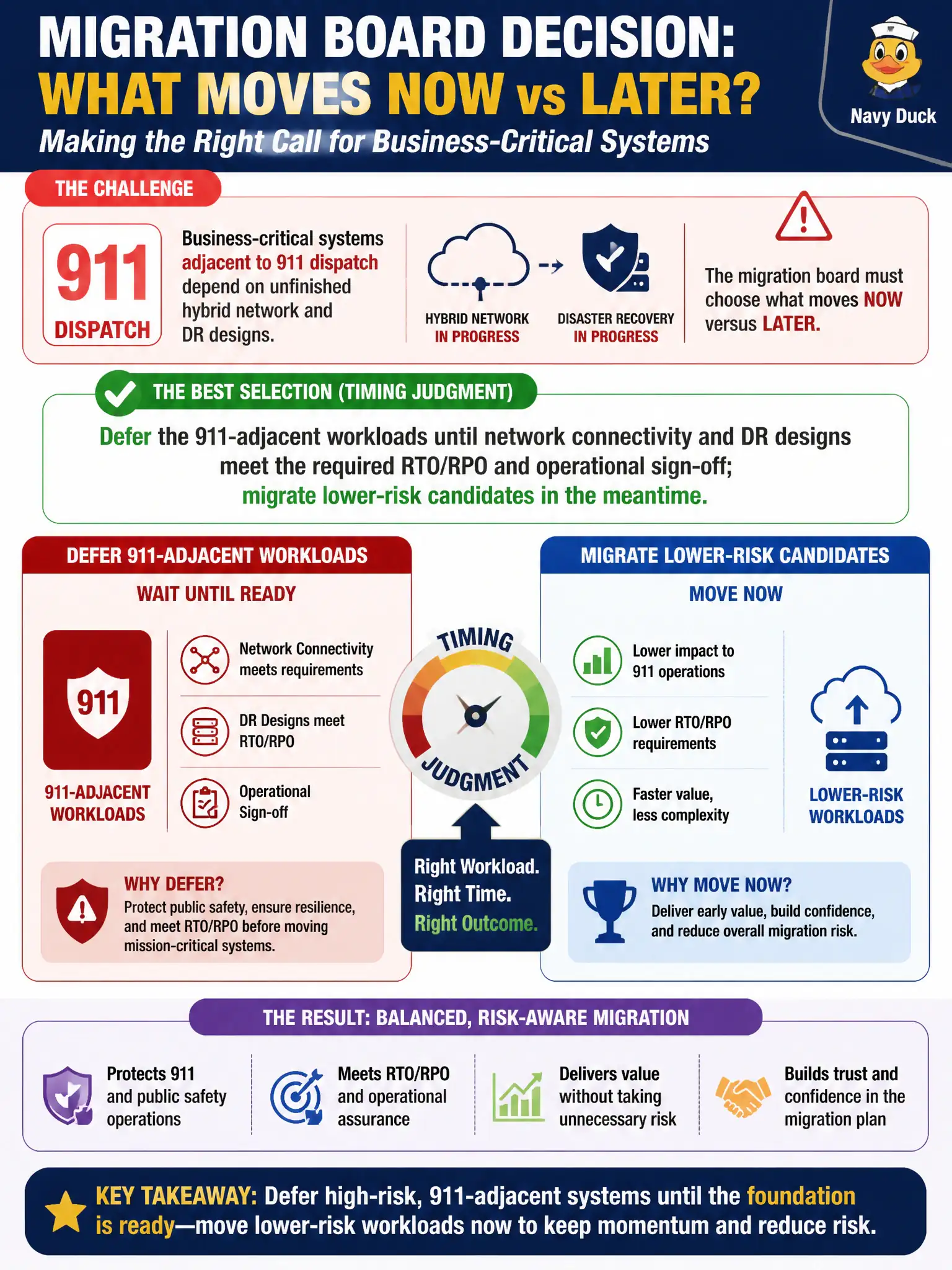
Business-critical systems adjacent to 911 dispatch depend on unfinished hybrid network and DR designs. The migration board must choose what moves now versus later. Which selection best reflects timing judgment?
Select an answer to reveal the explanation.
Short Explanation
If 911-adjacent gear needs network and DR designs that aren’t done, it waits—period. Move safer candidates now. Schedule optics don’t outrank public-safety readiness.
Full Explanation
Business-critical systems adjacent to 911 dispatch that depend on unfinished hybrid network and DR designs should not move merely to protect a schedule. Defer the 911-adjacent workloads until network connectivity and DR designs meet the required RTO/RPO and operational sign-off; migrate lower-risk candidates in the meantime. That timing judgment protects public safety while keeping the municipal program moving. Forcing 911-adjacent systems into the next weekend wave to maintain schedule optics fails by elevating calendar optics over life-safety readiness. Retiring the 911 systems because migration complexity implies they are unused fails absurdly—complexity does not equal lack of use for emergency systems. Rehosting 911 adjacency apps without DR testing because pilot light designs are optional for public safety fails on duty-of-care and exam concept: public-safety adjacency needs proven RTO/RPO. Exam caveat: defer when dependencies and DR are incomplete; do not equate schedule pressure with readiness. Operational check: document network and DR exit criteria, keep 911-adjacent apps on retain/defer, progress lower-risk waves, exercise DR tests to sign-off, then re-enter wave planning with evidence.