
A city’s architecture review board gates new solutions before launch. Which cost practice should be part of that review?
Select an answer to reveal the explanation.
Short Explanation
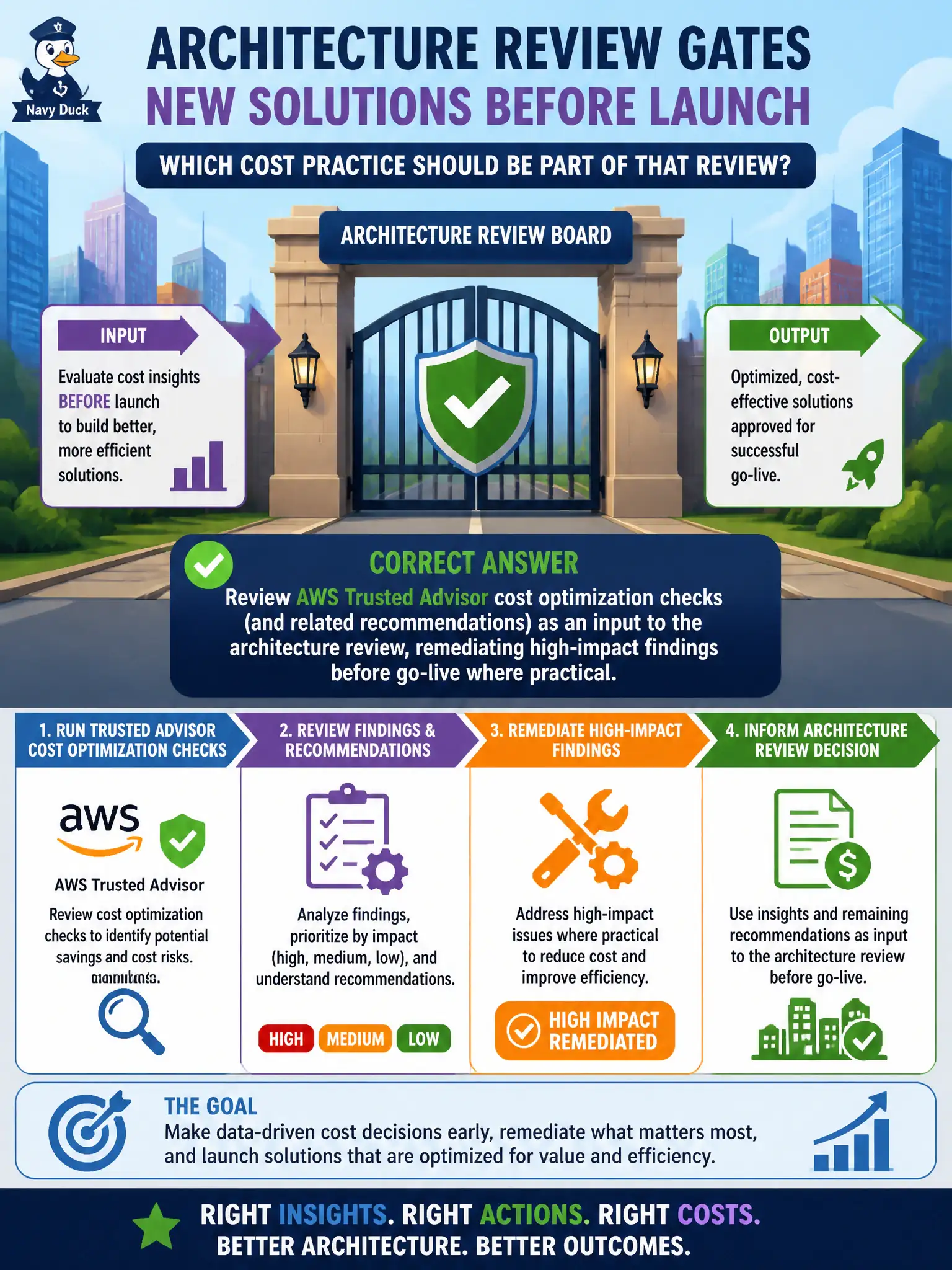
Trusted Advisor is the free second set of eyes before opening day—idle load balancers and leftover volumes show up there. Pretending it only matters after the overrun is backwards.
Full Explanation
Architecture review boards that gate municipal launches should treat AWS Trusted Advisor cost optimization checks as design inputs, not trivia after an overrun. Reviewing those recommendations—and remediating high-impact findings such as idle load balancers or underutilized volumes before go-live where practical—raises solution quality and avoids shipping known waste. The practice works because cost tooling surfaces actionable misconfigurations early, when change is cheapest. Ignoring Trusted Advisor because it supposedly only applies after budget overrun fails by postponing free insight until damage is done. Treating cost checks as optional trivia unrelated to design quality fails conceptually: idle and oversized resources are architecture defects with financial symptoms. Disabling Trusted Advisor access so reviews stay purely diagram-focused fails governance—diagrams without cost hygiene are incomplete for production civic systems. Exam caveat: Trusted Advisor coverage and check depth vary by support plan; still use available checks plus Cost Explorer and Compute Optimizer rather than claiming no insight exists. Operational check: attach a Trusted Advisor cost findings excerpt to the architecture review packet, assign owners for High findings, verify remediation or accepted risk before launch approval, and re-check one week after go-live.