
A city is designing a new mobile 311 API. Engineers are debating services before agreeing how success will be measured. What methodology should lead the design?
Select an answer to reveal the explanation.
Short Explanation
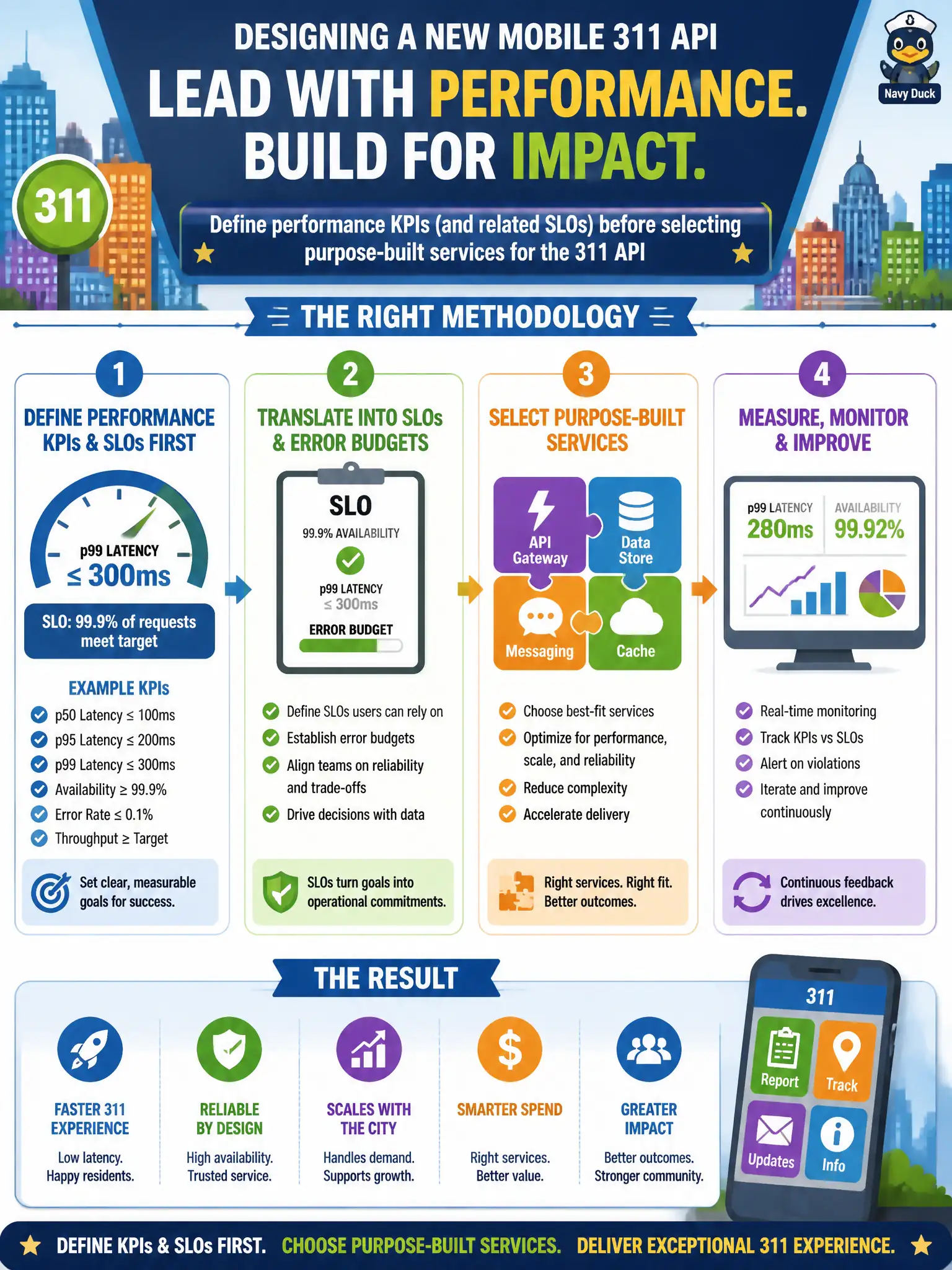
Don’t buy tools before you know what ‘fast enough’ means. Nail p99 latency and friends first, then pick AWS services that can hit those marks for 311.
Full Explanation
A new mobile 311 API should start from measurable success criteria before service shopping. Defining performance KPIs such as p99 latency and related SLOs first, then selecting purpose-built services that can meet those targets, keeps architecture honest to citizen experience. Picking popular services first and inventing KPIs that fit whatever was deployed reverses evidence-based design. Skipping non-functional requirements and optimizing only for the shortest architecture diagram ignores real traffic. Copying another city's architecture without measuring this city's traffic or latency goals imports unvalidated assumptions. Exam caveat: KPIs need measurement instrumentation in the design—synthetic checks, tracing, and dashboards—or SLOs cannot be proven after launch. Operational check: publish p99/latency and availability SLOs for the 311 API, instrument traces and dashboards before coding integrations, choose services against those targets, and run a pre-prod load test that gates go-live. In municipal cloud governance, record the owners, success metrics, and rollback or restore contacts beside this technical choice so the next incident, budget review, or audit does not rediscover the decision from scratch under time pressure.