
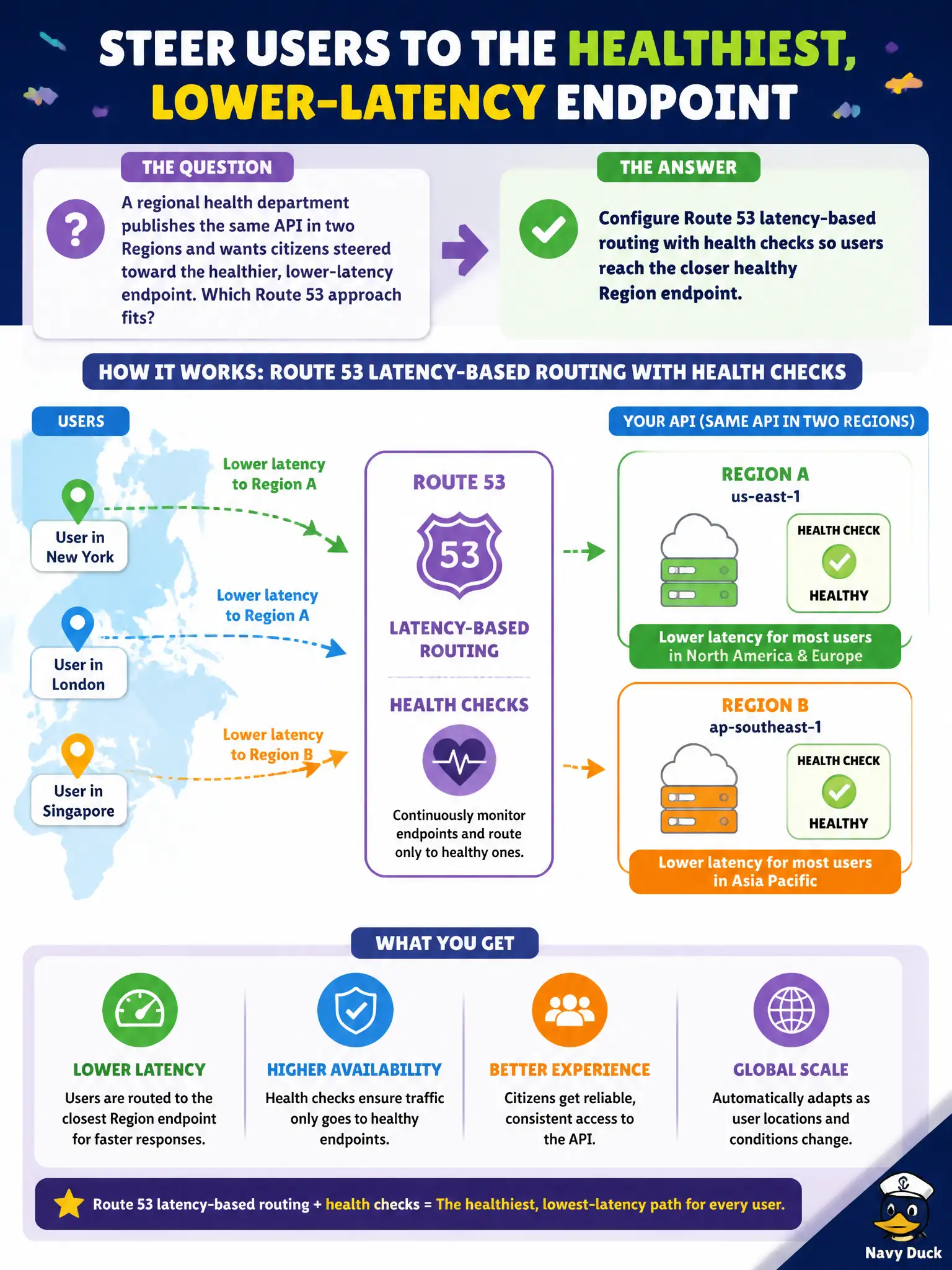
A regional health department publishes the same API in two Regions and wants citizens steered toward the healthier, lower-latency endpoint. Which Route 53 approach fits?
Select an answer to reveal the explanation.
Short Explanation
Send folks to the clinic line that’s both nearby and actually open. Latency-based Route 53 routing plus health checks does that for regional API endpoints.
Full Explanation
A municipal OpenSearch or Elasticsearch domain used for 311 search must limit administrative and data-plane access to approved roles and networks. Combine fine-grained access control or IAM-based policies with VPC placement and security groups so only approved application and admin principals reach the domain. Opening the domain to 0.0.0.0/0 with anonymous access invites abuse of citizen case search data. Sharing master user passwords in a public chat channel fails credential hygiene. Disabling encryption and authentication to simplify demos is unacceptable for production 311 data. Exam caveat: FGAC and IAM mapping mistakes can lock out operators—maintain break-glass procedures in the secrets vault. Operational check: place the domain in a VPC, deny anonymous access, verify the app role can query required indexes only, and confirm an unapproved identity receives Access Denied. In municipal cloud governance, record the owners, success metrics, and rollback or restore contacts beside this technical choice so the next incident, budget review, or audit does not rediscover the decision from scratch under time pressure. In municipal cloud governance, record the owners, success metrics, and rollback or restore contacts beside this technical choice so the next incident, budget review, or audit does not rediscover the decision from scratch under time pressure.