
A seasonal parks reservation system needs continuity for peak summer demand but must stay cost-aware in the off-season. Which DR capacity approach best balances continuity and cost?
Select an answer to reveal the explanation.
Short Explanation
You do not heat the whole stadium in January for a July game. Keep a cheaper DR posture off-season, then scale the standby muscles before the parks booking rush.
Full Explanation
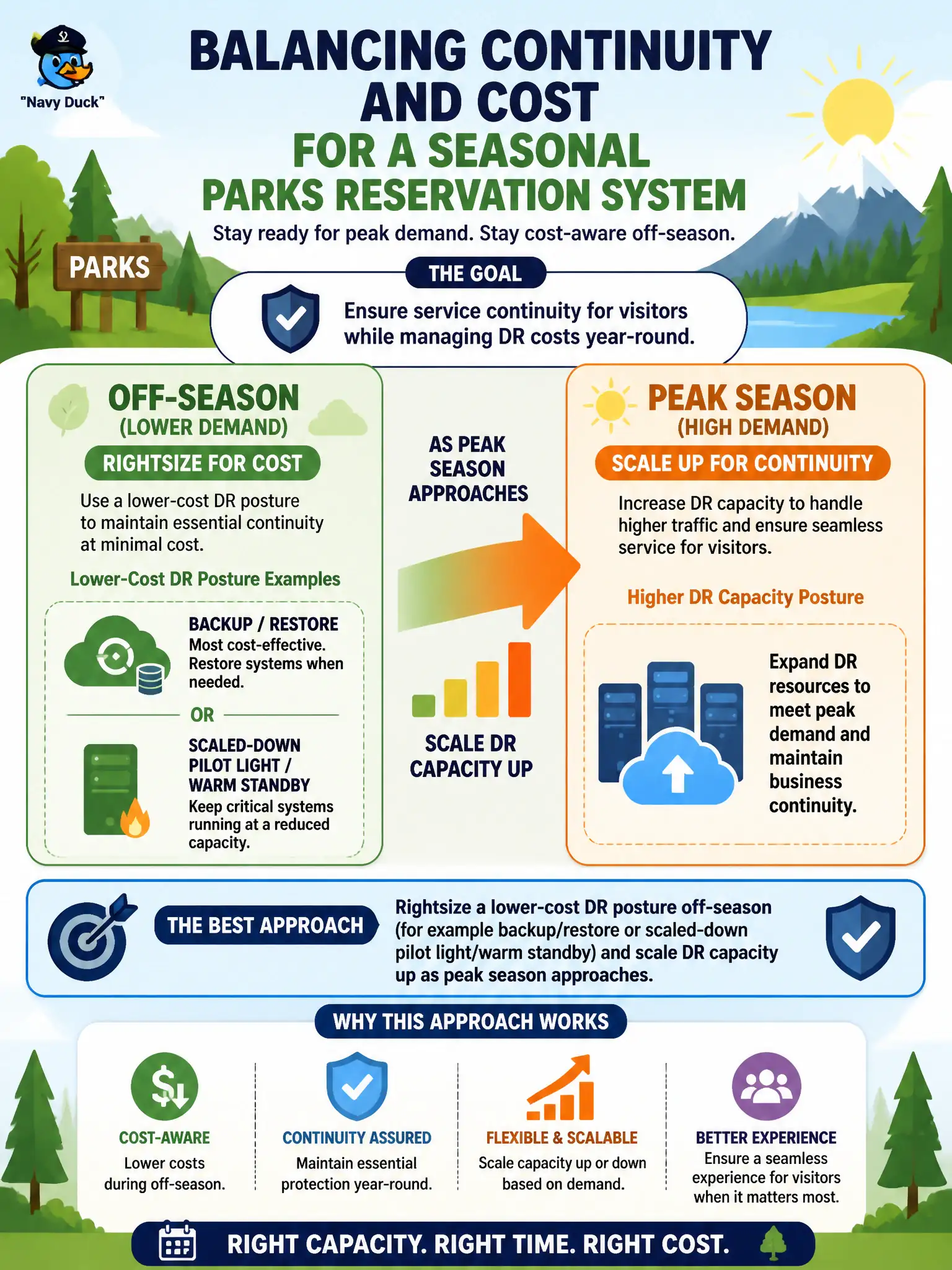
Seasonal parks reservation systems need stronger continuity near peak summer demand but should not fund peak DR capacity all year. Rightsizing a lower-cost DR posture off-season—such as backup/restore or scaled-down pilot light or warm standby—and scaling DR capacity up as peak approaches balances continuity and cost for municipal finance. Running full multi-site active-active at peak sizing twelve months overspends relative to seasonal risk. Disabling all backups in winter because reservations are unused abandons data protection for configurations, historical bookings, and off-season administrative use. Permanently oversized warm-standby fleets identical to peak production year-round ignore the cost-aware constraint. Exam caveat: seasonal scale-up must be scheduled and tested before the rush; a paper plan to enlarge DR the week peak starts often slips. Operational check: define off-season versus peak DR runbooks, rehearse a mid-spring scale-up, verify booking cutover timing, and compare monthly DR cost curves to reservation revenue seasonality. In municipal cloud governance, record the owners, success metrics, and rollback or restore contacts beside this technical choice so the next incident, budget review, or audit does not rediscover the decision from scratch under time pressure.