
A city’s shared-services account accumulates orphaned AMIs and untagged ECR images from retired pipelines, steadily increasing snapshot and registry storage cost. Which action best reclaims that artifact sprawl cost?
Select an answer to reveal the explanation.
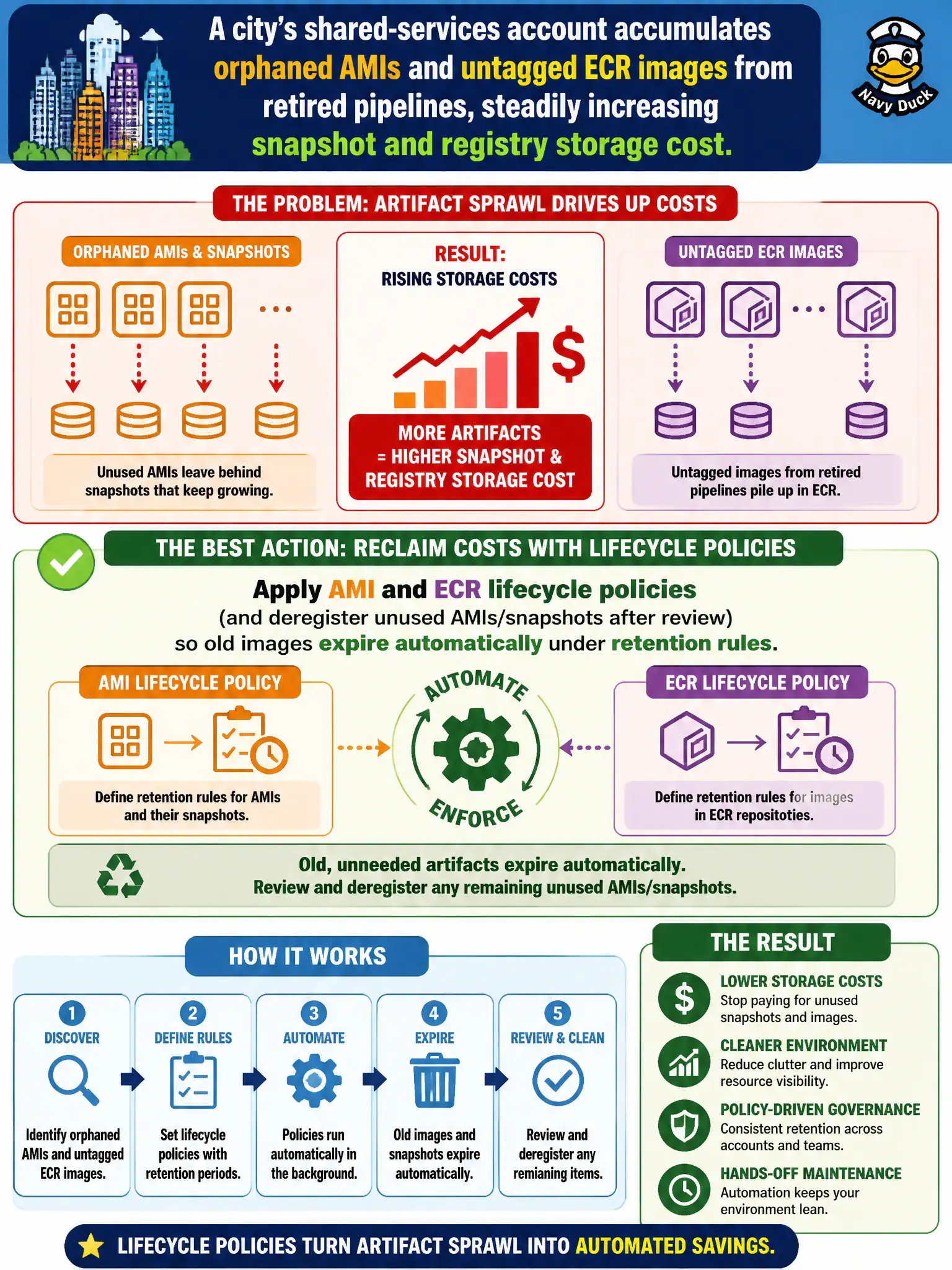
Short Explanation
Orphaned AMIs and ECR tags are attic boxes that keep billing you rent. Lifecycle policies—and a deliberate deregister pass—clear the attic. Shipping everything to Docker Hub or weekly VM exports just moves the mess.
Full Explanation
A city's shared-services account that accumulates orphaned AMIs and untagged ECR images from retired pipelines needs automated artifact lifecycle, not infinite retention. Apply AMI and ECR lifecycle policies and deregister unused AMIs and associated snapshots after review so old images expire automatically under retention rules and snapshot/registry storage stops growing forever. That reclaims sprawl cost while keeping a governed retention window for rollback. Storing every historical AMI and ECR tag forever in S3 Glacier Deep Archive without lifecycle controls fails because unbounded retention without expiry still grows cost and operational noise, and Deep Archive is the wrong default for active image pipelines. Disabling ECR in the shared-services account so developers push images to public Docker Hub instead fails by exporting municipal software supply chain control to the public internet. Converting all AMIs to manual on-premises VM exports weekly to eliminate AWS storage charges while keeping unlimited versions fails as a cost strategy—it relocates sprawl and adds courier/operations burden without lifecycle discipline. Exam caveat: lifecycle policies for AMIs/ECR are the continuous-improvement answer for artifact sprawl; 'store forever elsewhere' is not governance. Operational check: inventory untagged and aged images, set ECR lifecycle rules and AMI deregistration/snapshot cleanup playbooks, require tags on new pipeline artifacts, alert on registry size, and verify shared-services storage line items decline after the first expiry cycle.