
An emergency mass-notification application improved architecture on paper but has not practiced recovery under failure. Leadership wants quarterly reliability improvement evidence. Which practice best exercises recovery?
Select an answer to reveal the explanation.
Short Explanation
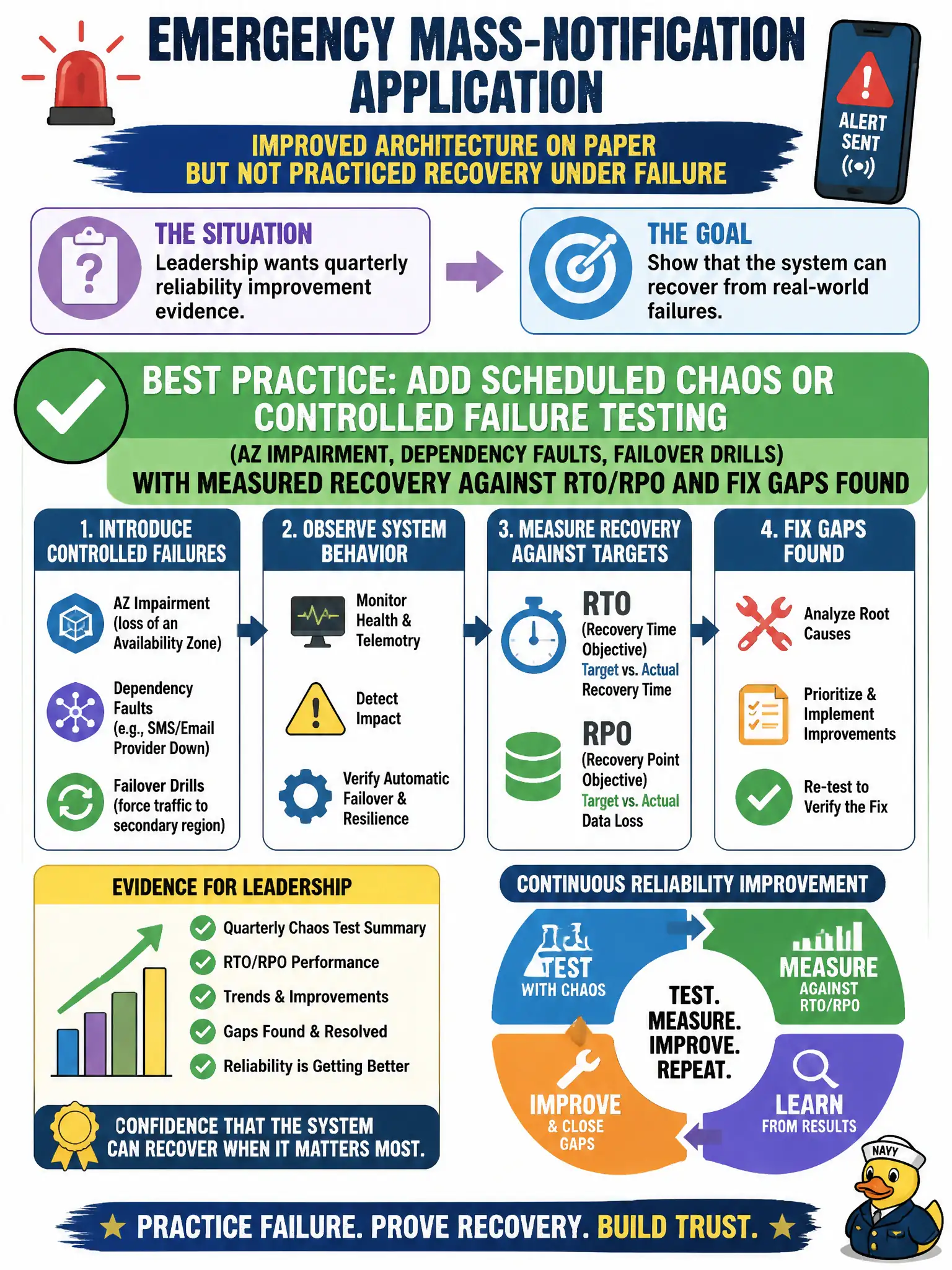
Paper DR plans are bedtime stories until you pull a plug on purpose. Quarterly chaos and failover drills show whether the mass-notification stack actually recovers—and what still breaks.
Full Explanation
An emergency mass-notification application that improved architecture on paper but has not practiced recovery under failure lacks evidence of quarterly reliability improvement. Adding scheduled chaos or controlled failure testing—AZ impairment, dependency faults, failover drills—with measured recovery against RTO/RPO and fixing gaps found best exercises recovery. That practice works because design documents do not reveal stale runbooks, broken health checks, or quota surprises the way drills do. Relying solely on design documents and skipping failure injection to avoid risk fails by preserving unknown recovery debt. Running production with all redundancy disabled permanently to prove single-host strength fails resilience on purpose. Postponing any recovery exercise until after the next real regional outage fails as learning only during citizen harm. Exam caveat: chaos needs blast-radius controls, abort criteria, and stakeholder communication—especially for emergency notification—so drills improve readiness without creating a real alert storm. Operational check: schedule a quarterly game day impairing one AZ or dependency, time detection and recovery against RTO/RPO, file defects with owners, and present measured improvement to leadership as reliability evidence.