
Amazon Macie reports SSN-like patterns in a municipal 'open data' S3 bucket that is publicly readable. What immediate remediation should architects drive?
Select an answer to reveal the explanation.
Short Explanation
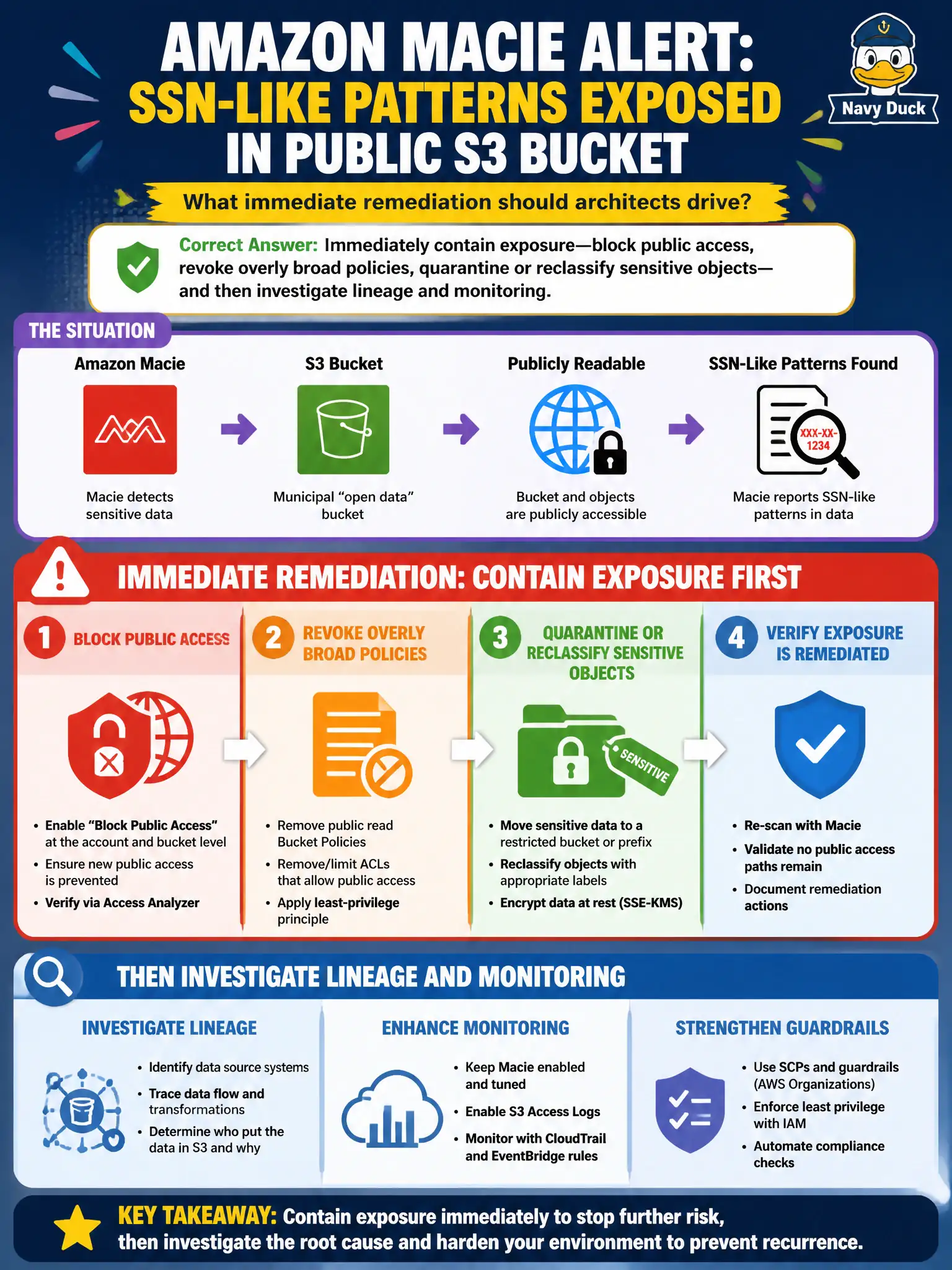
SSNs in a public 'open data' bucket are a siren, not a suggestion. Slam Block Public Access, yank the bad policy, and quarantine the objects before the postmortem. Curiosity browsing can wait until the door is locked.
Full Explanation
Amazon Macie reporting SSN-like patterns in a municipal open-data S3 bucket that is publicly readable is an active sensitive-data exposure event. Immediate remediation is contain first: block public access, revoke overly broad policies, quarantine or reclassify sensitive objects, then investigate lineage and monitoring. That sequence works because stopping anonymous reads outranks debate about catalog branding while personal data may still be downloading. Increasing the bucket’s public cache TTL so sensitive objects serve faster from CloudFront fails by amplifying exposure. Ignoring Macie because open-data catalogs are supposedly exempt from sensitive-data controls fails conceptually—open data must not contain SSNs. Granting anonymous s3:GetObject more broadly so researchers can confirm findings manually fails by widening access during an incident. Exam caveat: after containment, run forensics on object versions and access logs, notify privacy/legal as required, and fix upstream ETL so sensitive fields never land in public prefixes again. Operational check: apply Block Public Access and deny public policies immediately, move suspect objects to a restricted quarantine prefix, preserve Macie and access evidence, and open a privacy incident with lineage review.