
A city permitting portal’s CI/CD pipeline shifts production traffic immediately after deploy, and recent releases shipped latent bugs that residents hit first. Which improvement should the architects prioritize?
Select an answer to reveal the explanation.
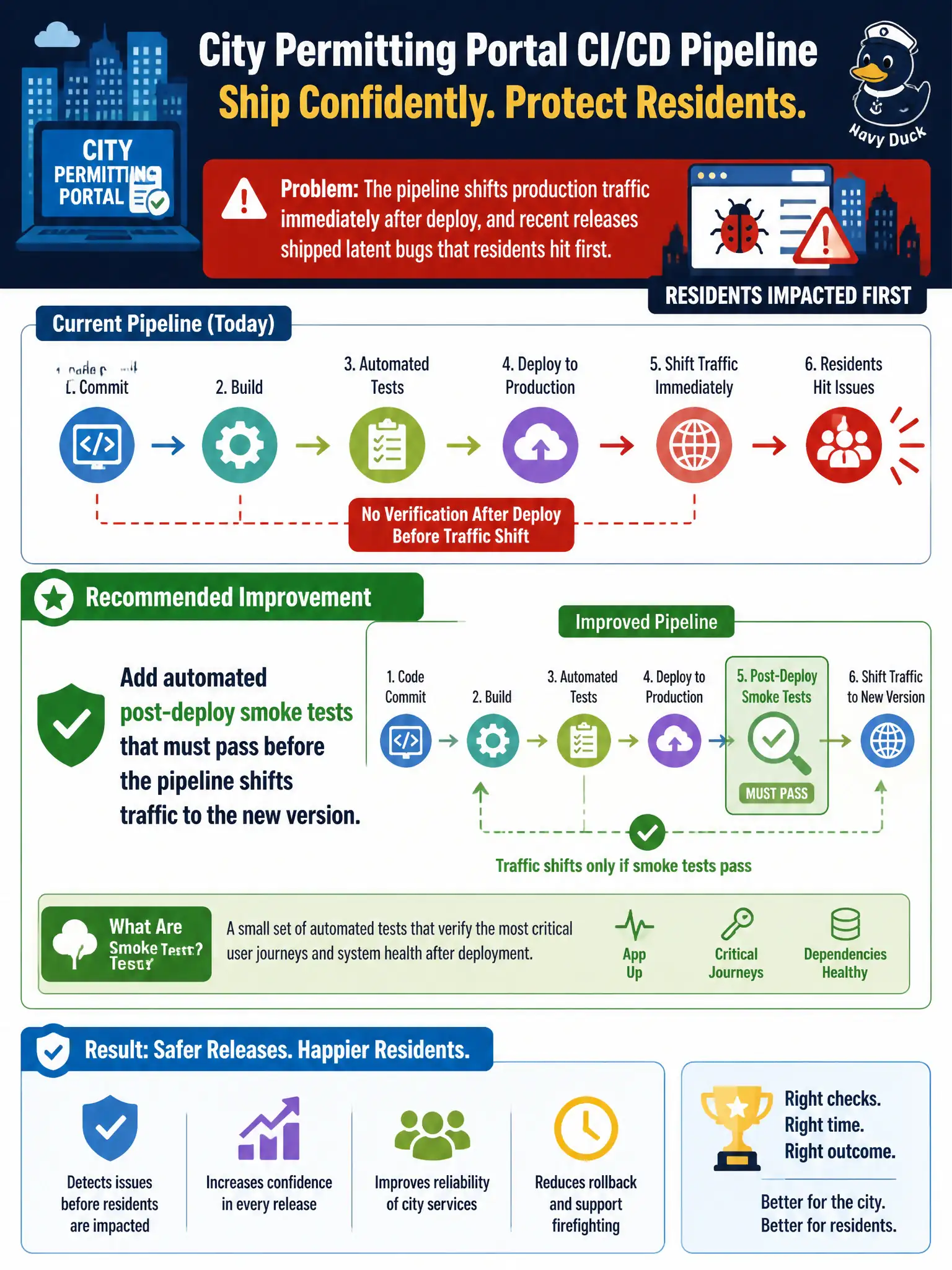
Short Explanation
Shipping without a smoke check is like opening a new bridge lane before a weight truck rolls across it. Bake a quick automated health pass into the pipeline and only then flip traffic. Residents should not be the first integration test.
Full Explanation
A city permitting portal whose CI/CD shifts production traffic immediately after deploy lets residents discover latent bugs first. Adding automated post-deploy smoke tests that must pass before the pipeline shifts traffic catches broken releases in the new version’s environment before citizens are exposed. That improvement works because deployment safety gates convert “deployed” into “verified” prior to cutover. Disabling automated deploys and requiring every production change manually on Fridays only fails by slowing delivery without guaranteeing verification quality. Removing all integration tests to shorten lead time and relying solely on resident bug reports fails conceptually—citizens should not be the QA department. Publishing every build straight to production with CodeDeploy all-at-once and skipping staging verification fails as maximum blast radius with minimum signal. Exam caveat: smoke tests must cover critical citizen paths (submit permit, pay fee, status check) and fail the pipeline closed; flaky tests that are ignored recreate the original risk. Operational check: insert a post-deploy smoke stage against the green environment, deliberately break a health endpoint in nonprod, confirm traffic does not shift, then enable the gate on the permitting production pipeline.