
A veterinary group's Salesforce team is scoping who should be allowed to build new prompt templates that ground on Patient and Case data. Which consideration should most directly shape that role decision?
Select an answer to reveal the explanation.
Short Explanation
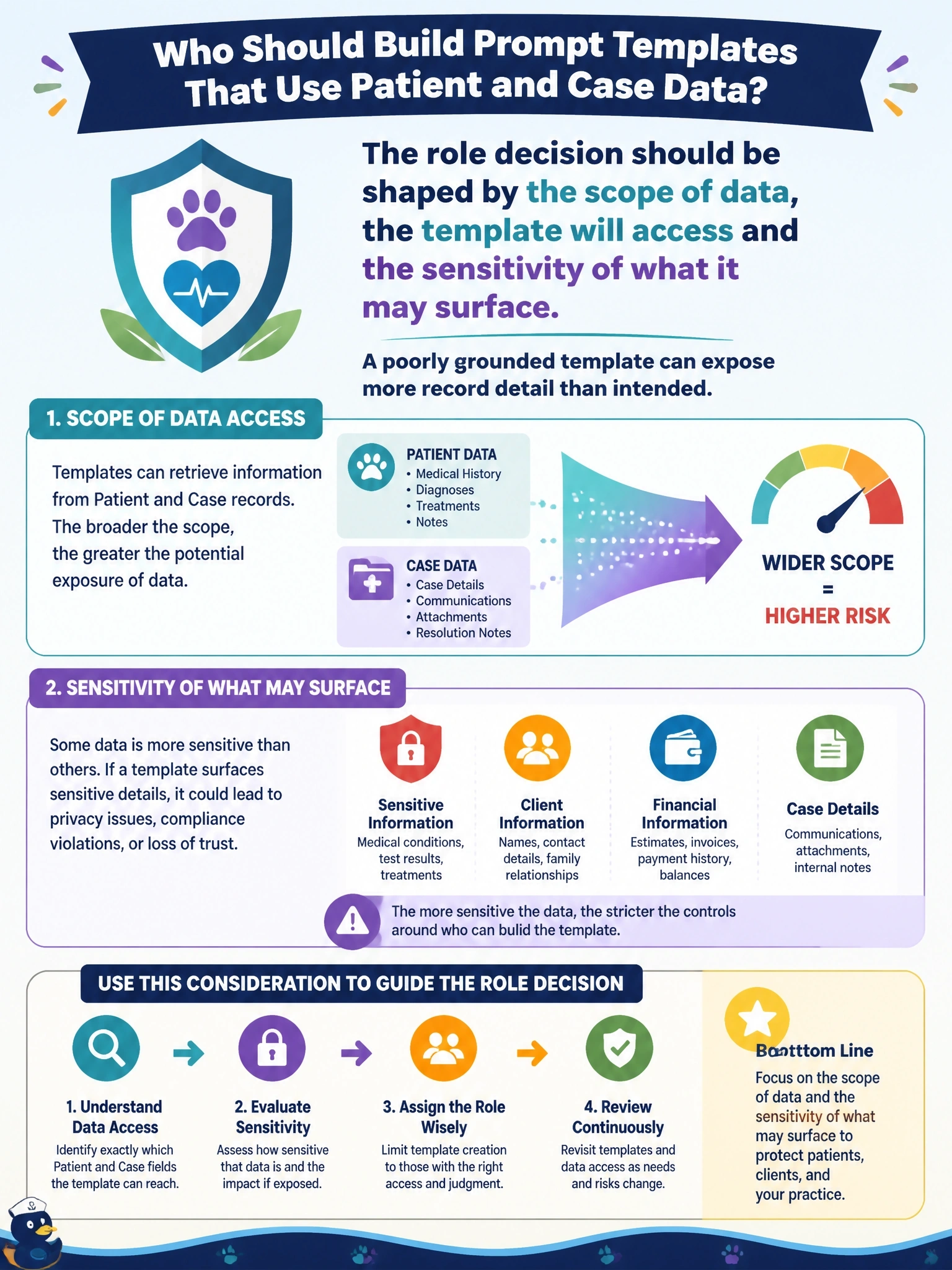
When you decide who can build these templates, focus on the data they can access and how sensitive it is, since generated text may reveal more record detail than intended. Company tenure, Apex familiarity, and a Chatter subscription do not replace that security-and-scope judgment.
Full Explanation
The template author controls which fields, related records, and grounding sources feed into a prompt, and that content may appear in generated text seen by a user. The builder role should therefore be assigned based on the scope and sensitivity of the data the template can access, rather than on an unrelated personal attribute. Company tenure does not show whether someone understands data sensitivity or grounding scope, so using seniority would be an arbitrary substitute for an access-control decision. Apex familiarity is not required to author a Prompt Builder template: instructions and grounding are configured through clicks-based tools; Apex is relevant only if a grounding source specifically invokes an Apex action, which is optional. A Chatter feed subscription to Patient likewise has no bearing on template configuration permissions or data governance. The exam caveat is that the correct criterion is the data exposure risk—not whether the author is technically experienced or familiar with the records. As a practical check, review the fields, related records, and grounding sources the template will use, and confirm that the assigned builder’s access and responsibilities are appropriate for their sensitivity. This applies least-privilege thinking to template authorship.