
A Ridgeline agent needs to tell a pet owner the exact date and time of their upcoming vaccination appointment. What is the most appropriate way to ground this response?
Select an answer to reveal the explanation.
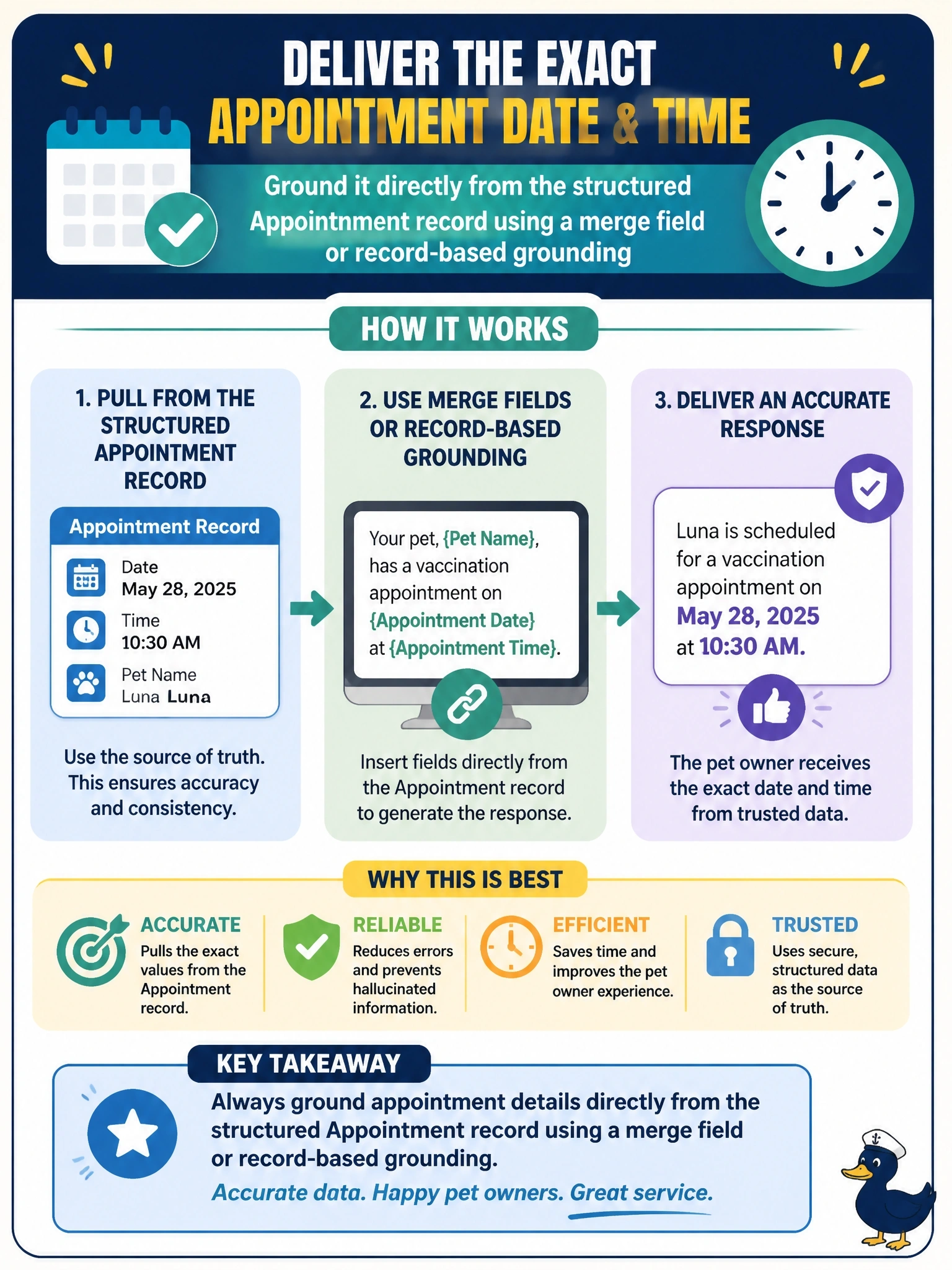
Short Explanation
An exact appointment date lives as a clean field on a record — reach for it directly, don't send a retriever hunting through PDFs for something that was never unstructured in the first place.
Full Explanation
When the needed fact is structured data already sitting on a Salesforce record — like the date/time field on an Appointment — the correct grounding approach is direct record-based grounding or a merge field, not a retriever querying unstructured documents. Searching a Data Library of general vaccination-schedule PDFs would return generic policy information, not this specific pet's actual booked appointment, so it wouldn't reliably produce the correct date. Running a vector search for the literal phrase 'appointment date' across PDFs conflates a structured lookup with an unstructured-content search pattern and is likely to return irrelevant or generic results rather than the specific record value needed. An ensemble retriever compounds the same mistake by pulling from multiple unstructured sources when no retrieval of unstructured content is required at all. The exam-relevant principle is a core one for this domain: structured CRM data is grounded directly through merge fields or record grounding, while the Data Library and its retrievers exist specifically for unstructured content that isn't already sitting cleanly on a record.