
A configuration specialist at Ridgeline Veterinary Group wants an agent to answer pet owners' questions using the text inside uploaded PDF discharge-instruction sheets. Which Agentforce capability makes that unstructured PDF content usable as grounding for the agent?
Select an answer to reveal the explanation.
Short Explanation
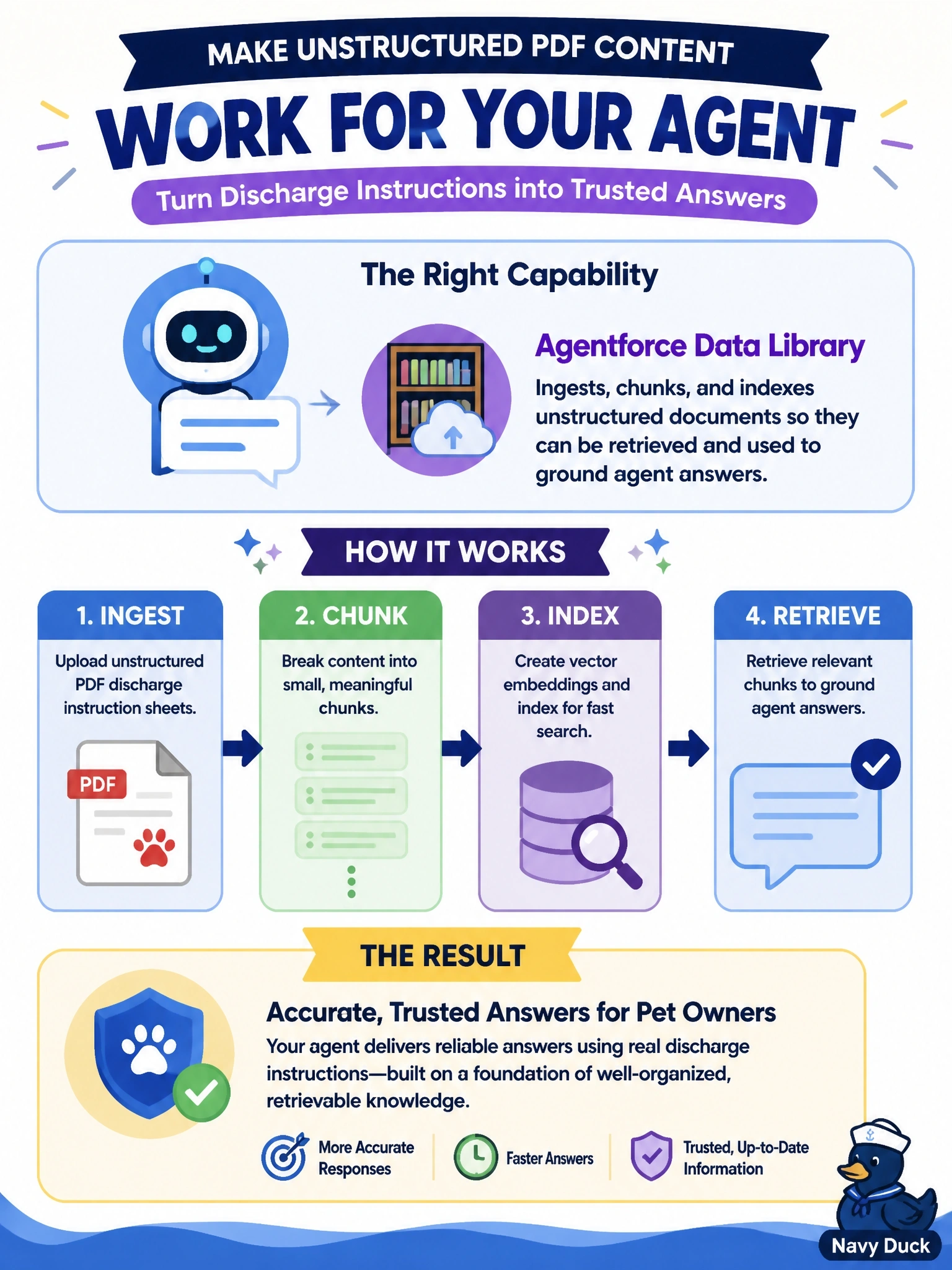
Think of the Data Library as the agent's card catalog for everything that isn't a tidy CRM field — PDFs, articles, policy docs. It does the unglamorous work of chopping the file into chunks and indexing them so a retriever can actually find the right paragraph later.
Full Explanation
The Data Library is purpose-built to turn unstructured content — PDFs, Word docs, knowledge articles — into something an agent can ground answers in. Ridgeline's discharge instructions live as free text inside PDFs, not as structured fields, so they need chunking and indexing before any retriever can surface them. A standard agent action reading a Case attachment field only returns a file reference, not searchable text inside it, so the agent still couldn't answer a specific question about wound-care timing. A merge field only pulls a single structured value already sitting on a record — it cannot reach inside a PDF's body text. Writing a custom Apex action to parse PDFs at runtime duplicates what the Data Library already does natively, adds maintenance burden, and doesn't benefit from the platform's built-in chunking, indexing, or retriever integration. The exam-relevant distinction to remember: structured record data is grounded through merge fields or record-based grounding, while unstructured documents belong in the Data Library so they can be chunked, indexed and retrieved.