
The refill topic must let a staff-flagged "chronic condition" pet skip the six-month check-in requirement, while every other pet is still blocked from refilling without one. The specialist wants this enforced without adding another instruction sentence for the model to interpret. What combination achieves this?
Select an answer to reveal the explanation.
Short Explanation
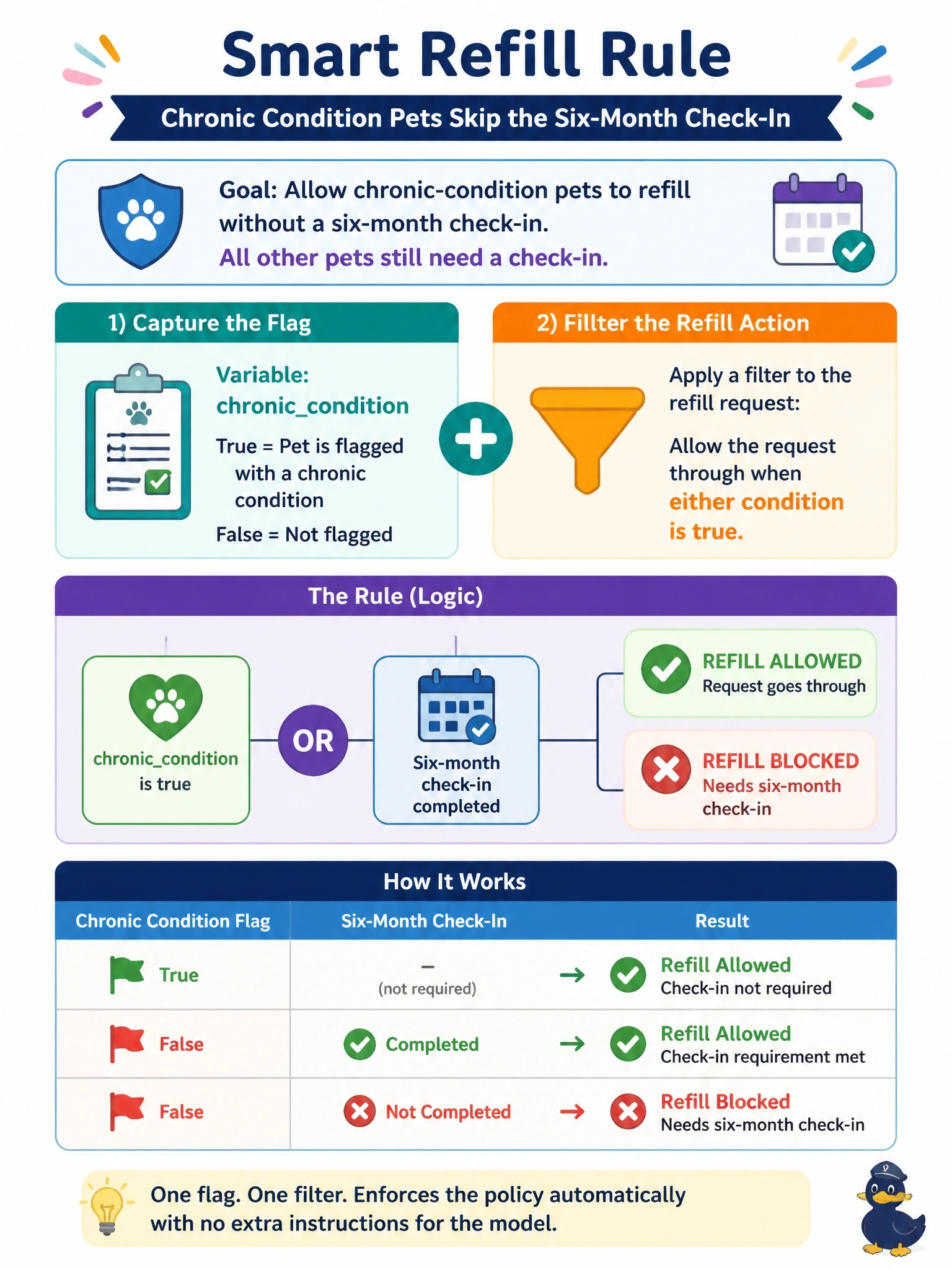
Read the chronic-condition flag into a variable, then let a filter do the actual gatekeeping with that flag as one of its conditions. That's an exception the data enforces, not a sentence the model has to remember to apply correctly every time.
Full Explanation
Combining a variable that captures the pet's chronic-condition status with a filter on the refill action's eligibility check, where the filter's logic allows the request through if either the flag is true or the standard check-in window is satisfied, keeps the exception fully deterministic: the data layer decides eligibility, and the model never has to correctly interpret a written-out exception under conversational pressure. A single guardrail instruction stating the exception in plain language is workable in simple cases but is exactly the language-layer approach the scenario says the specialist wants to avoid, since it depends on the model correctly applying a conditional rule every time rather than the data enforcing it. Building two entirely separate topics for what is really one workflow with one conditional exception needlessly duplicates the topic, its classification, and every other piece of shared logic, multiplying maintenance for no benefit. Detecting the phrase "chronic condition" in the owner's own message via classification is fragile and wrong in kind: classification exists to route to a topic, not to evaluate business eligibility, and an owner's phrasing is not an authoritative source for a clinical flag that should come from the record itself.