
A specialist configuring a brand-new Sales agent notices it arrives with different out-of-the-box standard topics and actions than a brand-new Service agent does, even before any custom configuration is added. What explains this?
Select an answer to reveal the explanation.
Short Explanation
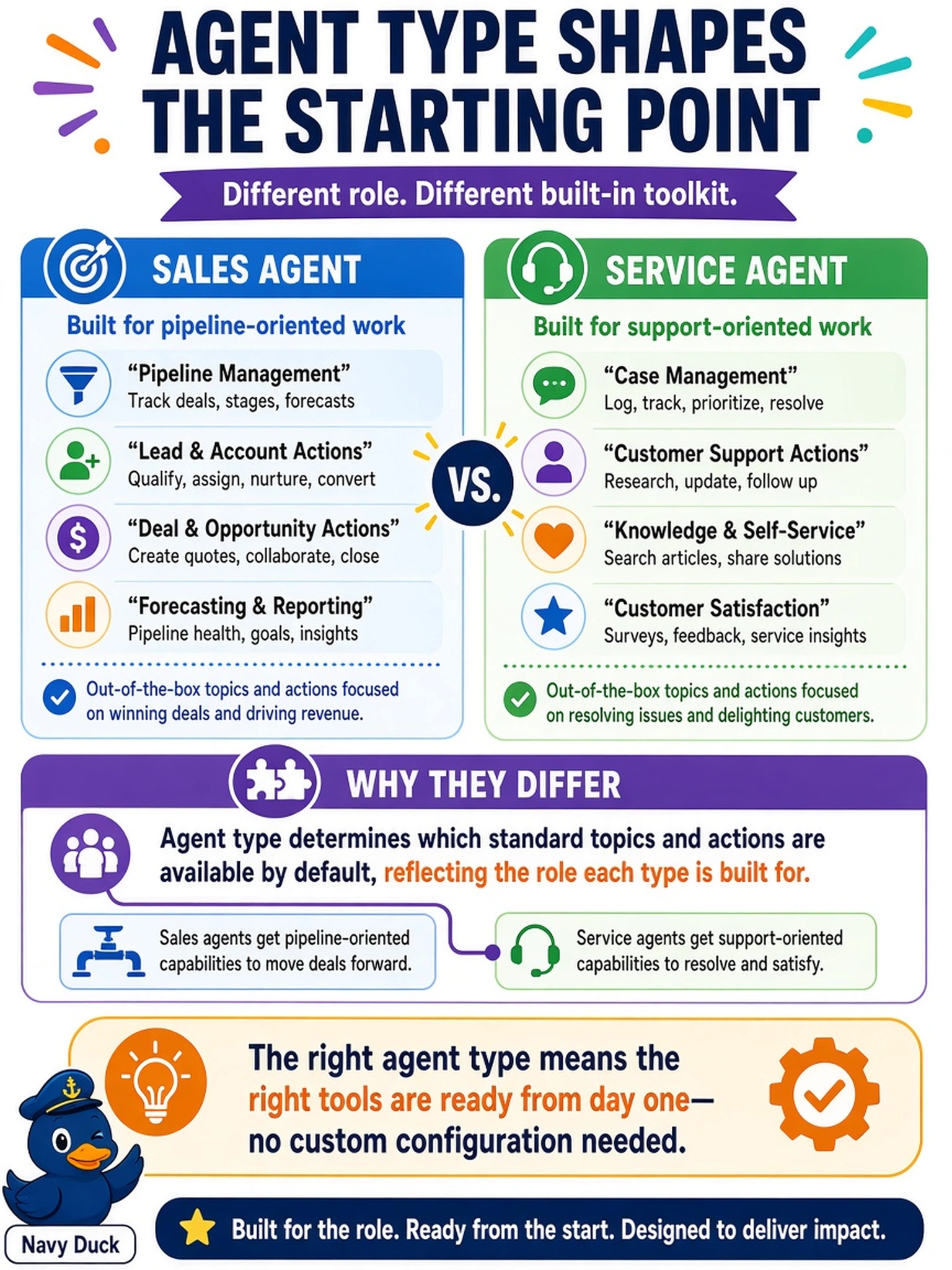
You’ll see different default toolboxes because Sales and Service agents are built for different roles. That’s expected role-based provisioning, not a licensing bug or a change caused by custom topics.
Full Explanation
Agent type determines the standard topics and actions available as soon as an agent is created; it is not merely a cosmetic label. Sales agents start with capabilities oriented toward pipelines and opportunities, while Service agents start with capabilities oriented toward cases and support. This role-based provisioning explains the specialist’s observation and is expected platform behavior, not a licensing bug that needs to be reported to Salesforce support. The claim that every agent type shares an identical catalog also misses the distinction: the difference is not simply a temporary interface display or synchronization issue. Likewise, custom topics are not a prerequisite for different defaults; standard topics and actions are available from creation, before custom configuration is added. An exam caveat is that a visible difference alone should not be mistaken for a display glitch when the agent types have different intended roles. To check in practice, compare newly created Sales and Service agents before adding custom topics and review their standard topics and actions; their role-oriented defaults should differ.