
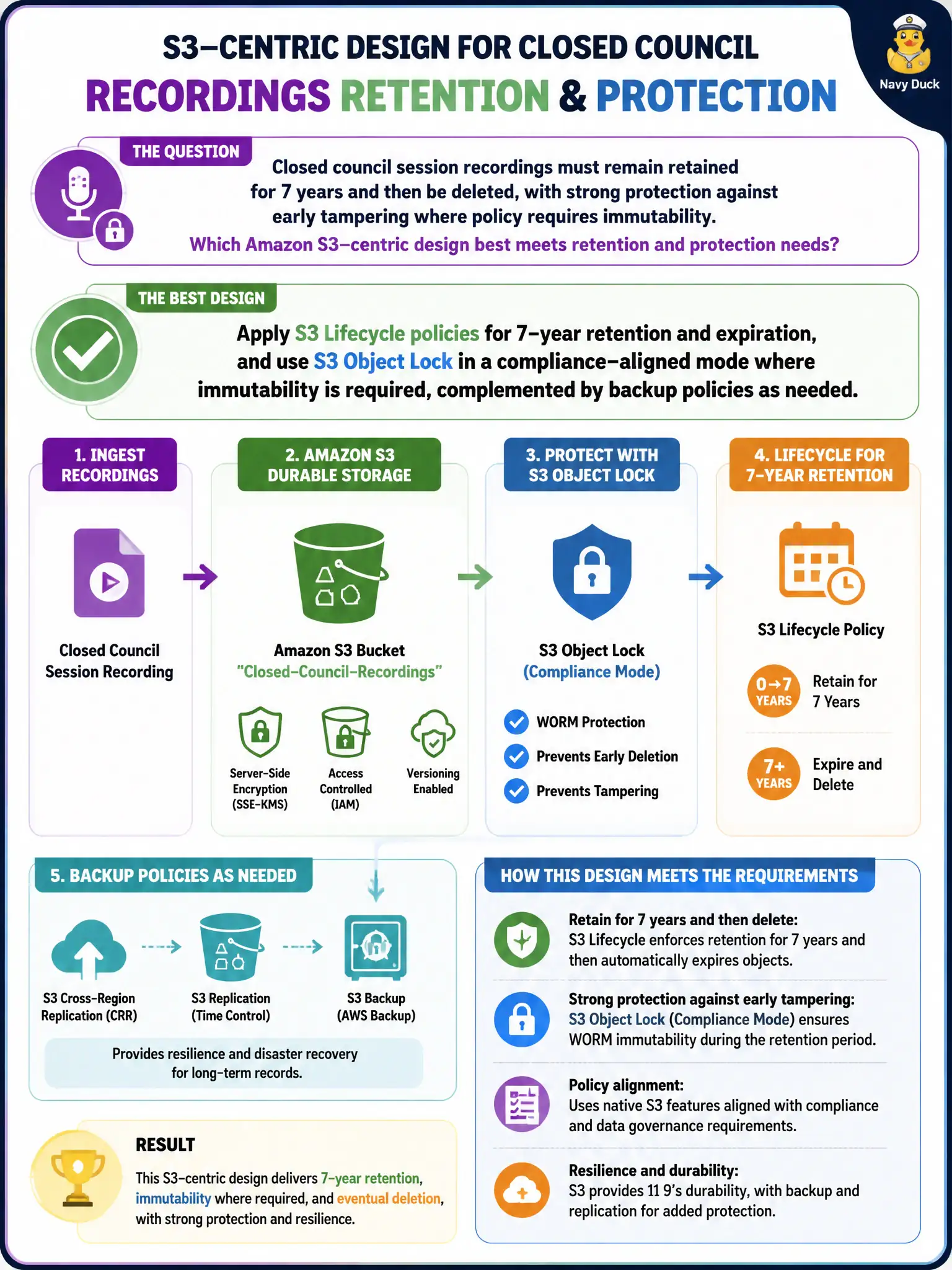
Closed council session recordings must remain retained for 7 years and then be deleted, with strong protection against early tampering where policy requires immutability. Which Amazon S3–centric design best meets retention and protection needs?
Select an answer to reveal the explanation.
Short Explanation
Seven years means a calendar with teeth: Lifecycle keeps the recordings for the full term then expires them, and Object Lock (when policy demands) stops early edits—like a sealed minutes vault, not a laptop recycle bin.
Full Explanation
Closed council session recordings that must be retained seven years then deleted need Amazon S3 Lifecycle rules that transition and expire objects on that schedule, plus S3 Object Lock in a compliance-aligned mode when policy requires immutability against early tampering—complemented by backup or replication policies where the records schedule demands geographic durability. Lifecycle encodes the calendar; Object Lock encodes the seal so privileged users cannot quietly overwrite or delete minutes before the retention clock completes.
Keeping recordings only on an administrator laptop and reformatting after each election cycle fails durability, shareability, and legal hold readiness. A public writable bucket with no lifecycle rules fails confidentiality and retention control—anyone can overwrite daily. Deleting recordings after 24 hours to save cost fails the seven-year records schedule outright.
Exam caveat: Object Lock compliance mode cannot be overridden by root in the ordinary sense during the retention period—set retention carefully and align legal/records officers before enabling; Governance mode differs if the question allows privileged override. Operational check: write a test recording with Object Lock retention, attempt early delete (must fail per mode), confirm Lifecycle expiration documents match the seven-year policy in non-prod, and verify backups cannot be used to circumvent retention without documented legal process.