
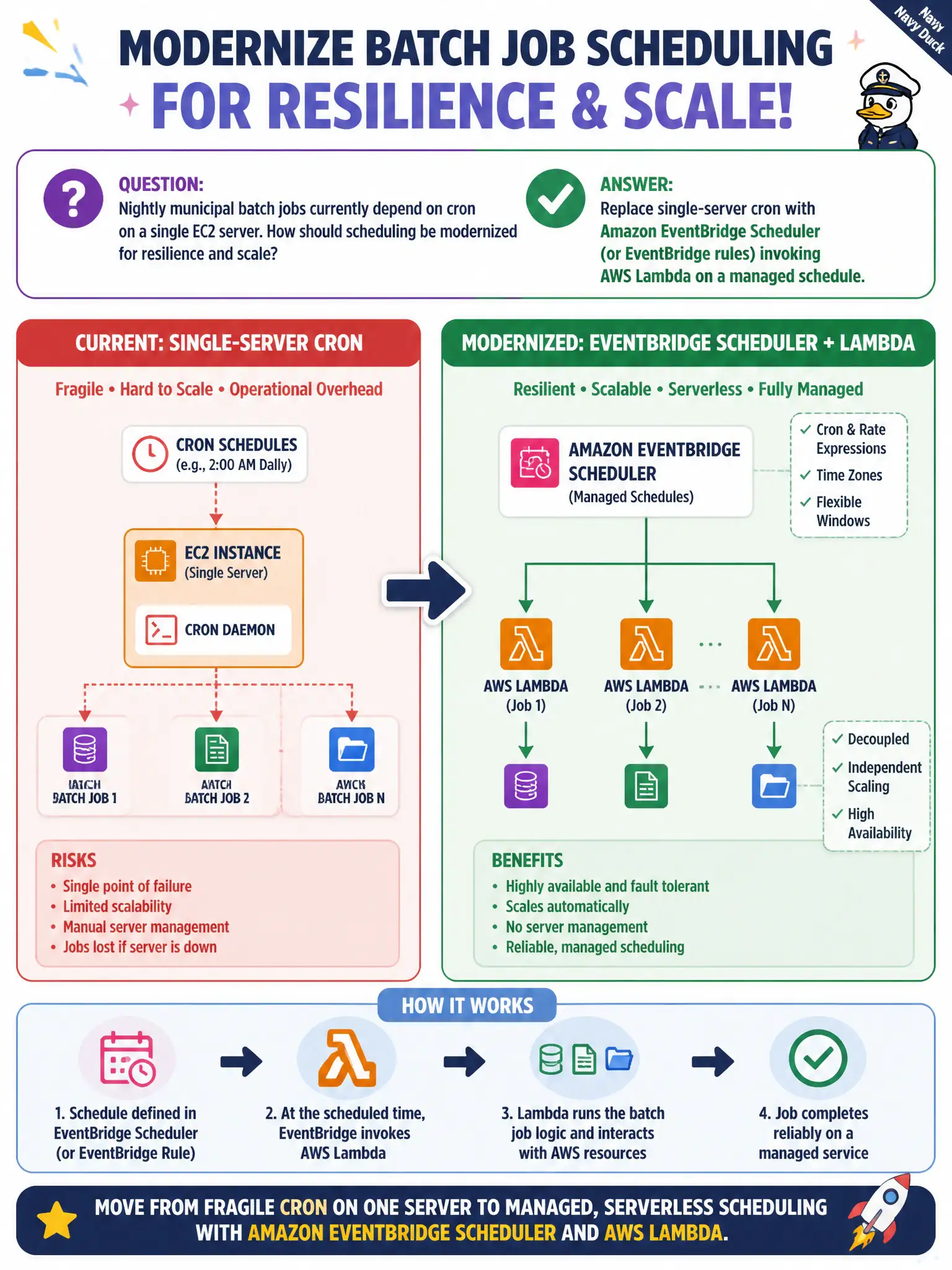
Nightly municipal batch jobs currently depend on cron on a single EC2 server. How should scheduling be modernized for resilience and scale?
Select an answer to reveal the explanation.
Short Explanation
EventBridge Scheduler is the city’s reliable night watch—no single dusty cron box to fail. Sticky notes and random traffic aren’t schedules; they’re hopes.
Full Explanation
Nightly municipal batch jobs should move from cron on a single EC2 server to Amazon EventBridge Scheduler (or EventBridge scheduled rules) invoking AWS Lambda on a managed schedule. Managed scheduling removes the single host SPOF, runs in highly available AWS control planes, and scales invocation targets without sticky notes on a dusty cron box. That is the modern resilience path for civic night jobs.
Keeping cron on one instance with a sticky note to reboot if the host dies fails by concept because it preserves the SPOF and relies on human ritual. Scheduling jobs only by waiting for random citizen traffic to trigger side effects fails because traffic is not a schedule—jobs may never run or may run chaotically. Moving cron into a Lambda deployment package but still requiring that one EC2 host to be online to fire it fails because the trigger remains tied to the failing host.
Exam caveat: Replace single-server cron with EventBridge Scheduler/rules → Lambda (or other targets). Anything that still depends on one EC2 cron host is not modernized.
Operational check: Verify schedules are defined in EventBridge, Lambda permissions allow invocation, failed invocations alarm, and the old EC2 cron entries are disabled. If the job still misses nights when one instance is down, the SPOF remains.