
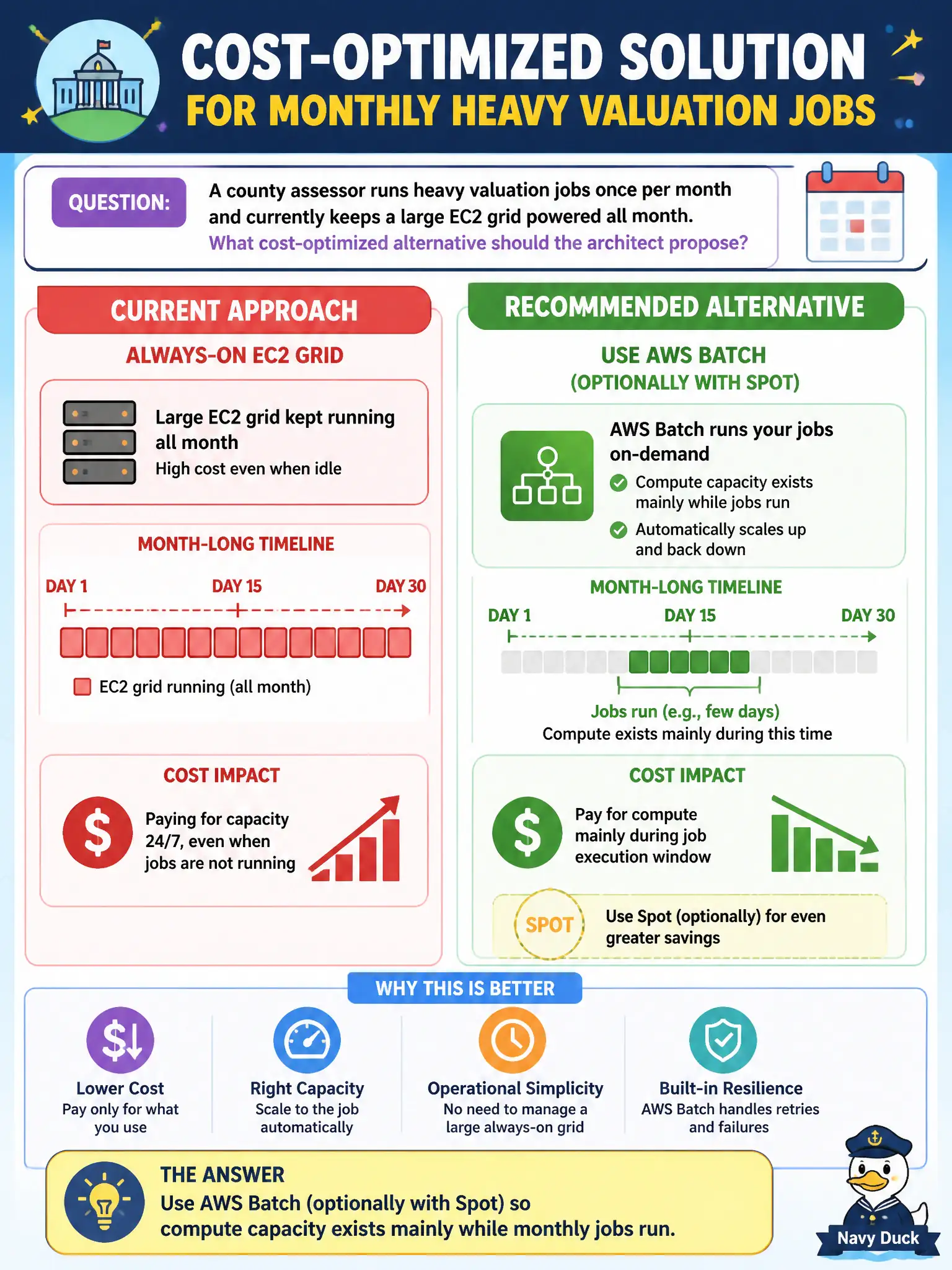
A county assessor runs heavy valuation jobs once per month and currently keeps a large EC2 grid powered all month. What cost-optimized alternative should the architect propose?
Select an answer to reveal the explanation.
Short Explanation
A month-long idle compute farm for a one-day valuation crunch is budget poison. AWS Batch spins capacity for the job window—optionally on Spot—and lets you stop paying for empty metal the other three weeks.
Full Explanation
Using AWS Batch (optionally with Spot) so compute capacity exists mainly while monthly jobs run is the correct alternative for a county assessor whose heavy valuation jobs run once per month but currently keep a large EC2 grid powered all month. Batch provisions workers for the queue and scales away when idle, aligning spend with the monthly duty cycle; Spot can deepen savings for interruptible valuation tasks. Keeping the oversized grid On-Demand continuously for convenience fails by billing empty capacity three weeks of idle for one crunch window. Purchasing Dedicated Hosts sized for the idle weeks fails by committing expensive tenancy through periods when no valuation work runs. Storing job inputs only in Amazon SQS FIFO without any compute service fails conceptually: SQS can buffer work but does not execute CPU-heavy valuation compute by itself. Exam caveat: Batch (with optional Spot) for monthly batch valuation; do not keep always-on grids, idle Dedicated Hosts, or queue-only designs without compute. Operational check: package valuation jobs for Batch; enable Spot where retries tolerate interruption; schedule the monthly submit; confirm queues drain to zero capacity; and compare the assessor’s monthly compute bill to the former always-on grid.