
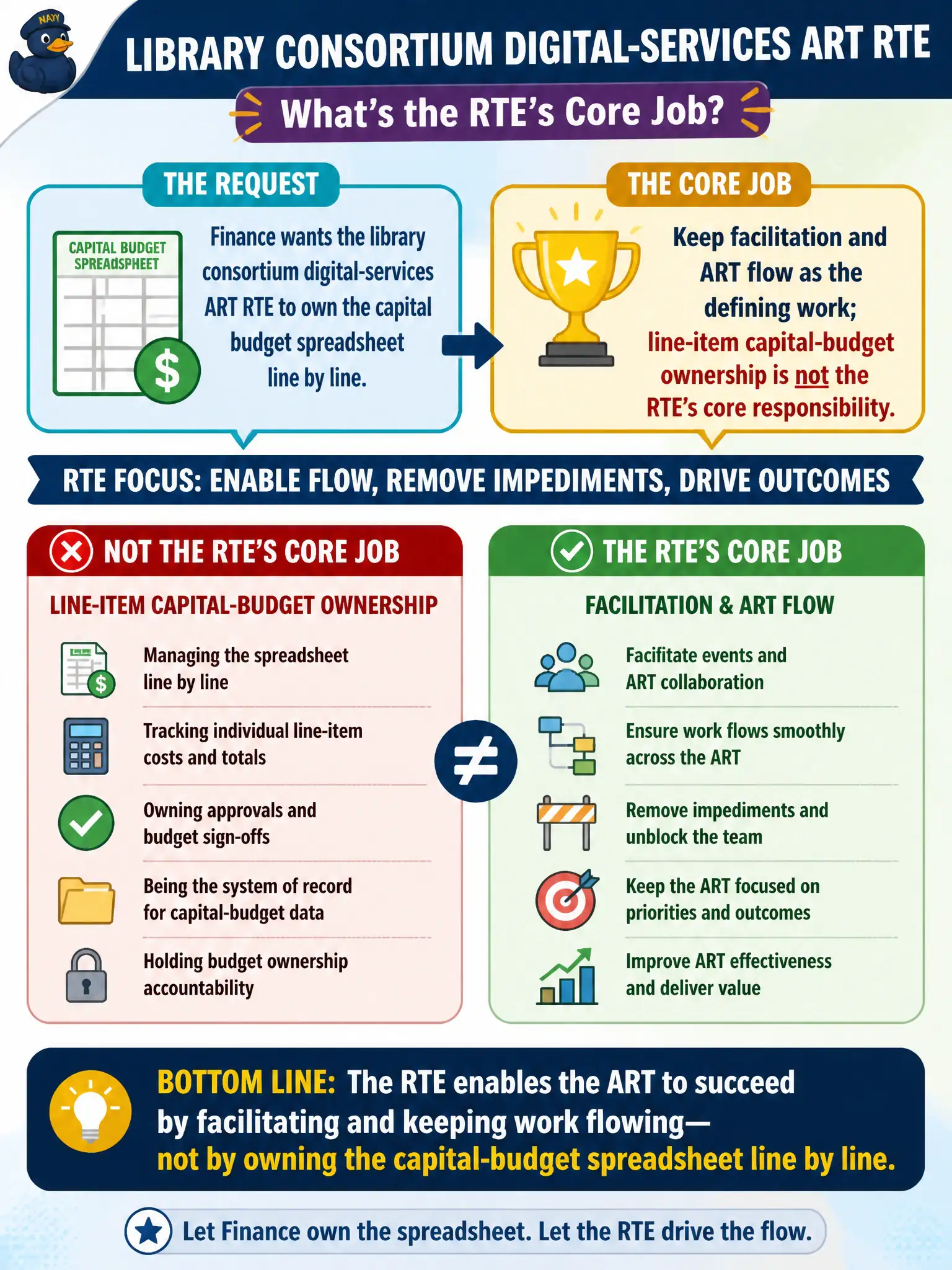
Finance wants the library consortium digital-services ART RTE to own the capital budget spreadsheet line by line. Which statement best describes the RTE's core job relative to that request?
Select an answer to reveal the explanation.
Short Explanation
Finance loves a single owner of the capital tab. That still is not what an RTE is for. The library ART needs someone who keeps events, dependencies, and flow healthy—not a second controller of every dollar line.
Full Explanation
The RTE's defining work is facilitation, coaching, and ART flow—not line-item capital-budget controllership. Finance may ask a library consortium digital-services RTE to own the capital spreadsheet, but accepting that as core work pulls the role into traditional PMO finance ownership and away from cadence, dependencies, and impediments that keep digital services shipping for member libraries. Keep facilitation and flow as the job; partner with finance without becoming the controller. Accepting line-item budget ownership because "the RTE is the program's financial controller" misstates the role and invites every fiscal dispute to land on the RTE. Moving the capital spreadsheet into the ART Kanban and treating every dollar as a story the RTE accepts confuses funding mechanics with backlog flow and again centers the RTE as approver of money rather than coach of delivery. Declining all finance conversations because money is outside Lean-Agile work is the opposite overcorrection; RTEs should understand economics and participate in conversations without owning the general ledger. Exam caveat: RTEs often help surface capacity, CapEx/OpEx impacts, and PI economic trade-offs—participation is expected; sole line-item ownership is not the core job. Operational check: In the next finance touchpoint, clarify who owns the capital line items versus who facilitates ART events, and ensure the RTE's weekly time still prioritizes sync, demo, planning readiness, and impediment removal for the library ART.