
Mid-Sprint, the health director dumps three extra outbreak-dashboard widgets onto the public-health Scrum Team. The Sprint Goal is a working exposure map for school nurses. What should the Product Owner do?
Select an answer to reveal the explanation.
Short Explanation
Mid-Sprint widget thrash is like changing the fire-drill route while the drill is already running. The Sprint Goal is the one thing the team committed to make useful for school nurses. Park the extra widgets on the Product Backlog and keep this Sprint pointed.
Full Explanation
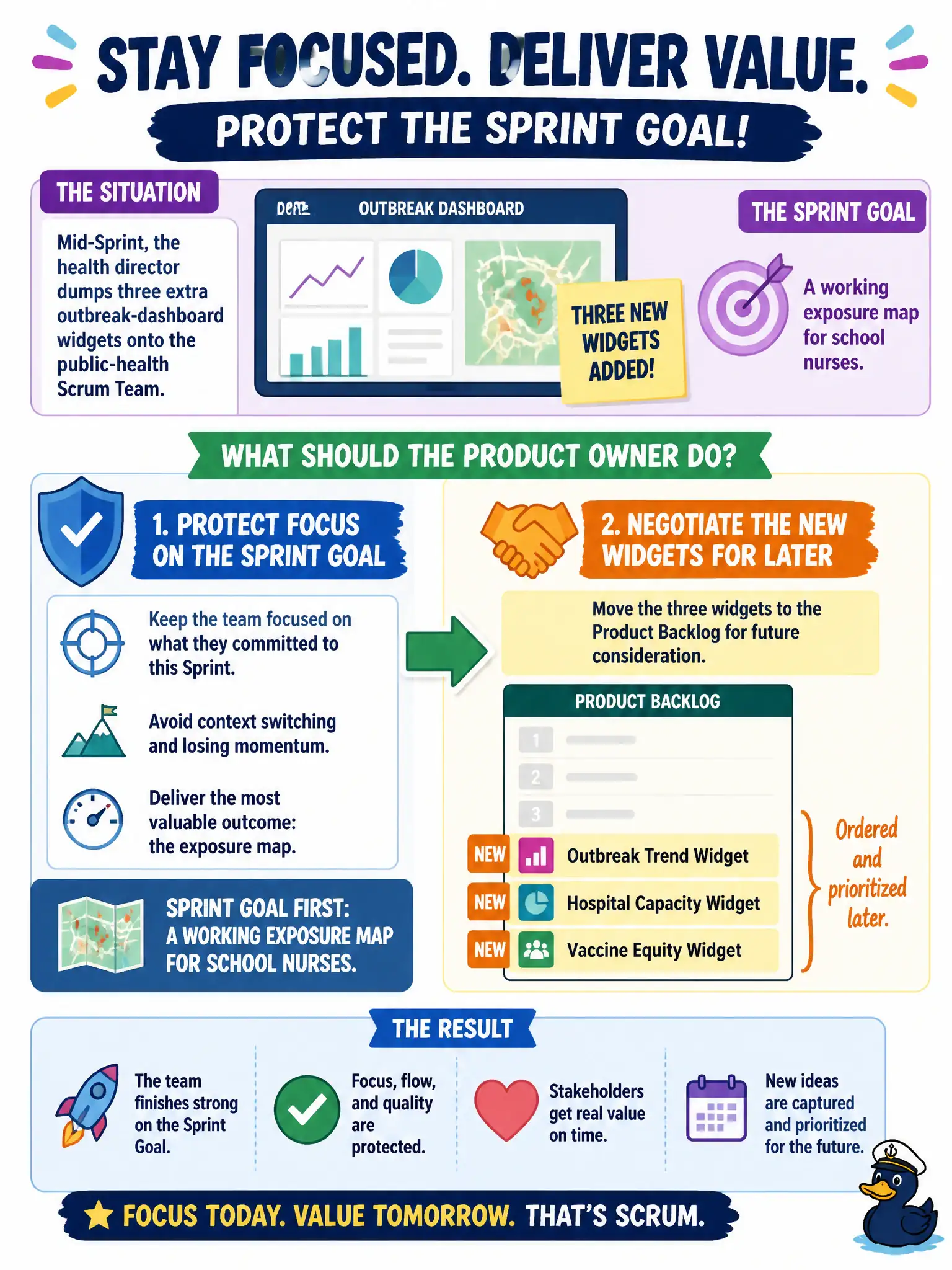
Focus, expressed through the Sprint Goal, is how a Scrum Team delivers a coherent Increment instead of scattered output. Mid-Sprint, when a health director dumps three extra outbreak-dashboard widgets onto a public-health team whose Sprint Goal is a working exposure map for school nurses, the Product Owner should protect focus on that Sprint Goal and negotiate the new widgets onto the Product Backlog for later ordering rather than thrashing the Sprint.
Adding the widgets immediately so executive urgency always outranks the Sprint Goal destroys focus and likely Done. Canceling Daily Scrum for the rest of the Sprint to free hours for extra widgets removes the Developers' daily inspection of progress toward the goal. Asking each Developer to take a personal widget side-quest without changing the Sprint Backlog creates hidden work and splinters accountability.
Exam caveat: PSPO II focus items treat mid-Sprint executive inserts as Product Backlog candidates, not automatic scope; the Sprint Goal holds unless the Product Owner cancels for obsolescence.
Operational check: capture the three widgets on the Product Backlog the same day, keep the exposure-map Sprint Goal unchanged, and revisit widget order in the next Planning with evidence of relative school-nurse value.