
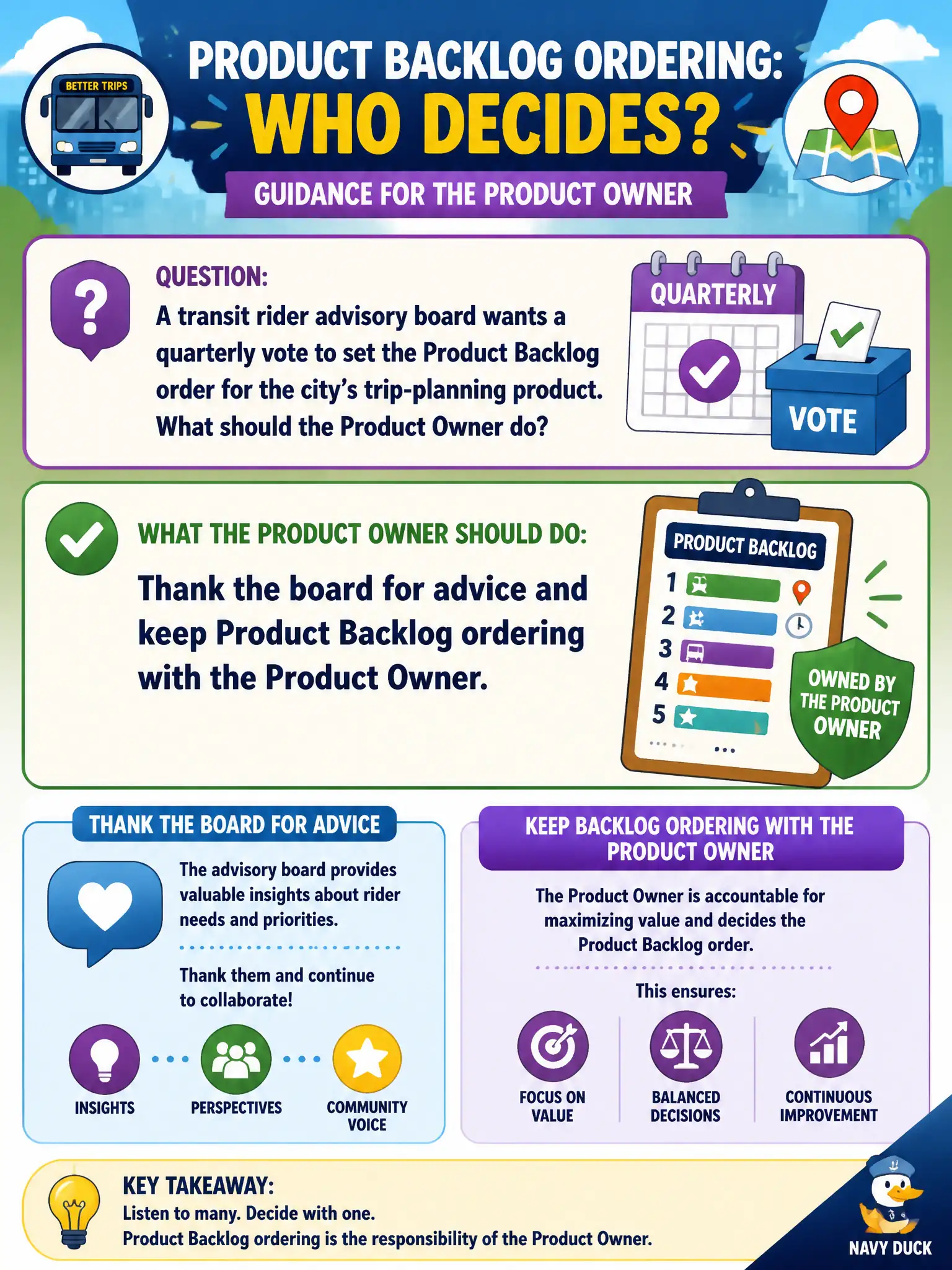
A transit rider advisory board wants a quarterly vote to set the Product Backlog order for the city’s trip-planning product. What should the Product Owner do?
Select an answer to reveal the explanation.
Short Explanation
An advisory board is a sounding board, not a steering wheel. Votes are useful opinions about pain, not a substitute for one person accountable for value. If the backlog is elected, nobody owns the hard no.
Full Explanation
Customer advisory groups improve discovery and legitimacy for a city’s trip-planning product, but they do not own Product Backlog order. Scrum keeps a single Product Owner accountable for maximizing value; committee ranking produces compromise stacks rather than coherent Product Goal progress. The Product Owner should thank the transit rider advisory board for advice, inspect votes as evidence of pain and demand, and still make the order decision. Dual ownership or finance-weighted votes merely relocate the committee problem.
Adopting the quarterly vote as the official ordering method fails because stakeholder engagement cannot replace single-person accountability for value. Asking finance to weight votes by fare-box contribution fails by reducing civic value to revenue contribution and still outsourcing order. Converting the board into a second Product Owner fails by splitting accountability and inviting conflicting orders.
Exam caveat: Advisory input is welcome; Product Backlog ordering stays with one Product Owner. Operational check: After each advisory session, publish which voted themes entered the backlog, which wait, and which conflict with the Product Goal—so the board sees influence without holding the steering wheel.