
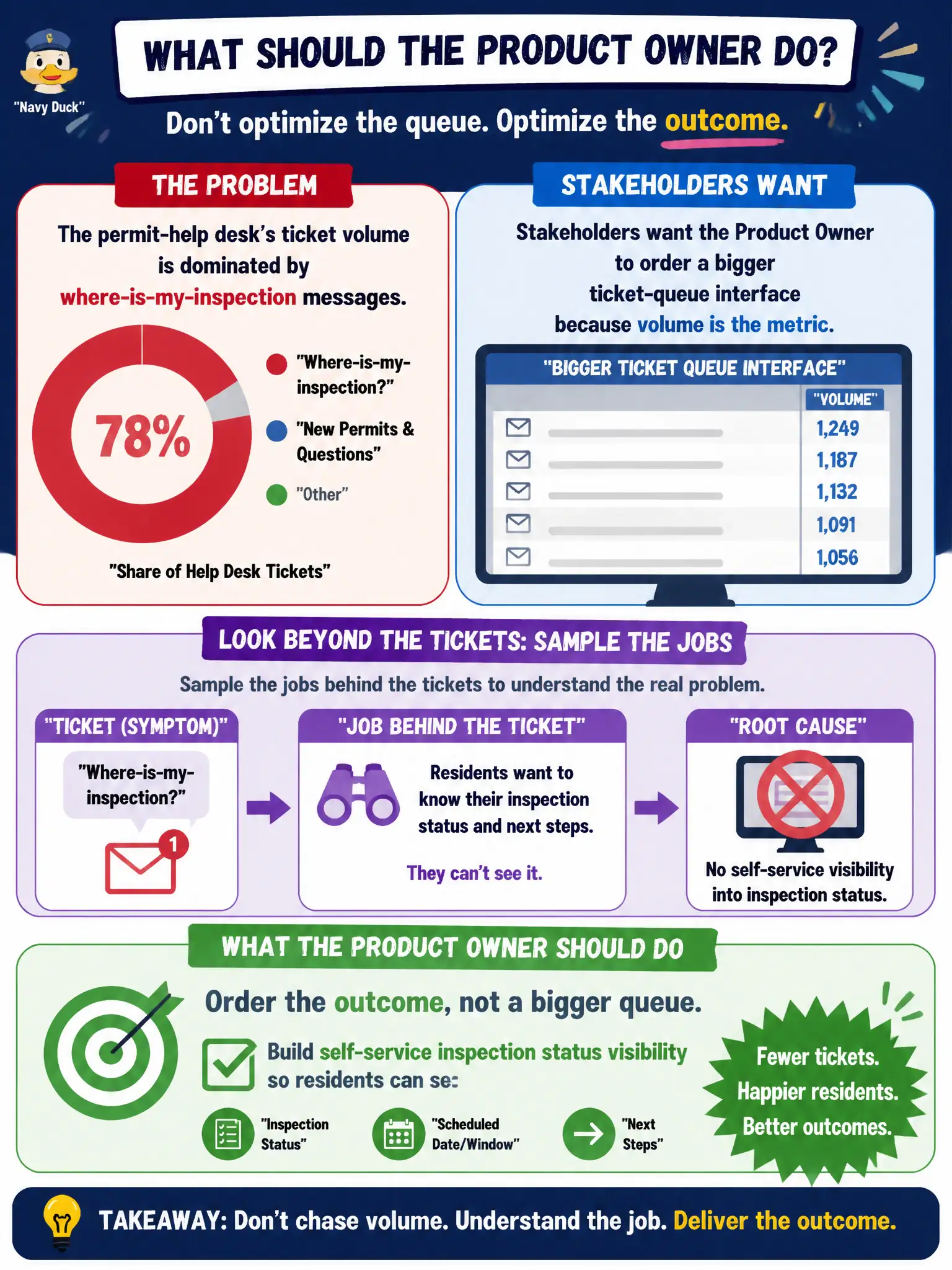
The permit-help desk's ticket volume is dominated by where-is-my-inspection messages. Stakeholders want the Product Owner to order a bigger ticket-queue interface because volume is the metric. What should the Product Owner do?
Select an answer to reveal the explanation.
Short Explanation
A pile of where-is-my-inspection tickets is not a request for a bigger inbox. It is people trying to do a job: know when the inspector is coming. Count the tickets, sure—but order the product around the job underneath.
Full Explanation
Ticket volume is often a symptom metric, not the job to be done. When the permit-help desk is dominated by where-is-my-inspection messages and stakeholders want a bigger ticket-queue interface because volume is the metric, the Product Owner should sample the jobs behind the tickets—residents cannot see inspection status—and order that outcome. Ordering a larger ticket inbox because volume is the clearest customer signal invests in the symptom. Auto-closing tickets after forty-eight hours so volume drops and the product looks healthier games the metric. Freezing new product work until the help desk is fully staffed treats staffing as a substitute for fixing the product gap. Exam caveat: help-desk tooling can still be valuable, but advanced Product Ownership looks for the unmet resident job driving contact volume. Operational check: analyze ticket samples, order transparent inspection-status work on the Product Backlog, measure resulting contact-rate changes, and refuse inbox enlargement as the primary response to status blindness. Keep civic stakeholders focused on inspectable outcomes for residents and operators rather than inbox politics or vanity metrics. Re-check the ordering rationale after the next Sprint Review.