
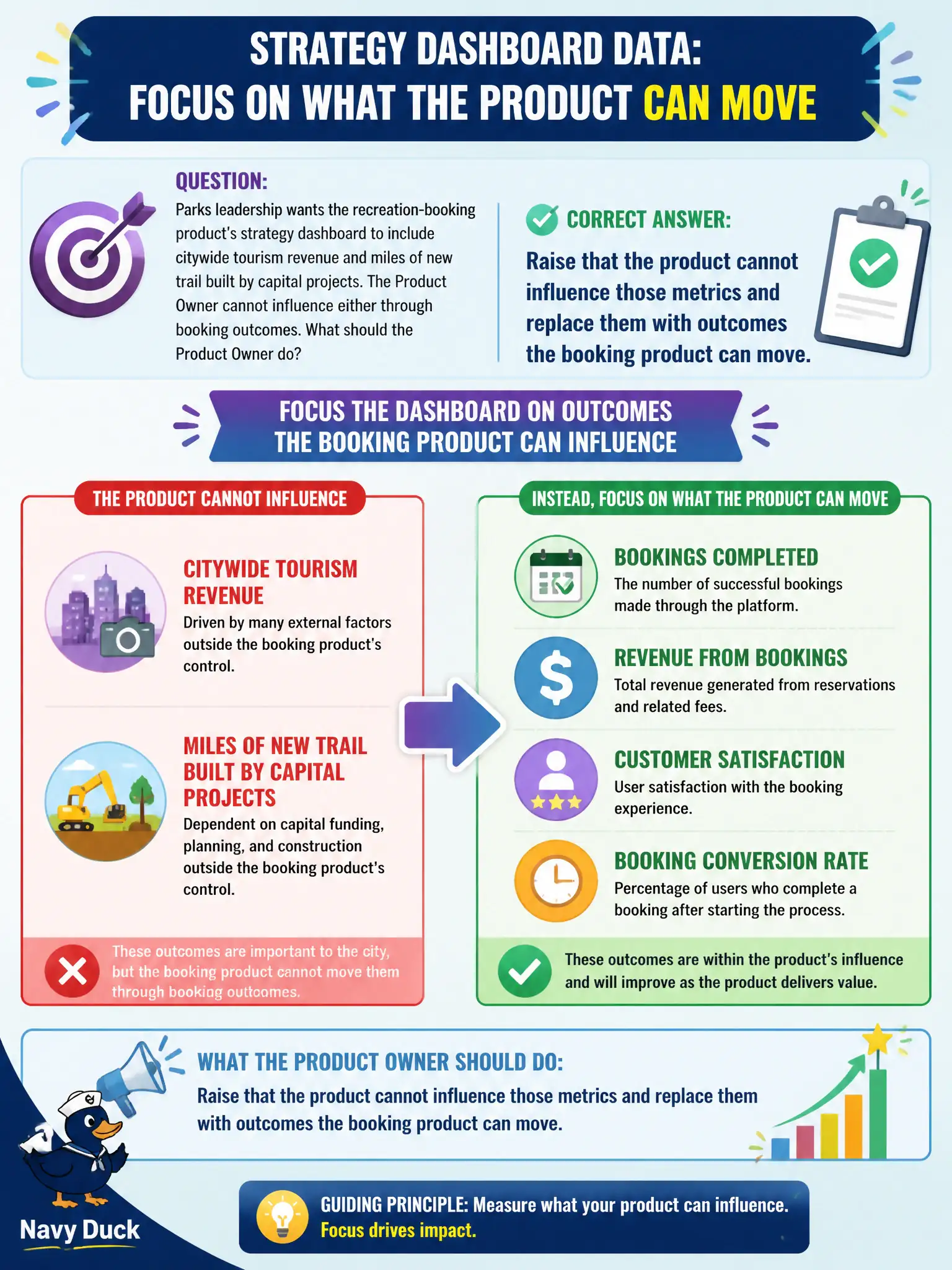
Parks leadership wants the recreation-booking product's strategy dashboard to include citywide tourism revenue and miles of new trail built by capital projects. The Product Owner cannot influence either through booking outcomes. What should the Product Owner do?
Select an answer to reveal the explanation.
Short Explanation
If the scoreboard is the weather, no amount of better booking will change it. Tourism revenue and miles of trail are mostly other people's jobs. Call out the theater and pick measures the recreation product can actually nudge.
Full Explanation
Product metrics must be influenceable by the product. When parks leadership wants the recreation-booking strategy dashboard to include citywide tourism revenue and miles of new trail built by capital projects—outcomes the Product Owner cannot move through booking—the Product Owner should raise that limitation and replace them with outcomes the booking product can move, such as reservation completion, no-shows, or equitable access to scarce facilities. Accepting both metrics so the product appears strategic in the annual report invites false accountability. Optimizing the interface to mention tourism and trails so the metrics feel closer is cosmetic alignment. Asking Finance to allocate a share of tourism revenue to the Scrum Team as a proxy KPI invents a financial fiction. Exam caveat: lagging city metrics can provide context, but Product Owners are judged on outcomes their backlog can affect. Operational check: publish booking-influenceable outcome metrics, remove non-influenceable KPIs from the product’s success definition, align Product Backlog order to those outcomes, and inspect them in Sprint Review with parks leadership. Keep civic stakeholders focused on inspectable outcomes for residents and operators rather than inbox politics or vanity metrics.