
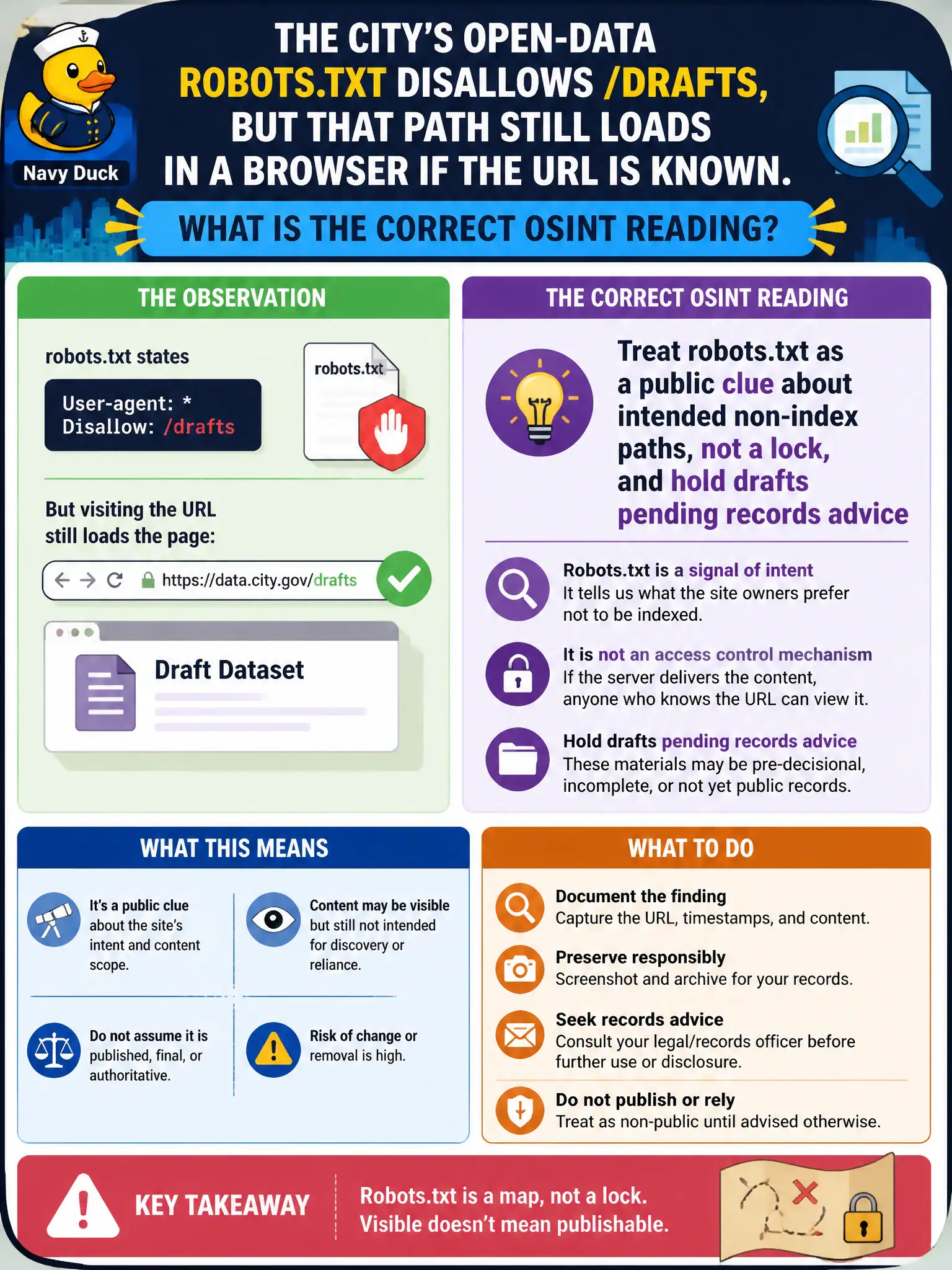
The city's open-data robots.txt disallows /drafts, but that path still loads in a browser if the URL is known. What is the correct OSINT reading?
Select an answer to reveal the explanation.
Short Explanation
robots.txt is a "please don't index this" sign, not a deadbolt. The file is a public clue about intended privacy, and a loadable /drafts URL is not a green light to republish civic drafts. Note the path, then get records advice before anyone copies it out.
Full Explanation
If the city’s open-data robots.txt disallows /drafts but that path still loads in a browser when the URL is known, the correct OSINT reading is to treat robots.txt as a public clue about intended non-index paths, not a lock, and hold drafts pending records advice. robots.txt is a crawler courtesy file, not an access-control system. Republishing every draft dataset because a loadable URL is an automatic public-records release fails; loadability is not the same as authorized release under records law. Treating robots.txt as a lock that makes /drafts legally inaccessible no matter what loads fails; the file does not create legal inaccessibility by itself. Fuzzing the rest of the civic site for other disallowed paths and dumping them to a public gist fails as aggressive enumeration and uncontrolled republication. Exam caveat: discovered drafts should be escalated to records/counsel before any wider sharing. Operational check: capture robots.txt and the loadable /drafts response with dates; do not republish; seek records guidance on whether the content is intentionally public. In municipal practice, record the rationale in the case file so future staff know which control was chosen and which failure modes the rejected options would create for city services.