
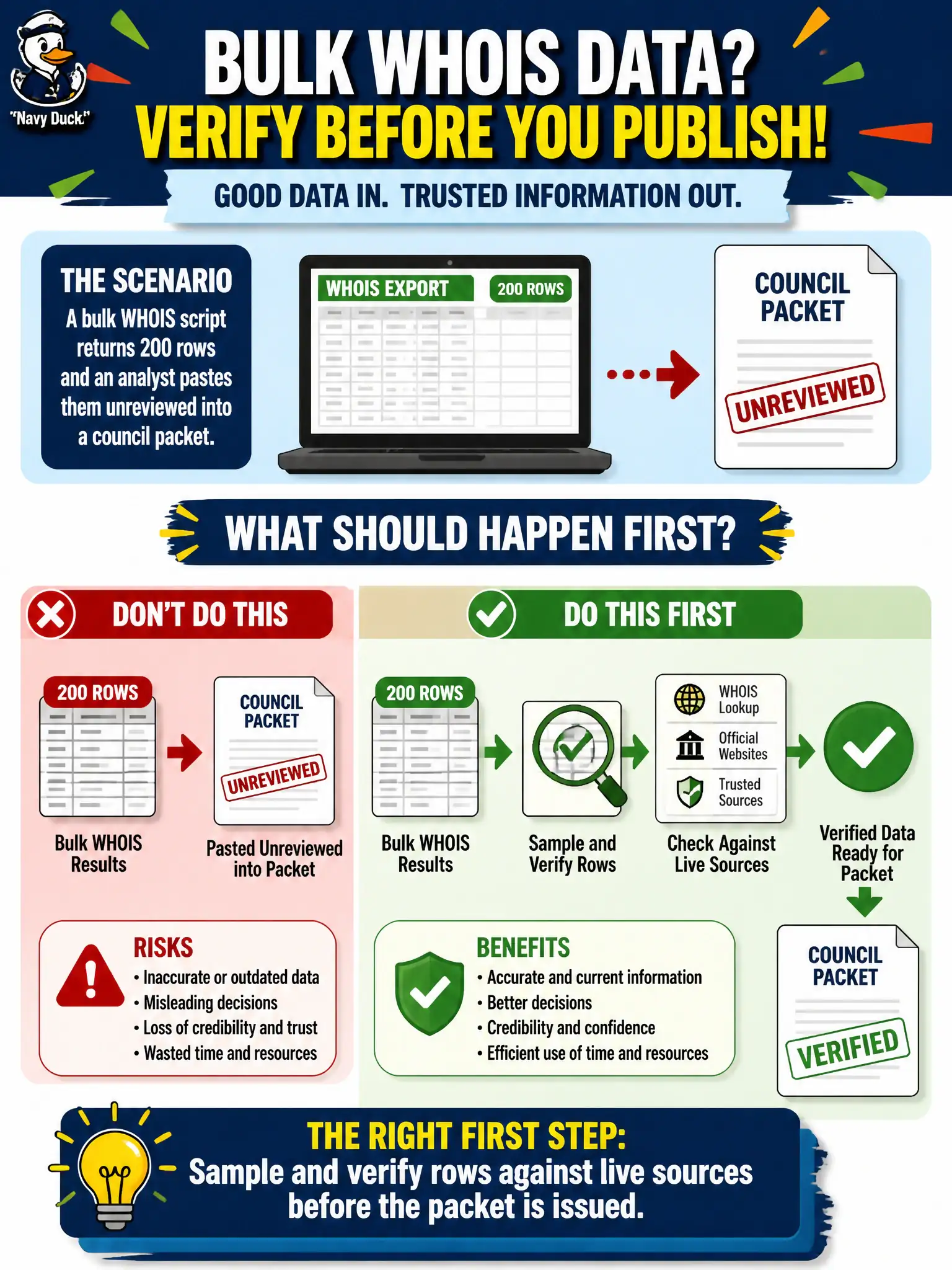
A bulk WHOIS script returns 200 rows and an analyst pastes them unreviewed into a council packet. What should happen first?
Select an answer to reveal the explanation.
Short Explanation
Scripts are fast typists, not fact-checkers. Spot-check the WHOIS rows against live sources before council sees them. Garbage in a packet is still garbage, even if a script printed it.
Full Explanation
Automated harvests can include stale, truncated, or mismatched rows. When a bulk WHOIS script returns 200 rows and an analyst pastes them unreviewed into a council packet, the required first step is to sample and verify rows against live sources before the packet is issued. Scripts are fast typists, not fact-checkers, and civic publications inherit any automation errors.
Publishing all 200 rows because automation does not err treats machine output as infallible. Deleting the output and inventing registrar names from memory replaces evidence with fiction. Forwarding the raw CSV to the vendor as an accusation weaponizes an unverified dump.
Exam caveat: WHOIS privacy and thin records can look like 'errors'; verification distinguishes redaction from script bugs before council messaging.
Operational check: sample a subset of rows, confirm against authoritative public WHOIS/registrar pages, correct or annotate discrepancies, then publish only verified material with retrieval dates—never a raw unreviewed CSV as accusation. In municipal practice, keep the wording tied to public artifacts, retrieval dates, and the authorized civic question so peers can re-perform the work without guessing intent.