
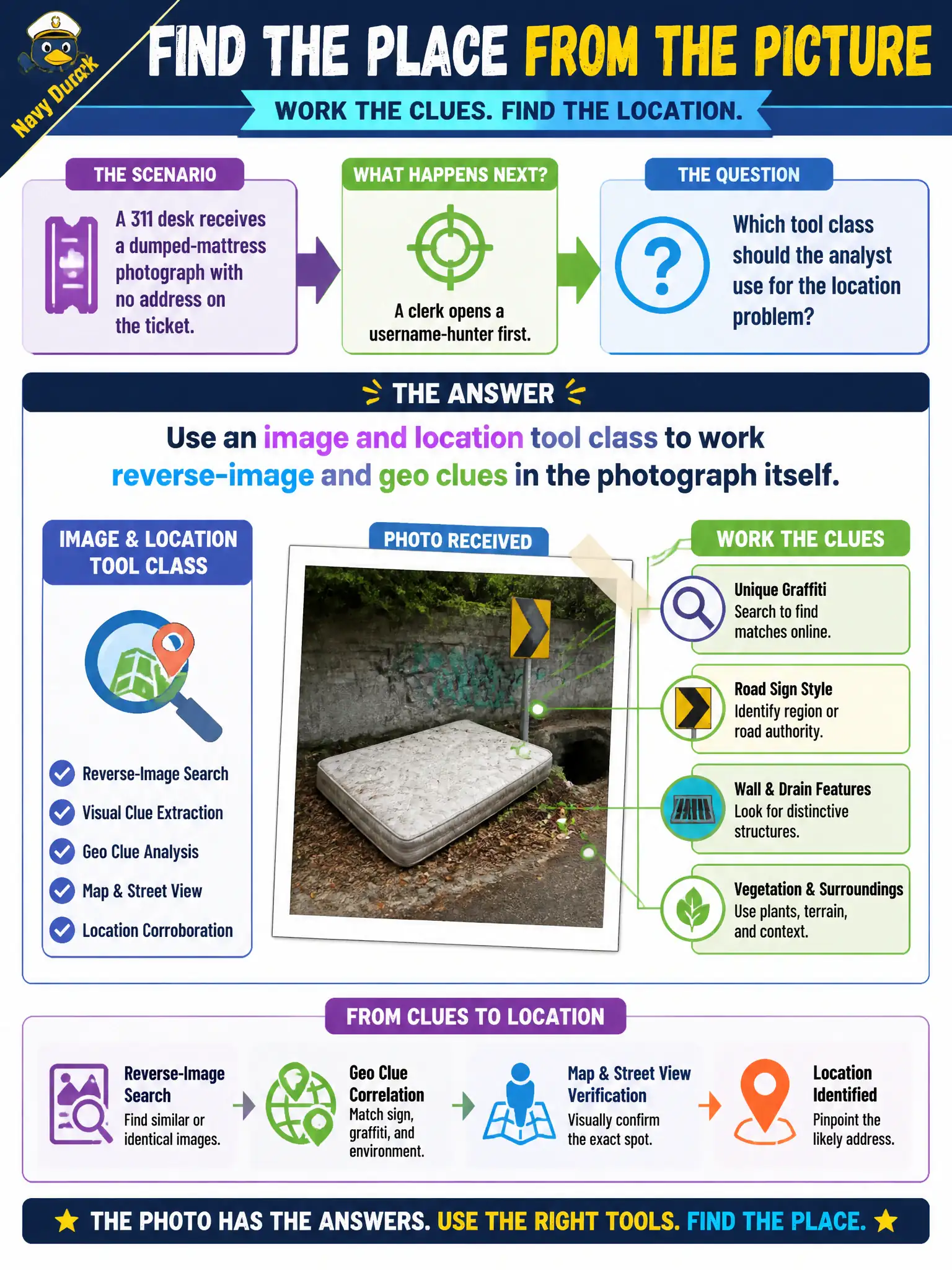
A 311 desk receives a dumped-mattress photograph with no address on the ticket. A clerk opens a username-hunter first. Which tool class should the analyst use for the location problem?
Select an answer to reveal the explanation.
Short Explanation
A photo that needs a place is a camera-and-map job, not a name-tag hunt. Think toolbox drawers: you grab the one that matches the thing in your hand. Reverse-image and geo classes work the 311 picture; username tools wait until you actually have a username.
Full Explanation
Tool-class selection starts from the identifier in hand. A 311 dumped-mattress photograph with no address and no social handle is an image and location problem, so the analyst should use reverse-image search, remaining metadata, and map or landmark correlation against the photograph itself. Matching the tool drawer to the artifact keeps civic response efficient and attributable.
Opening a username-correlation hunter and guessing handles from the photo filename answers an identity pivot that does not yet exist and will not place the mattress. Querying a wireless observation map for SSIDs near the caller's listed home ignores the photograph—the only location-bearing object on the ticket. Opening closed utility-billing screens for the nearest parcel owner and labeling that pull OSINT leaves public-source methods for non-public systems.
Exam caveat: image/geo classes may still fail if the photo lacks landmarks; report a gap rather than inventing a username or abusing closed utility data to force a parcel.
Operational check: run reverse-image and landmark/map correlation on the 311 photo, cite hits with dates, and only pivot to username or other classes if a new identifier appears in the image or results.