
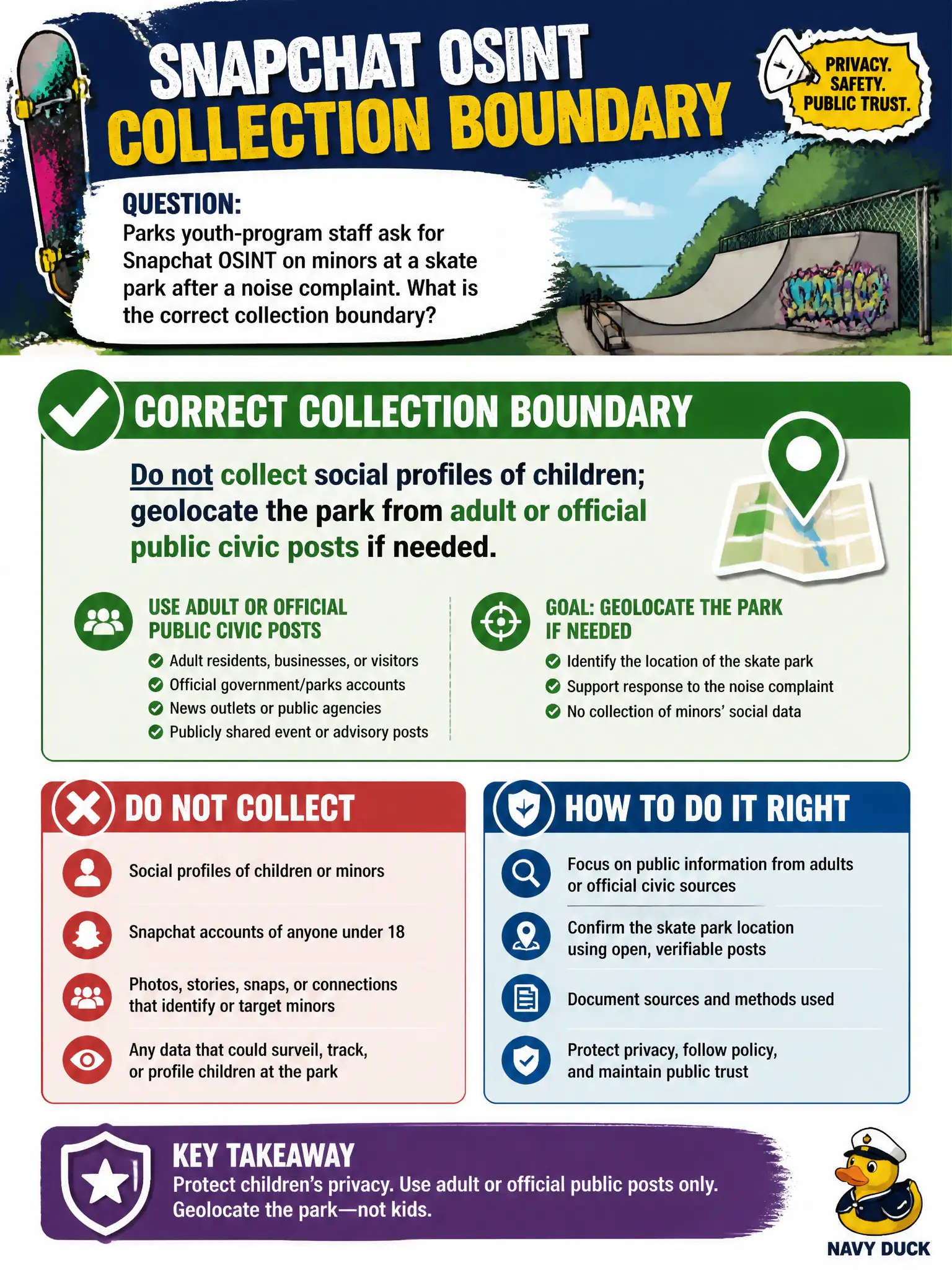
Parks youth-program staff ask for Snapchat OSINT on minors at a skate park after a noise complaint. What is the correct collection boundary?
Select an answer to reveal the explanation.
Short Explanation
Kids' social accounts are a stop sign, not a research pool. If the park location matters, use adult or official public posts of the place itself. Following, yearbooking, or friending minors is not civic OSINT.
Full Explanation
When parks youth-program staff ask for Snapchat OSINT on minors at a skate park after a noise complaint, the correct collection boundary is not to collect social profiles of children; geolocate the park from adult or official public civic posts if location confirmation is needed. Protecting minors overrides curiosity about who was noisy and keeps the city inside ethical OSINT practice. Building a sock puppet to follow kids’ public stories for safety documentation fails as targeting children and as unethical sock use. Reverse-searching school yearbook photos of the skaters to attach names to the complaint fails as identity exploitation of minors unrelated to abating noise. Asking nearby teens to friend the city’s real Snapchat so staff can screenshot their maps fails as recruiting children into surveillance. Exam caveat: threats or clear safety emergencies may trigger separate mandated reporting paths—not a license for broad social collection on minors for a noise case. Operational check: if the park location matters, use official parks pages or adult public posts of the facility; document the refusal to collect minors’ profiles in the noise-complaint OSINT log for accountability. In municipal practice, record the rationale in the case file so future staff know which control was chosen and which failure modes the rejected options would create for city services.