
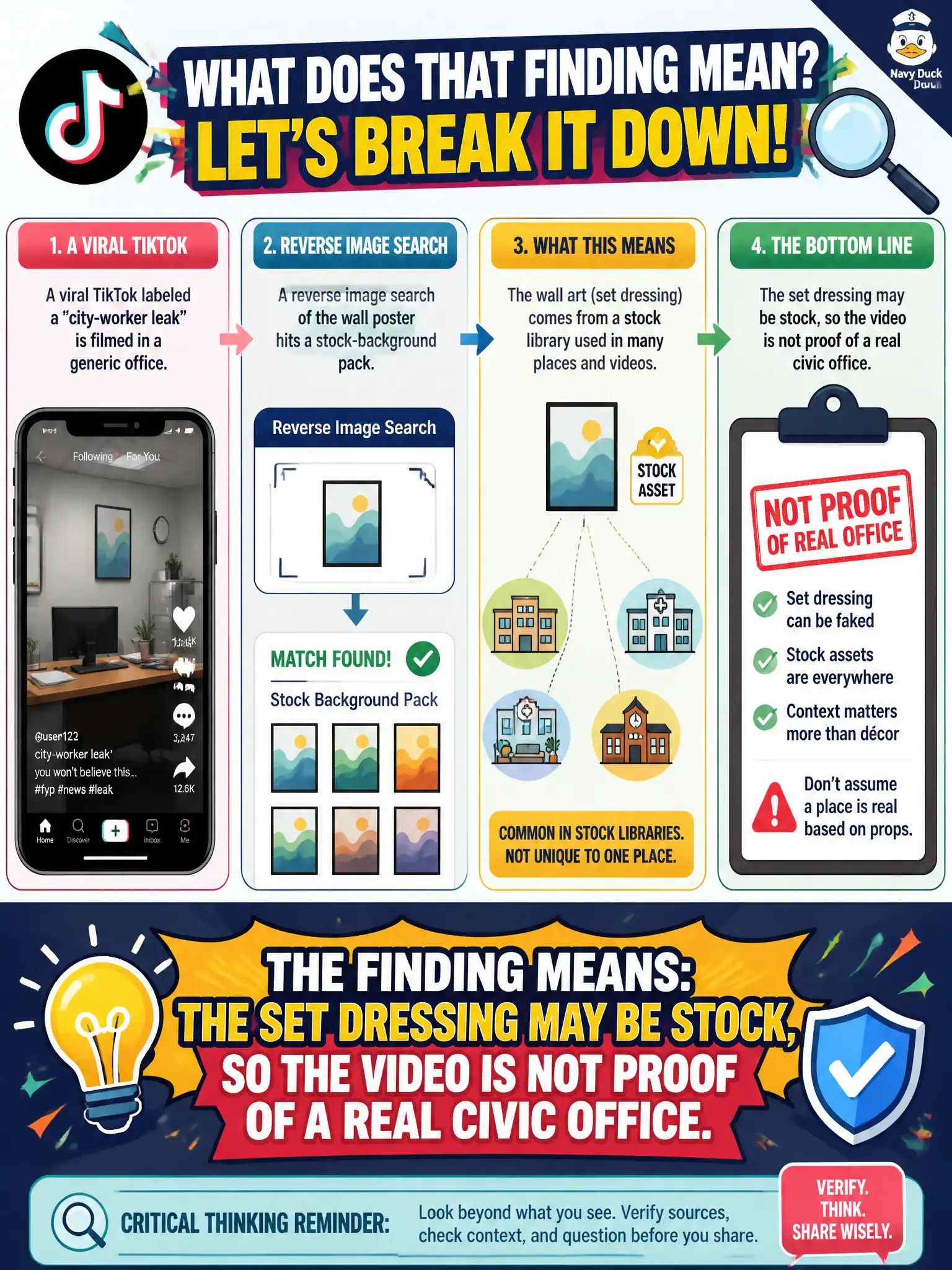
A viral TikTok labeled a city-worker leak is filmed in a generic office, and reverse image search of a wall poster hits a stock-background pack. What does that finding mean?
Select an answer to reveal the explanation.
Short Explanation
A stock poster on the wall is like a movie set with a fake skyline behind the actor. If the background is catalog art, the clip has not proven it was shot in city hall. Check the scenery before treating a 'leak' as an inside job.
Full Explanation
When a viral TikTok labeled a city-worker leak is filmed in a generic office and reverse image search of a wall poster hits a stock-background pack, that finding means the set dressing may be stock, so the video is not proof of a real civic office. Background OSINT protects municipalities from acting on staged or misattributed “leaks” that can panic residents or staff. Treating stock posters as proof the speaker is a current city employee fails; catalog art does not authenticate employment or location. Publishing the worker’s home address taken from objects in the video fails as doxxing outside civic OSINT purpose and ethics. Claiming reverse image search of backgrounds is out of scope for social-media OSINT fails; background analysis is a standard authenticity check in open-source work. Exam caveat: stock backgrounds falsify or weaken location claims but do not by themselves prove the speaker’s identity either way—continue with other public checks if identity truly matters. Operational check: reverse-search distinctive wall art and props; document stock hits with sources; caveat the “city office” claim in the PIO or HR-adjacent briefing and avoid publishing personal addresses from the frame.