
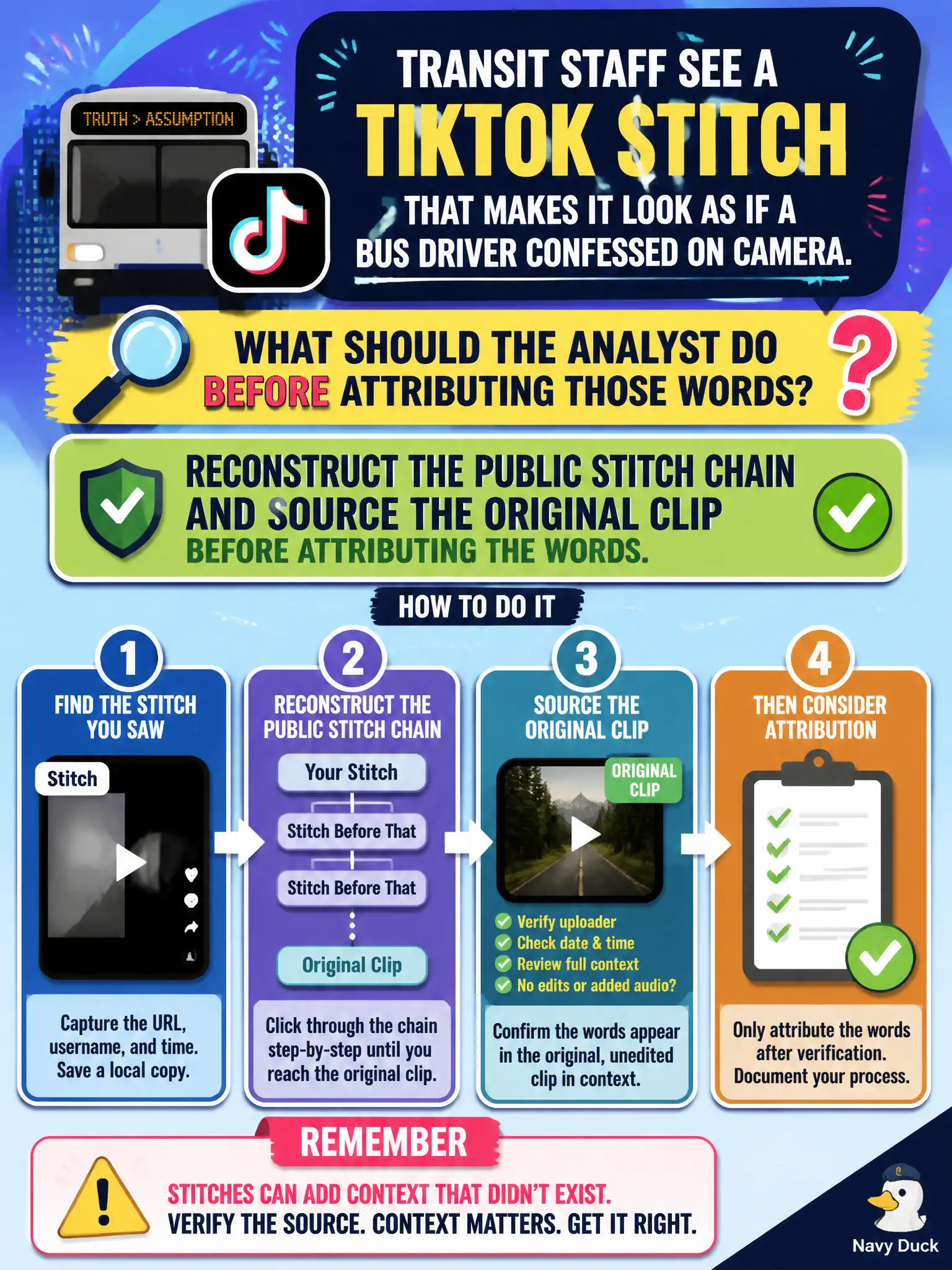
Transit staff see a TikTok stitch that makes it look as if a bus driver confessed on camera. What should the analyst do before attributing those words?
Select an answer to reveal the explanation.
Short Explanation
A stitch is a remix, like clipping someone else's sentence onto a new intro so it sounds like a confession. Trace the public chain back to the original clip before hanging those words on a driver. The loud remix is not the source.
Full Explanation
When transit staff see a TikTok stitch that makes it look as if a bus driver confessed on camera, the analyst should reconstruct the public stitch chain and source the original clip before attributing those words. Remix culture can recontextualize speech, and municipal incident reports must not hang quotations on the wrong employee. Quoting the stitch in the incident report as the driver’s original statement fails by accepting remixed framing as primary speech and risking unfair discipline. Demanding TikTok’s private stitch graph by subpoena as the first OSINT step fails; public chain reconstruction comes before closed legal process. Treating remix culture as proof the confession is authentic because stitches cannot change meaning fails; stitches routinely alter apparent meaning with new intros, cuts, and captions. Exam caveat: even after finding the original, assess whether the driver is correctly identified in that original before workplace-action language enters the file. Operational check: walk public stitch links and saves; capture original and remix URLs with times; attribute only words actually spoken in the sourced original, labeled as such in the transit incident note. In municipal practice, record the rationale in the case file so future staff know which control was chosen and which failure modes the rejected options would create for city services.