
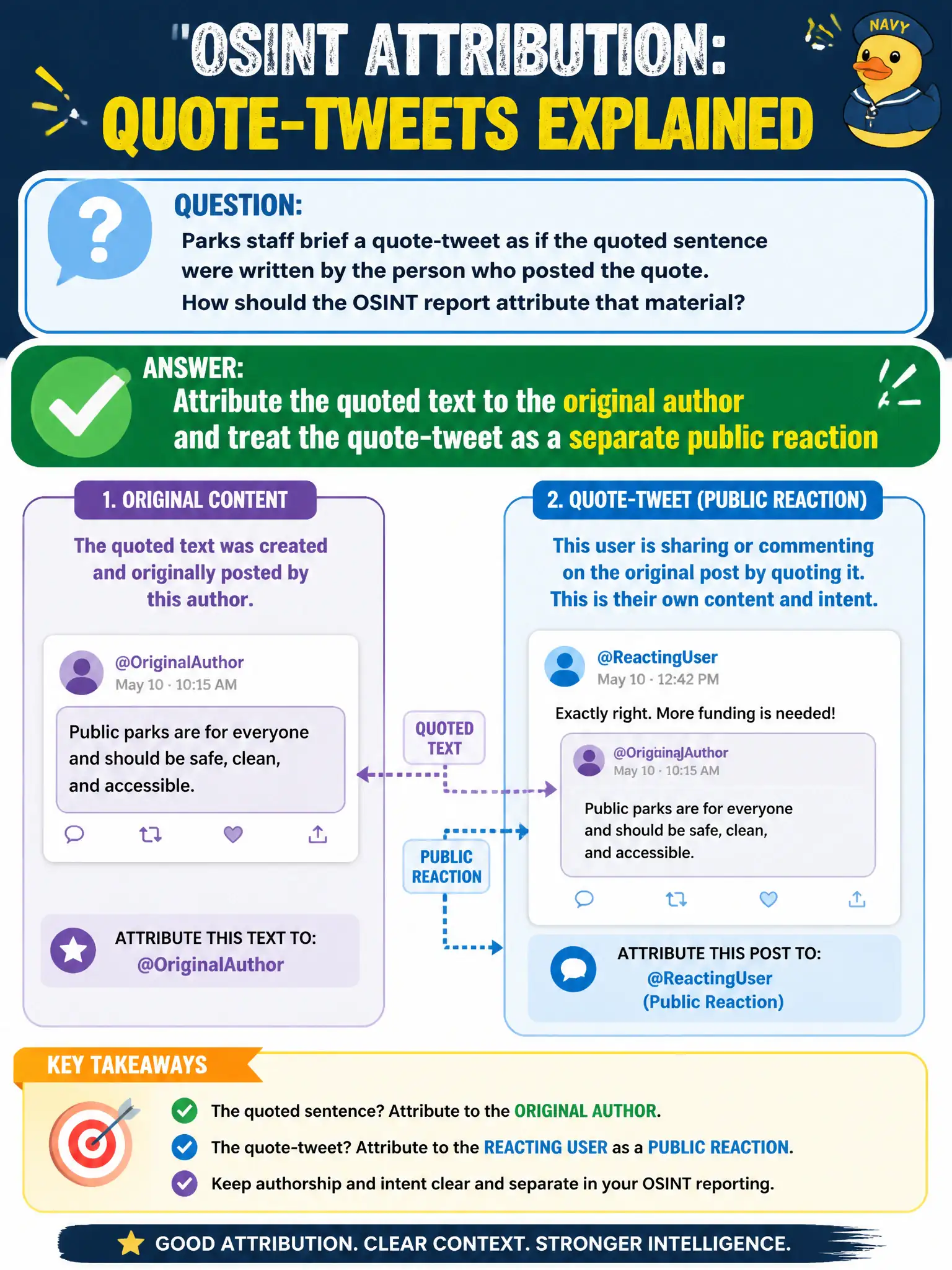
Parks staff brief a quote-tweet as if the quoted sentence were written by the person who posted the quote. How should the OSINT report attribute that material?
Select an answer to reveal the explanation.
Short Explanation
A quote-tweet is a picture frame around someone else's postcard. The words in the frame still belong to the original author, and the person holding the frame only added a reaction. Reports have to keep that chain straight.
Full Explanation
Parks briefings must attribute quote-tweet material correctly: the quoted text belongs to the original author, while the quote-tweet itself is a separate public reaction by the quoting account. Civic OSINT reports keep those layers distinct so council or parks leadership does not brief someone else’s sentence as if the reactor wrote it. Treating the quote-tweet as the original author’s statement because it appears on that timeline fails by conflating display surface with authorship—the quoting timeline hosts a reaction, not a rewrite of ownership. Merging both accounts into one identity merely because they discussed the same park fails as identity conflation; shared topic is not a join key strong enough for identity fusion. Discarding the quote-tweet because quoted posts are not public evidence fails because both the original and the reaction are public social artifacts when visible without login barriers. Exam caveat: attribution discipline is report quality, not optional style; misattribution can become a false public statement by the city. Operational check: capture both URLs, label original author vs reactor, quote each layer separately in the parks briefing memo, and avoid collapsing handles into one person without independent corroboration.