
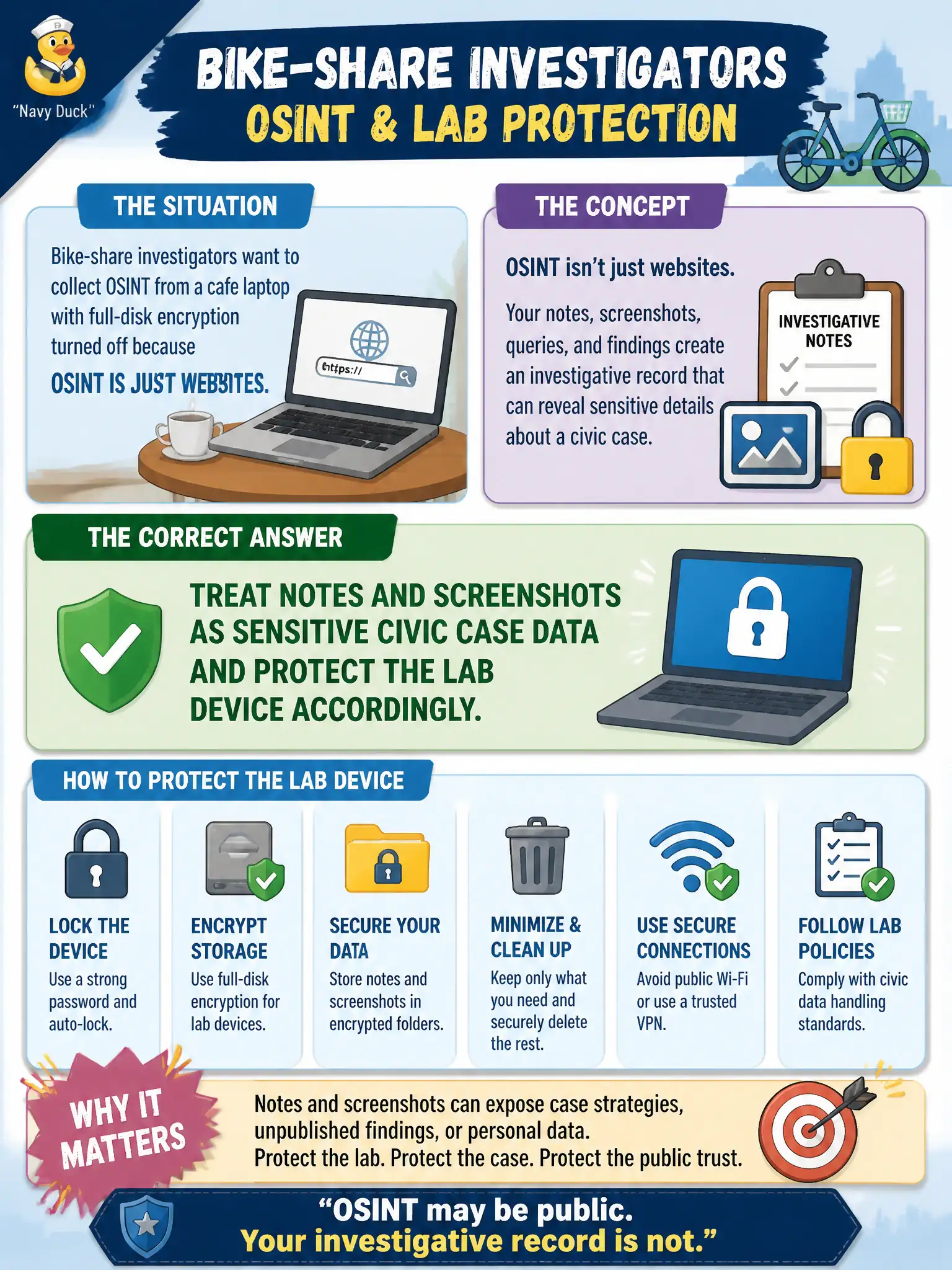
Bike-share investigators want to collect OSINT from a cafe laptop with full-disk encryption turned off because OSINT is just websites. What lab protection should they apply?
Select an answer to reveal the explanation.
Short Explanation
OSINT may start as websites, but the laptop then holds the city's notes and screenshots. That pile is a case file, not a tourist brochure. A cafe machine without disk protection is a lost-backpack problem waiting to happen.
Full Explanation
Notes and screenshots from bike-share OSINT are sensitive civic case data even when sources were public websites; the lab device should use full-disk encryption and normal endpoint protections. Leaving the disk unencrypted because public pages cannot become sensitive once screenshotted ignores how case folders aggregate identifiers, maps, and investigative context. Storing the case folder on an unsigned USB stick left at the cafe between visits invites theft and tampering. Disabling the screen lock so the next analyst can jump on the laptop without a password abandons basic physical control in a public space. Exam caveat: public-source origin does not strip sensitivity from the compiled investigative product. Operational check: confirm full-disk encryption and screen lock are enabled on the research laptop before the next cafe collection session, and keep case exports on approved encrypted storage. Keep the civic purpose, method limits, and exhibit labels aligned so reviewers can see what was public-source work versus other authorities. Document residual uncertainty explicitly rather than implying completeness. Prefer reversible public methods and preserve exhibits that a second analyst can reopen without guessing.