
The library IT lab virtual machine used for OSINT is never snapshotted or reset, and malware from a sketchy event-flyer site persists into the next case. What lab-hygiene practice is missing?
Select an answer to reveal the explanation.
Short Explanation
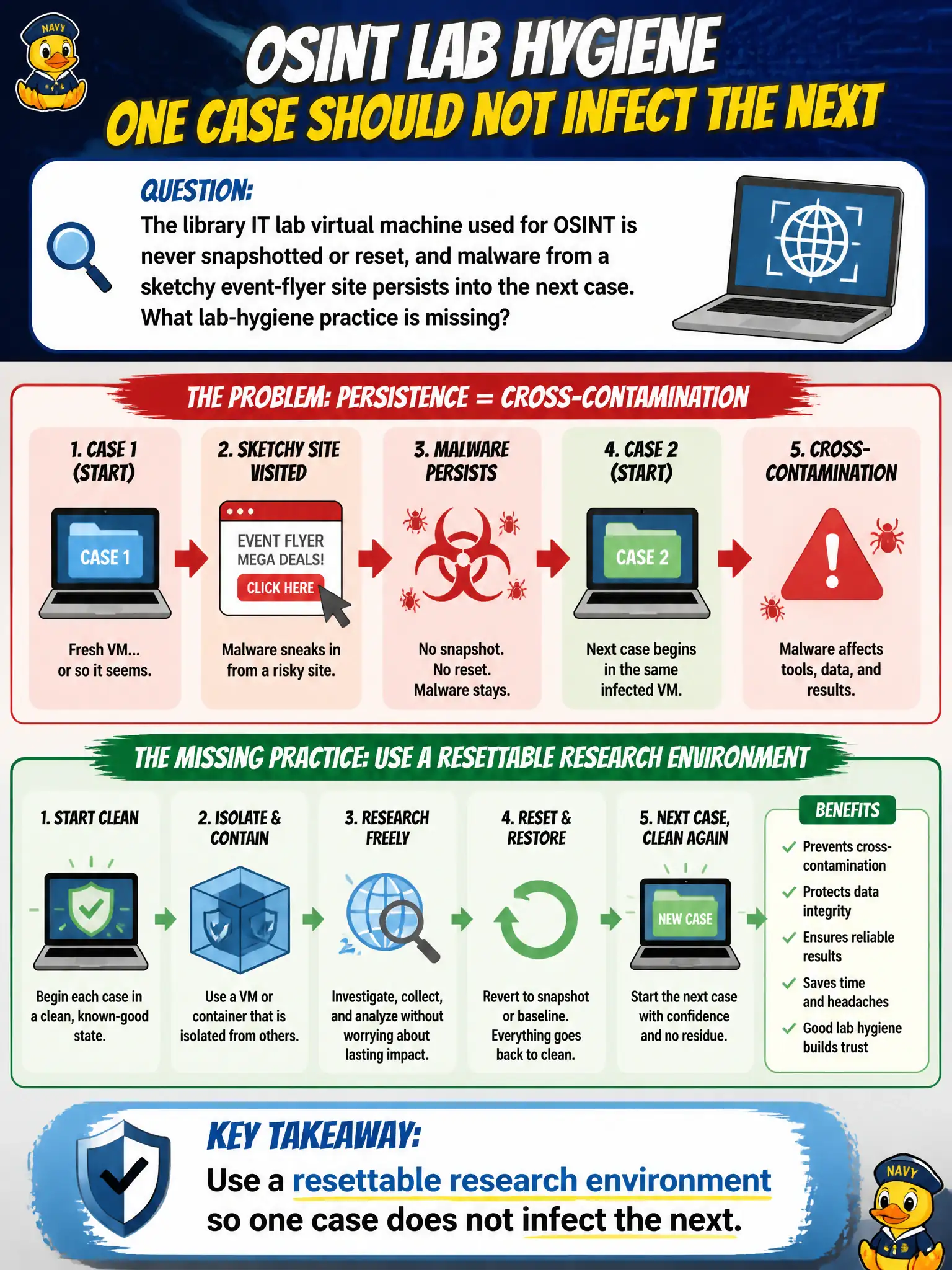
A lab VM that never gets rolled back is a hotel room nobody ever cleans. Whatever the last guest left—including malware from a sketchy flyer site—greets the next case. Snapshots and resets make the research box disposable again.
Full Explanation
A resettable research environment is required so malware or tracking from one sketchy event-flyer site does not persist into the next library OSINT case. Never snapshotting or resetting the lab VM leaves residual compromise across matters. Keeping the infected VM as a museum exhibit for future study is not a hygiene practice for active casework. Moving the VM onto the circulation-desk PC so patrons share the research environment expands exposure. Disabling snapshots because reverting would destroy the only copy of case screenshots confuses exhibit storage with lab state—exhibits should be exported to the case store before reset. Exam caveat: long-lived lab tools can exist on a golden image, but case-tainted state still needs periodic revert. Operational check: after exporting notes and screenshots to the official case repository, revert the research VM to a known-clean snapshot before starting the next matter. Keep the civic purpose, method limits, and exhibit labels aligned so reviewers can see what was public-source work versus other authorities. Document residual uncertainty explicitly rather than implying completeness. Prefer reversible public methods and preserve exhibits that a second analyst can reopen without guessing.