
Stormwater asks an analyst for a callback number’s “current GPS” from OSINT. What should the analyst explain?
Select an answer to reveal the explanation.
Short Explanation
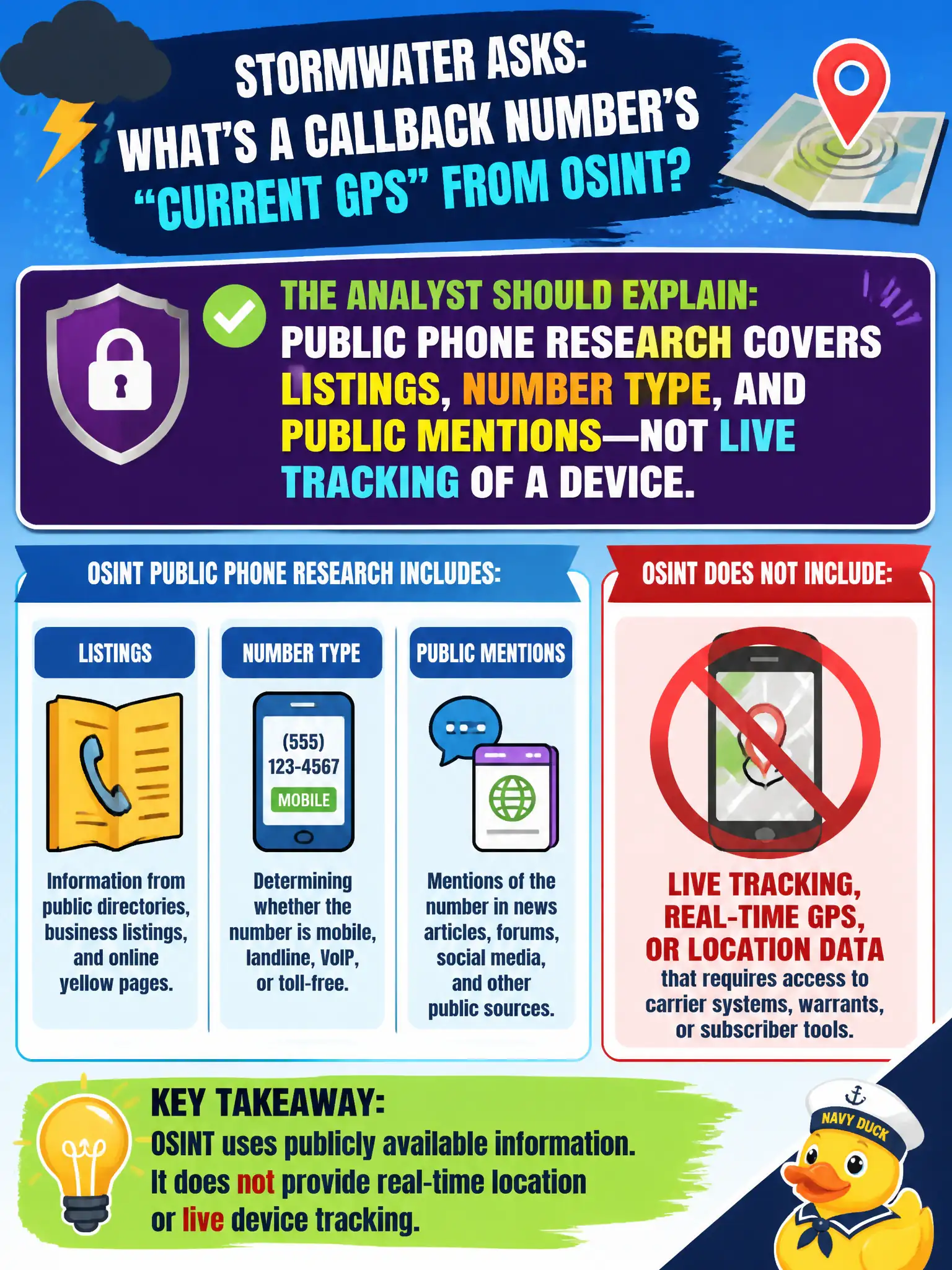
OSINT can read the label on the bottle; it cannot GPS-track the bottle down the street. Public phone work is listings, type, and where the number is already published. Live device location is a different legal world.
Full Explanation
When stormwater asks an analyst for a callback number’s “current GPS” from OSINT, the analyst should explain that public phone research covers listings, number type, and public mentions—not live tracking of a device. OSINT can characterize and find publications of a number; it cannot lawfully ping a handset’s location without appropriate legal process and technical access. Claiming public reverse-lookup pages stream live GPS for any number misstates what those pages publish. Asserting that dialing with a hidden ID returns coordinates in the ringback invents a capability that ordinary telephony does not provide to civic analysts. Saying phone OSINT includes carrier-side location pings without a legal process collapses OSINT into surveillance authorities the curriculum does not grant. Exam caveat: PORP phone OSINT stops at public listings and mentions; live device location is outside scope. Operational check: offer number-type and public-mention research instead, document the refused GPS request, explain the legal-process path if stormwater truly needs subscriber or location data, and keep the engagement inside authorized public-source methods. Stormwater work orders should receive number-type and public-mention notes instead of a fictional GPS point that OSINT cannot produce.