
A permit applicant's email appears in a 2013 public dump and in no later public corpora the analyst can find. How should licensing be briefed on risk?
Select an answer to reveal the explanation.
Short Explanation
A 2013 dump is last decade's spilled coffee, not today's kitchen fire. Mention it, date it, and do not dress it up as a live takeover. Recency matters when licensing asks how worried to be.
Full Explanation
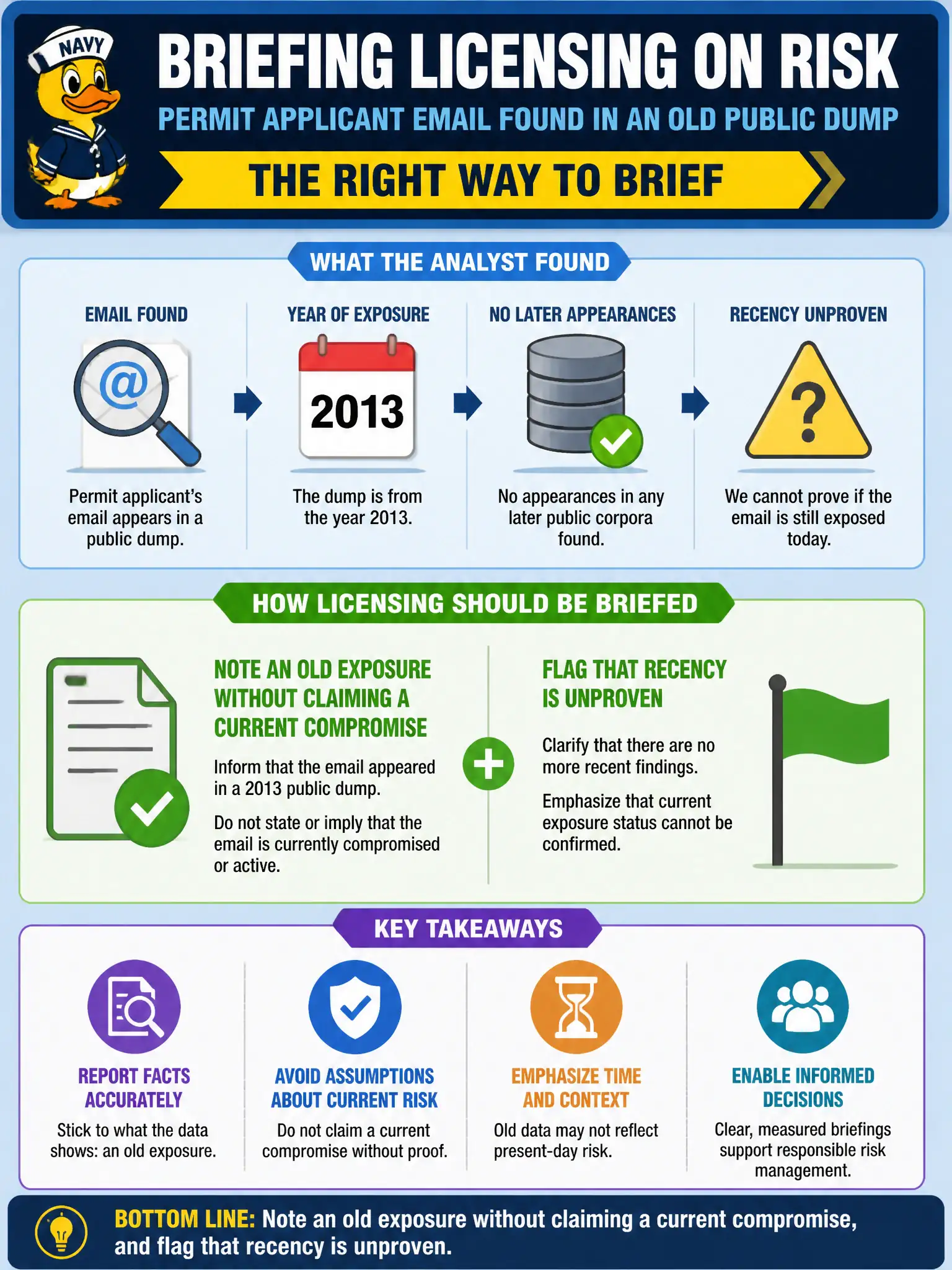
A 2013 public dump hit on a permit applicant’s email is an old exposure signal, not proof of a current compromise of city systems. Licensing should be briefed that the address appeared in a dated corpus, that no later public corpora in the analyst’s search showed the same hit, and that recency is therefore unproven. Treating a thirteen-year-old dump as evidence of a live account takeover invents currency the data do not support and can trigger disproportionate civic responses against an applicant. Ignoring dump dates and briefing every public breach as equally current erases the triage value that breach indexes exist to provide for municipal risk conversations. Locking the applicant out of all city systems indefinitely on that old hit alone converts a historical exposure note into punishment without a current-risk finding. Exam caveat: PORP requires dating breach hits and stating when recency cannot be shown, rather than equating any dump appearance with active compromise of city services. Operational check: cite dump name or index, capture date, and year of the corpus; note which later corpora were checked with no hit; brief licensing in exposure-class language only; and escalate any live-compromise concern through authorized IT channels instead of stretching OSINT chronology in the permit file.