
An apparel retailer limits an analyst with endpoint scope only. That analyst runs XQL over cases and issues and still sees rows outside the endpoint limit. Why do those rows remain?
Select an answer to reveal the explanation.
Short Explanation
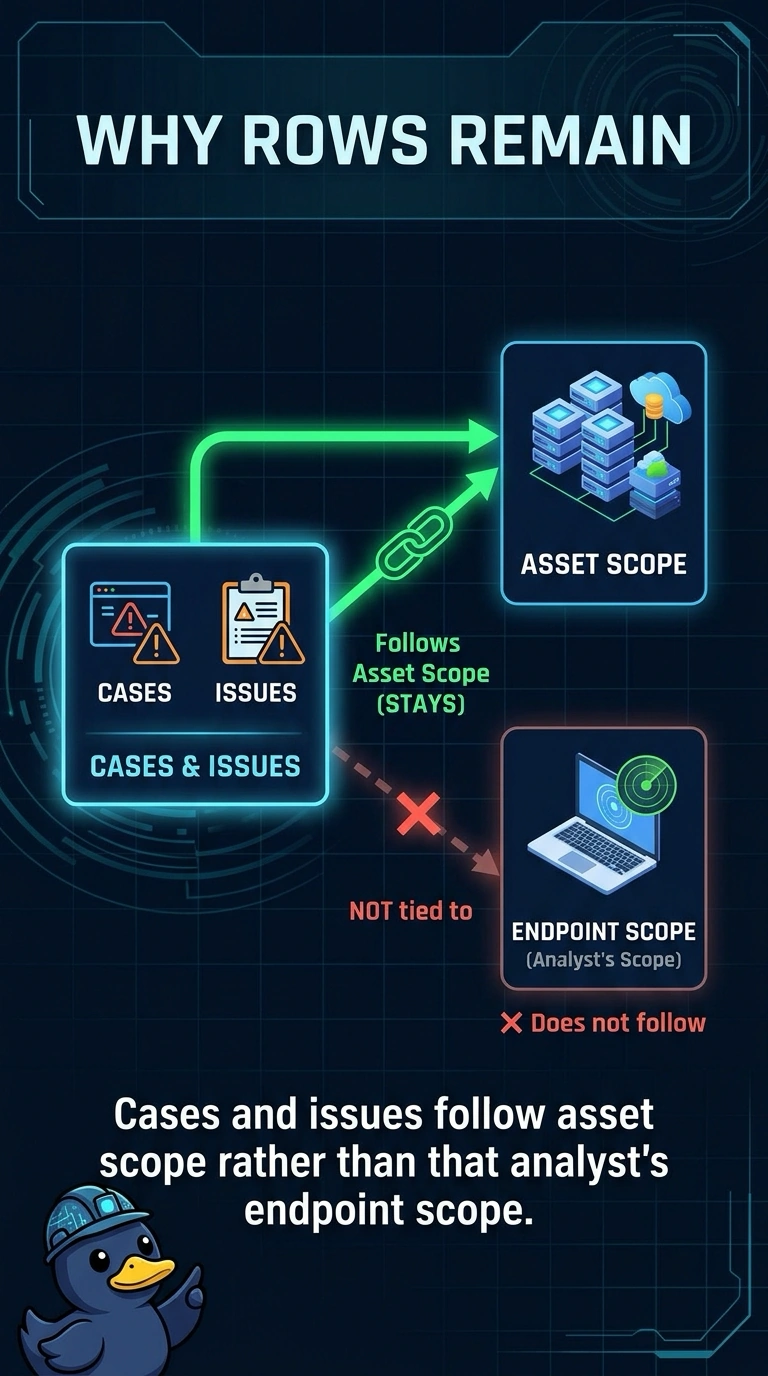
Think of endpoint scope as the key to the laptop cage, not the key to the case files. You still see cases and issues outside that endpoint limit because those queries follow asset scope. Expecting the endpoint limit to hide them is the trap.
Full Explanation
XQL over cases, issues, findings, and asset inventory follows asset scope. XQL cases/issues respect Assets and Cases and Issues scopes, not Endpoints. Endpoint scope also affects endpoint administration, Action Center and applicable Security-domain case/issue visibility in other interfaces; do not generalize the XQL exception to all case views. An analyst who has only an endpoint limit can still see case and issue rows that their asset scope allows, which is why the apparel query is not empty. Treating cases and issues as if they followed endpoint scope predicts hidden rows that the product does not hide that way. A missing dashboard permission would block the screen or the query outright, including rows the asset scope allows, and it would not selectively ignore an endpoint list. A static group cannot be an access scope, and saving one does not explain why endpoint scope failed to filter cases. Exam caveat: if the same analyst's asset scope is also narrow, cases and issues will shrink for that reason, and endpoint scope is still the wrong knob. Operational check: compare the analyst's asset scope with the rows returned, then confirm the endpoint scope only changes which endpoint policies that analyst can manage.