
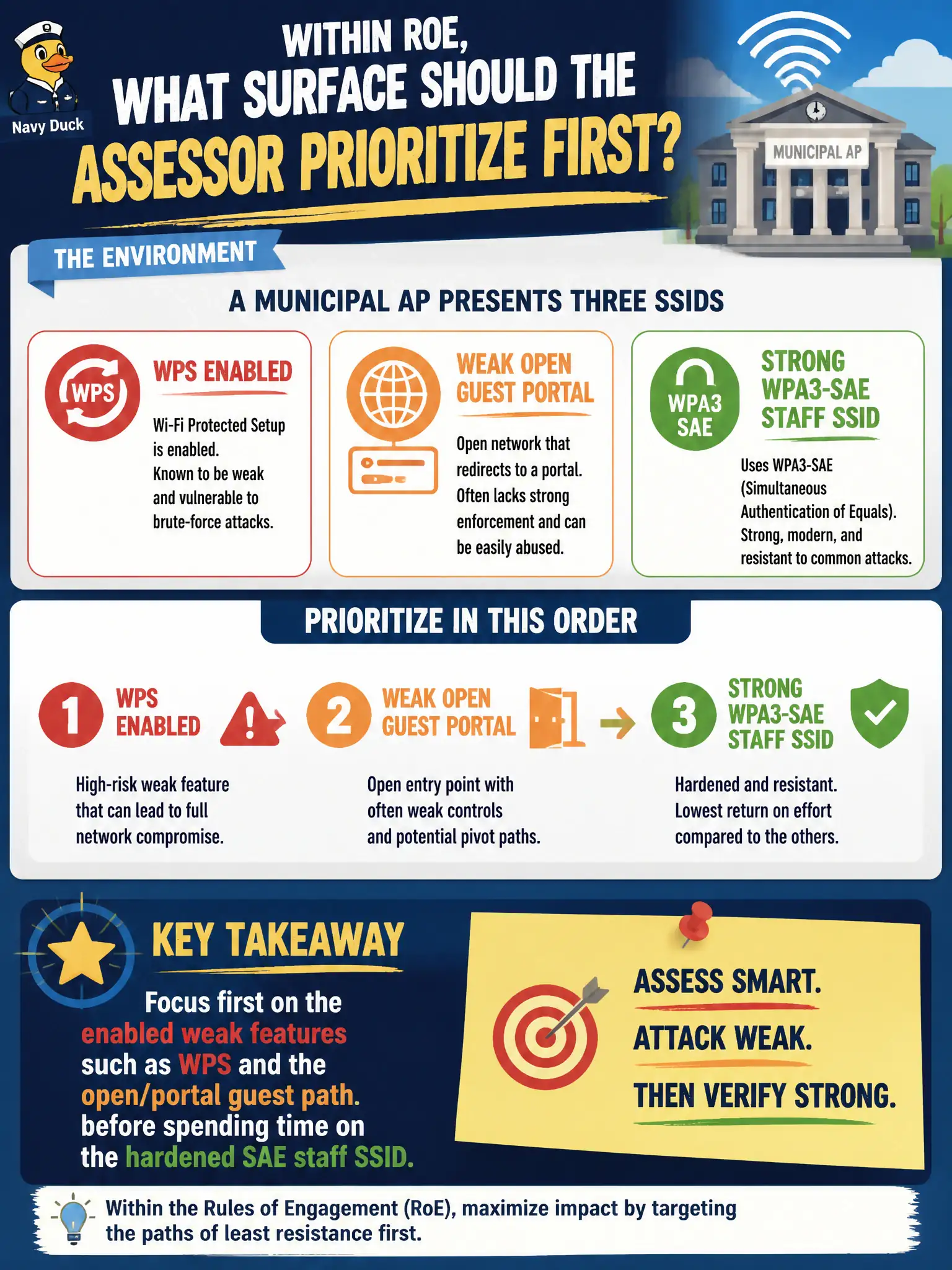
A municipal AP presents WPS enabled, a weak open guest portal, and a strong WPA3-SAE staff SSID. Within RoE, which surface should the assessor prioritize first?
Select an answer to reveal the explanation.
Short Explanation
Do not climb the hardened tower while the basement door is wide open. WPS-on and a floppy guest portal are the obvious first stops. SAE staff can wait its sober turn inside scope.
Full Explanation
When a municipal AP presents WPS enabled, a weak open guest portal, and a strong WPA3-SAE staff SSID, prioritization within RoE should favor the enabled weak features first—WPS and the open or portal guest path—because they typically offer higher near-term access or credential impact than a well-hardened SAE staff BSS. Ignoring weak features solely to attack SAE because it is newer wastes limited assessment time and misses likely findings for city operators. RF jamming against the staff SAE BSS is out of scope and unlawful as a practice class. Treating all surfaces as equal and beginning with Enterprise certificate theft ignores both observed modes and effort-to-impact judgment when Enterprise may not even be present. Exam caveat: prioritization is contextual—if RoE bans rogue or portal work, adjust accordingly—but weak enabled controls still outrank fashionably new hardened ones. Operational check: build a civic attack-surface matrix from recon covering WPS state, guest mode, and staff crypto, rank by authorized impact and time, and execute the top weak paths first. For municipal and campus engagements, keep the finding language tied to authorized scope, name the building or SSID class affected, and state the residual risk to residents or staff if the rejected option had been chosen. Re-validate after the next change window that the selected control still matches inventory, monitoring, and RoE abort criteria used by the city wireless program.