
A municipal wireless assessment report recommends WIPS signatures tuned for evil-twin detection. Why include that defensive advice?
Select an answer to reveal the explanation.
Short Explanation
Breaking it and then shrugging helps nobody at City Hall. If you showed an evil twin works, tell them what WIPS should watch for. Offense that leaves a fix-it list is the grown-up version.
Full Explanation
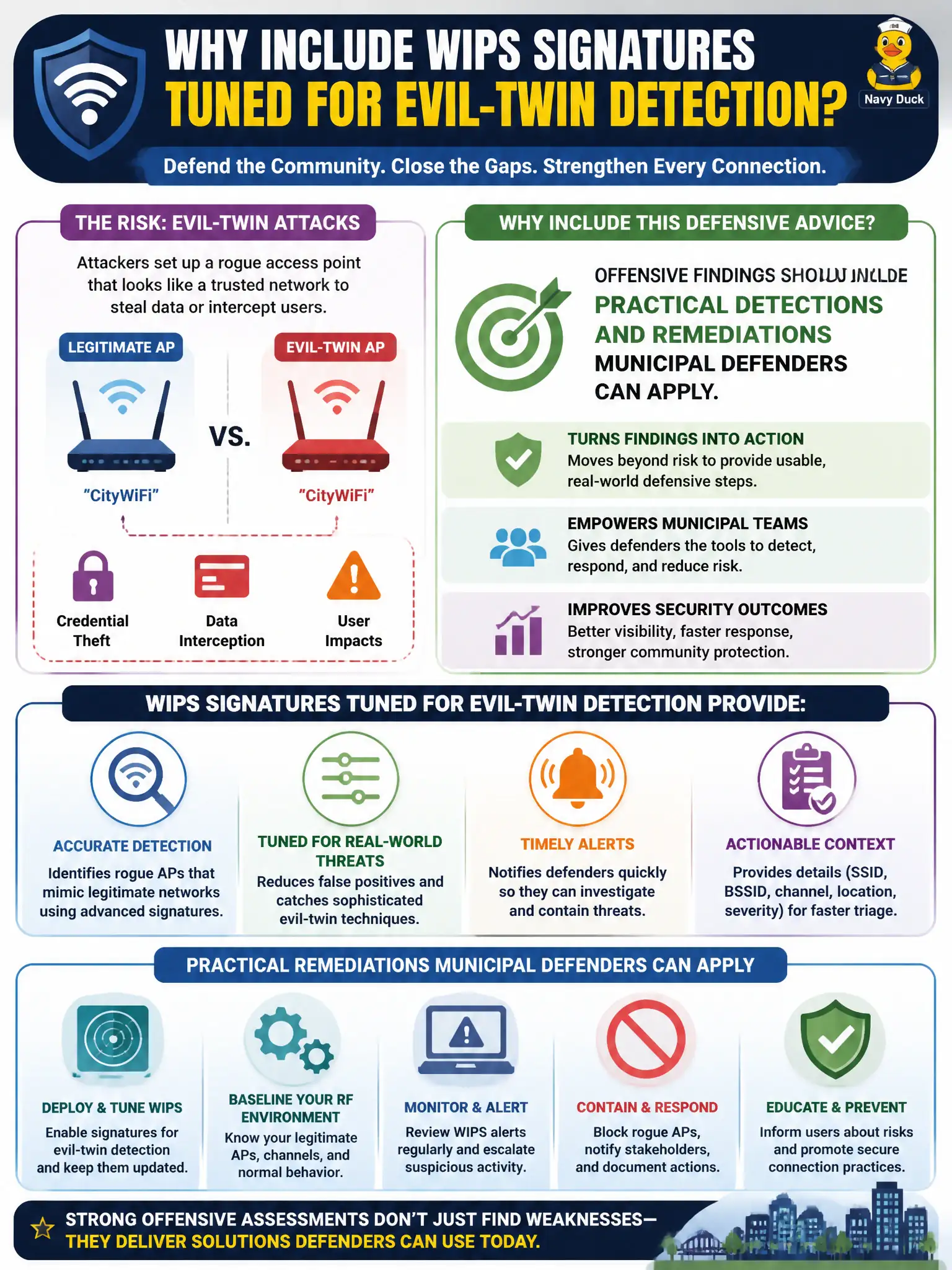
Including WIPS signature and detection guidance for evil-twin conditions in a municipal wireless assessment report is appropriate because professional offensive findings should help defenders act. Recommendations such as alerting on unexpected BSSIDs, duplicate SSIDs, or other twin indicators give civic operators practical detections alongside remediation themes. Offensive reports are not forbidden from mentioning detection; bridging to defense is part of the value for city stakeholders. WIPS signatures do not replace disabling WPS or fixing weak open portals—they complement hardening rather than substitute for it. Evil-twin guidance is an 802.11 concern here, not a Bluetooth-only topic for this finding class. Exam caveat: detection advice should be actionable and scoped to the city's tooling maturity without pretending signatures alone eliminate root causes. Operational check: map recommended detections to the municipal WIPS or SIEM capabilities, propose concrete alert use cases, and pair them with inventory and 802.1X hardening items. For municipal and campus engagements, keep the finding language tied to authorized scope, name the building or SSID class affected, and state the residual risk to residents or staff if the rejected option had been chosen. Re-validate after the next change window that the selected control still matches inventory, monitoring, and RoE abort criteria used by the city wireless program.