
A student claims HTTPS captive portals cannot be spoofed on a rogue network the assessor fully controls. What nuance about trust on that path is most accurate?
Select an answer to reveal the explanation.
Short Explanation
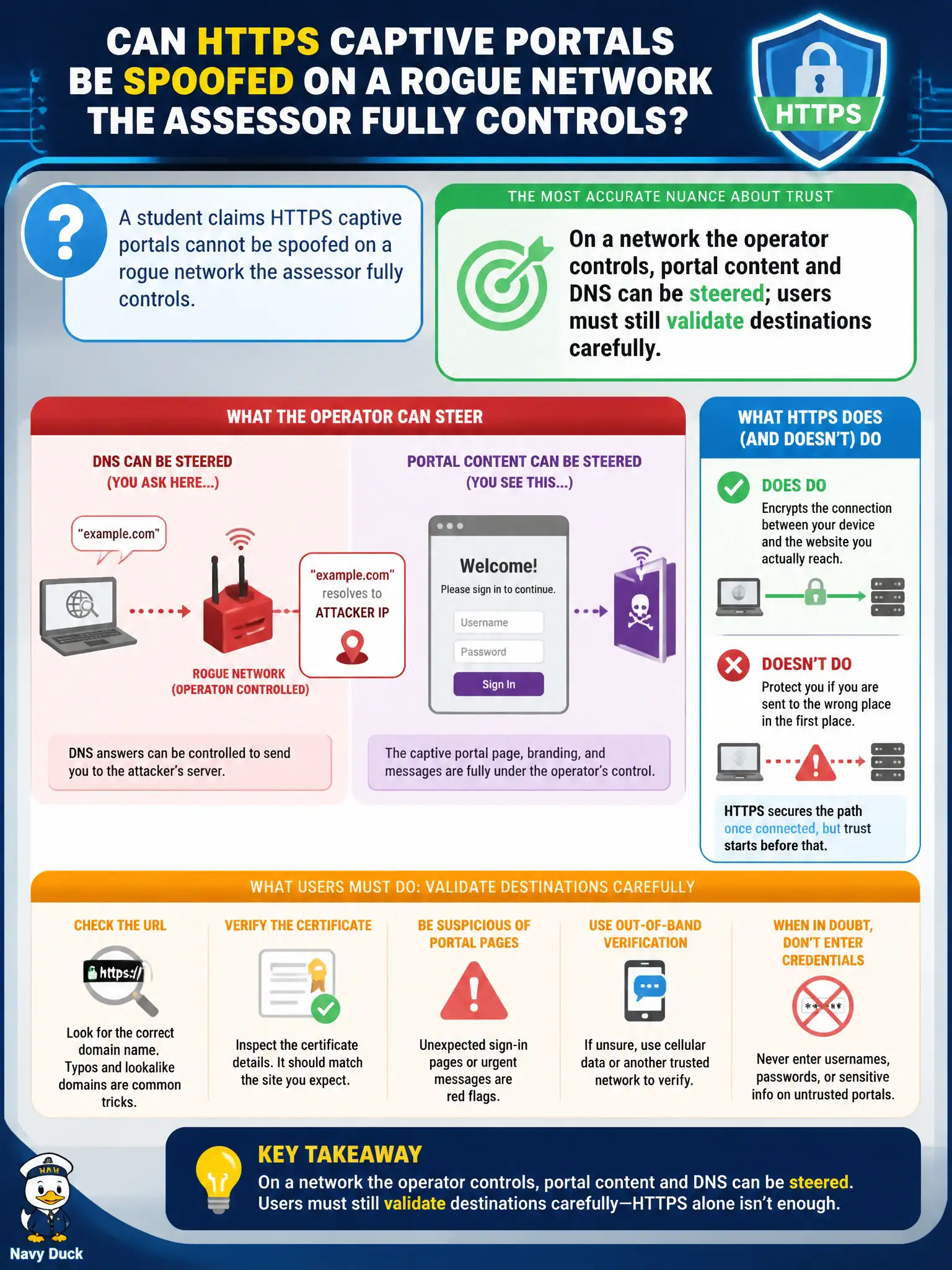
If you own the AP and the DNS the client hears, you can steer them to a portal you built—HTTPS lock icons and scary warnings still need a human who pays attention. Control of the path matters; it is not magic immunity, CA-token theft as a prerequisite story, or a fiber-only myth.
Full Explanation
On a rogue network the assessor fully controls, portal content and DNS can be steered; TLS does not make fake portals magically impossible because users still click through warnings or land on attacker-controlled names. The accurate nuance is operator control of the path plus the need for users to validate destinations carefully. Municipal awareness should teach skepticism on unexpected captive pages.
'TLS always makes fake portals impossible because browsers ignore user clicks on warnings' fails because TLS does not always make fake portals impossible simply because browsers sometimes show warnings users may ignore. 'HTTPS portals require the rogue to own the city's certificate authority hardware tokens' fails because HTTPS portals do not require owning the city's certificate authority hardware tokens in every spoof scenario. 'Captive portals only work on fiber backhaul and cannot appear on Wi-Fi at all' fails because captive portals are not fiber-only—they commonly appear on Wi-Fi.
Exam caveat: controlled-path demos can still teach harm—use lab clients and clear RoE. Operational check: in the civic lab, demonstrate DNS/HTTP steering to a test portal on an authorized rogue, show warning UX, and brief staff on verifying SSIDs/BSSIDs and not entering real passwords into unexpected pages. Tear down the rogue after the lesson. In municipal wireless operations, record the rationale in the engagement notes so future assessors know which control or technique class was chosen and which failure modes the rejected options would create for city services.