
A city asks what Kismet adds beyond simply listing nearby SSIDs during wireless monitoring. What is the best answer?
Select an answer to reveal the explanation.
Short Explanation
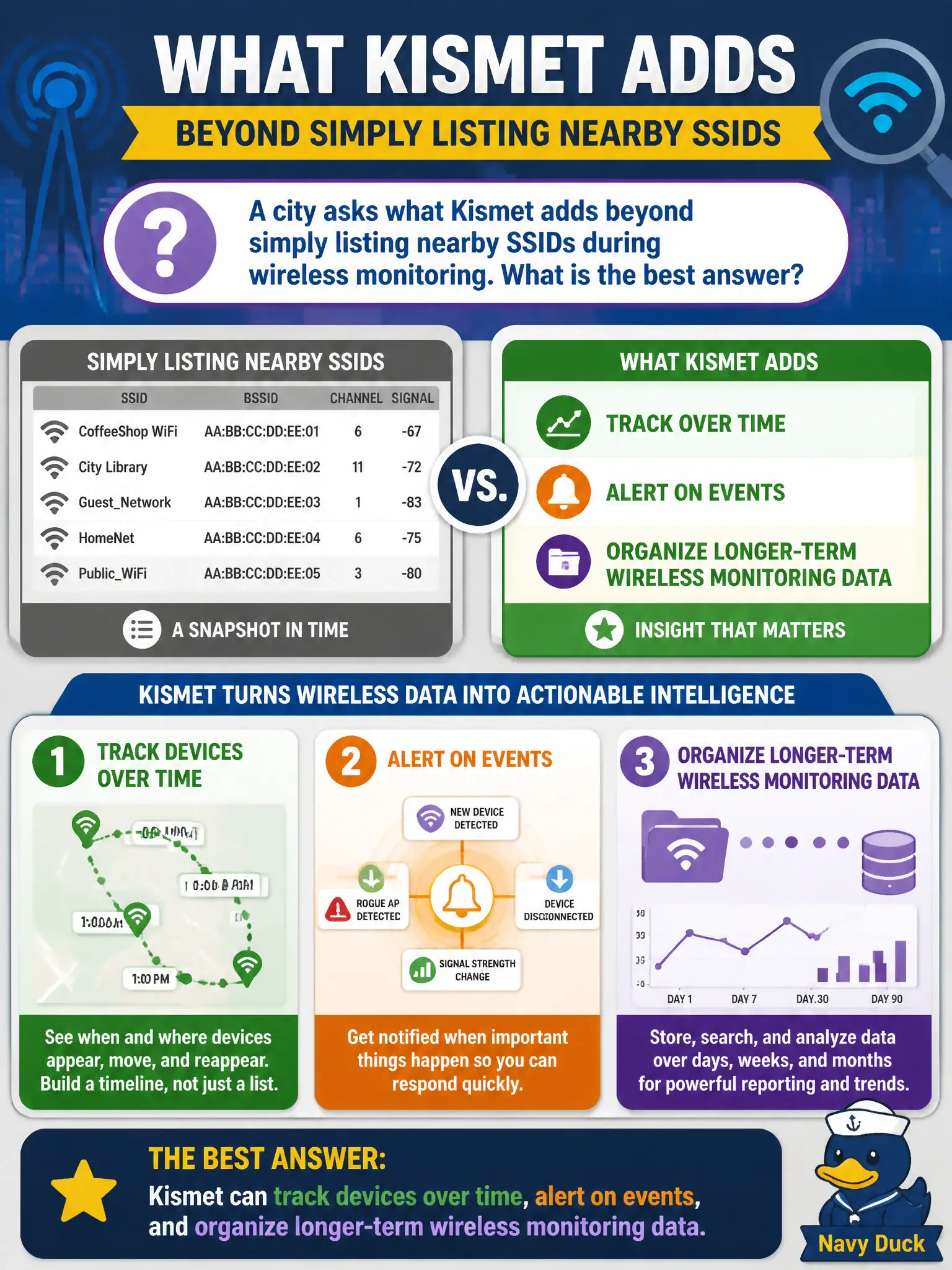
SSID lists are the brochure; Kismet is the filing cabinet with motion alarms. It remembers devices, raises events, and keeps longer monitoring tidy. That depth is why cities use it beyond a one-glance SSID dump.
Full Explanation
Beyond simply listing nearby SSIDs, Kismet-class tooling adds longer-term wireless monitoring value for a city: it can track devices over time, raise alerts on interesting events, and organize survey data into inventories that outlive a single airodump glance. Municipal SOCs that need historical presence, roaming patterns, or anomaly hooks benefit from that continuous detection and logging purpose class rather than treating Kismet as a passphrase cracker. Saying Kismet exists only to crack WPA2 passphrases faster than aircrack-ng fails by concept: cracking is not its primary purpose class; discovery and monitoring are. Claiming it replaces channel selection by inventing missing handshake frames fails by concept: no tool should fabricate handshake evidence, and channel discipline remains required. Asserting its only function is drawing floor-plan heatmaps for cabling crews fails by concept: heatmaps may be ancillary in some ecosystems, but they are not the sole function and do not define the monitoring class. Exam caveat: long-running Kismet sensors still require RoE and privacy retention limits—especially in public civic spaces where devices of visitors appear. Operational check: run an authorized Kismet-class session on a monitor interface during the municipal window, verify devices and APs log over time, export an inventory for the SOC, and correlate alerts to known city assets before escalating.