
A city wireless assessment template includes an executive summary and a technical appendix. What audience-layering purpose does that structure serve?
Select an answer to reveal the explanation.
Short Explanation
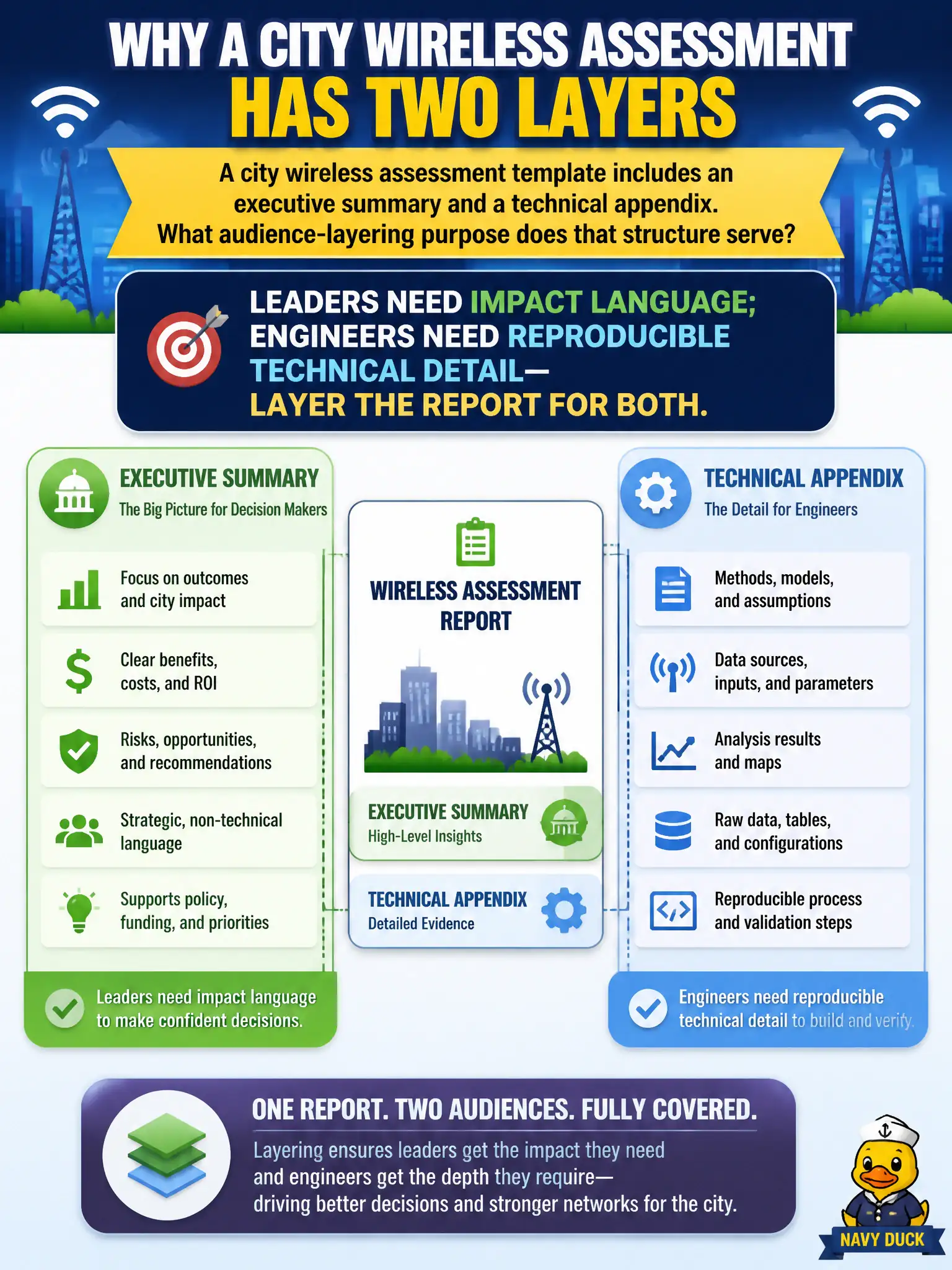
Mayors want “what breaks and what it costs us”; engineers want “how to replay and fix it.” Dual layers feed both without drowning either. One mushy blob serves nobody.
Full Explanation
A city wireless assessment template with an executive summary and a technical appendix layers audience: leaders need impact language while engineers need reproducible technical detail. Executives should not be forced to read every aircrack flag while engineers only see budget charts—each section serves its reader. Dual sections do not always confuse municipal readers when labeled clearly; one audience is not enough for mixed stakeholders. Technical appendices should not omit remediation so executives stay uninformed; remediation belongs in both summary form and technical depth. Exam caveat: OSWP-style and civic professional reports both reward clarity for graders or clients who skim and for those who deep-dive. Operational check: write a one-page civic impact summary, then append methods, evidence, and fixes; peer-review that each audience can find what they need without drowning. For municipal and campus engagements, keep the finding language tied to authorized scope, name the building or SSID class affected, and state the residual risk to residents or staff if the rejected option had been chosen. Re-validate after the next change window that the selected control still matches inventory, monitoring, and RoE abort criteria used by the city wireless program.