
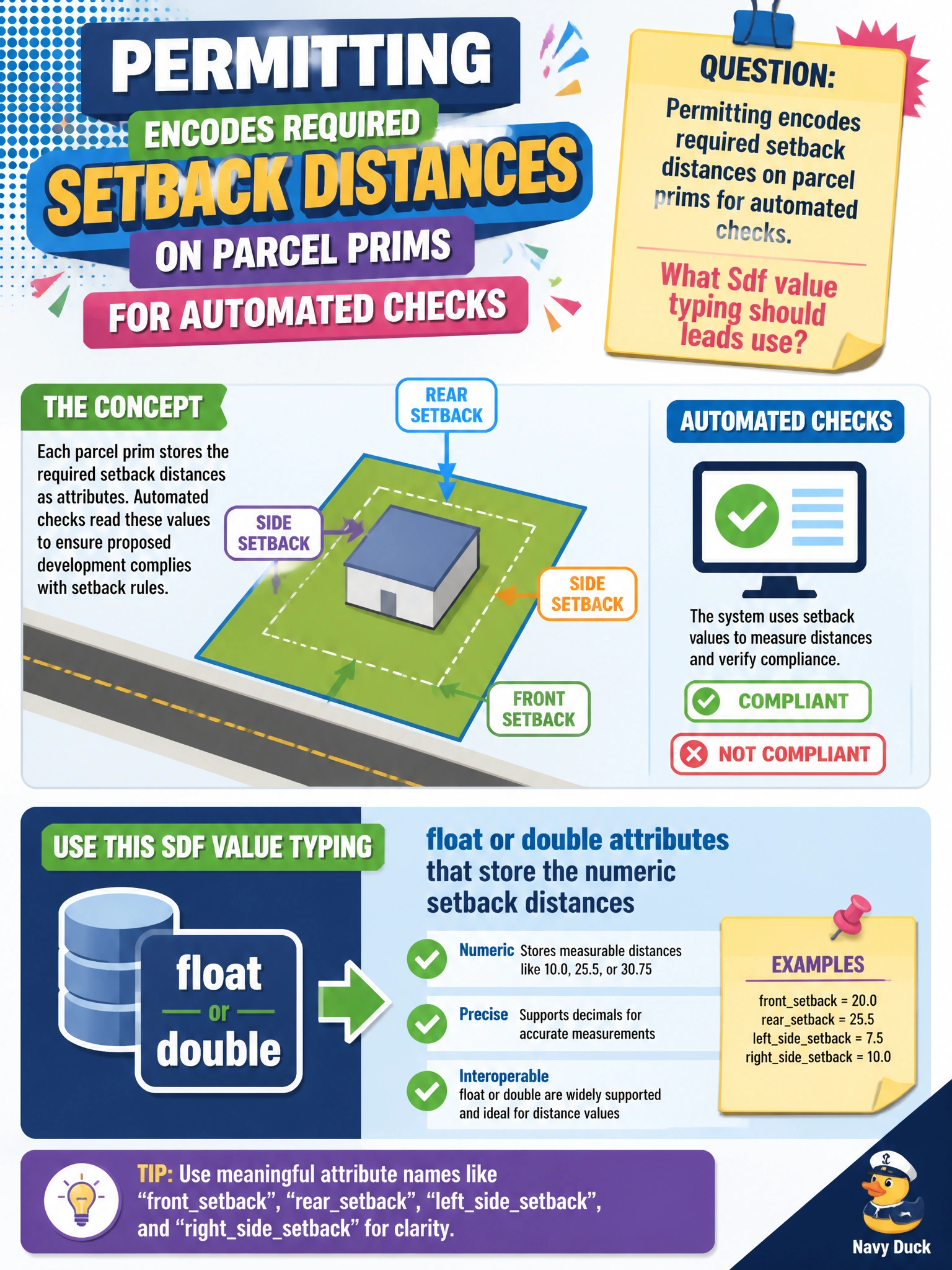
Permitting encodes required setback distances on parcel prims for automated checks. What Sdf value typing should leads use?
Select an answer to reveal the explanation.
Short Explanation
Setbacks are measurements. Use float or double attributes, not English phrases or PDF asset paths. Numbers let the checker math work. Leave the PDF for humans, not the attribute type system.
Full Explanation
Permitting setback distances on parcel prims are measurements used by automated checks, so leads should use float or double Sdf value types that store numeric setbacks. Typed numerics let validators compare proposed envelopes against required distances without natural-language parsing. Matching Sdf types to municipal numeric data is a core data-modeling skill on NCP-OUSD-style exams.
String attributes with phrases like "fifteen feet" are ambiguous, hard to internationalize, and unsuitable for inequality checks. Asset path attributes pointing at a setback PDF may help humans read policy but are not the numeric setback itself and cannot drive automated math. Opaque byte arrays without declared type defeat USD’s typed property system and block safe interchange across tools.
Exam caveat: policy PDFs can still live as related asset references for auditors, but the machine-checked setback value must be a typed float/double (or schema field of numeric type). Keep units consistent with metersPerUnit or an explicit unit metadata field.
Operational check: author numeric setbacks on sample parcels, run the automated checker against a known violating massing, confirm detection, and verify the attribute type in usda/usdc remains float or double after export from the authoring DCC.