
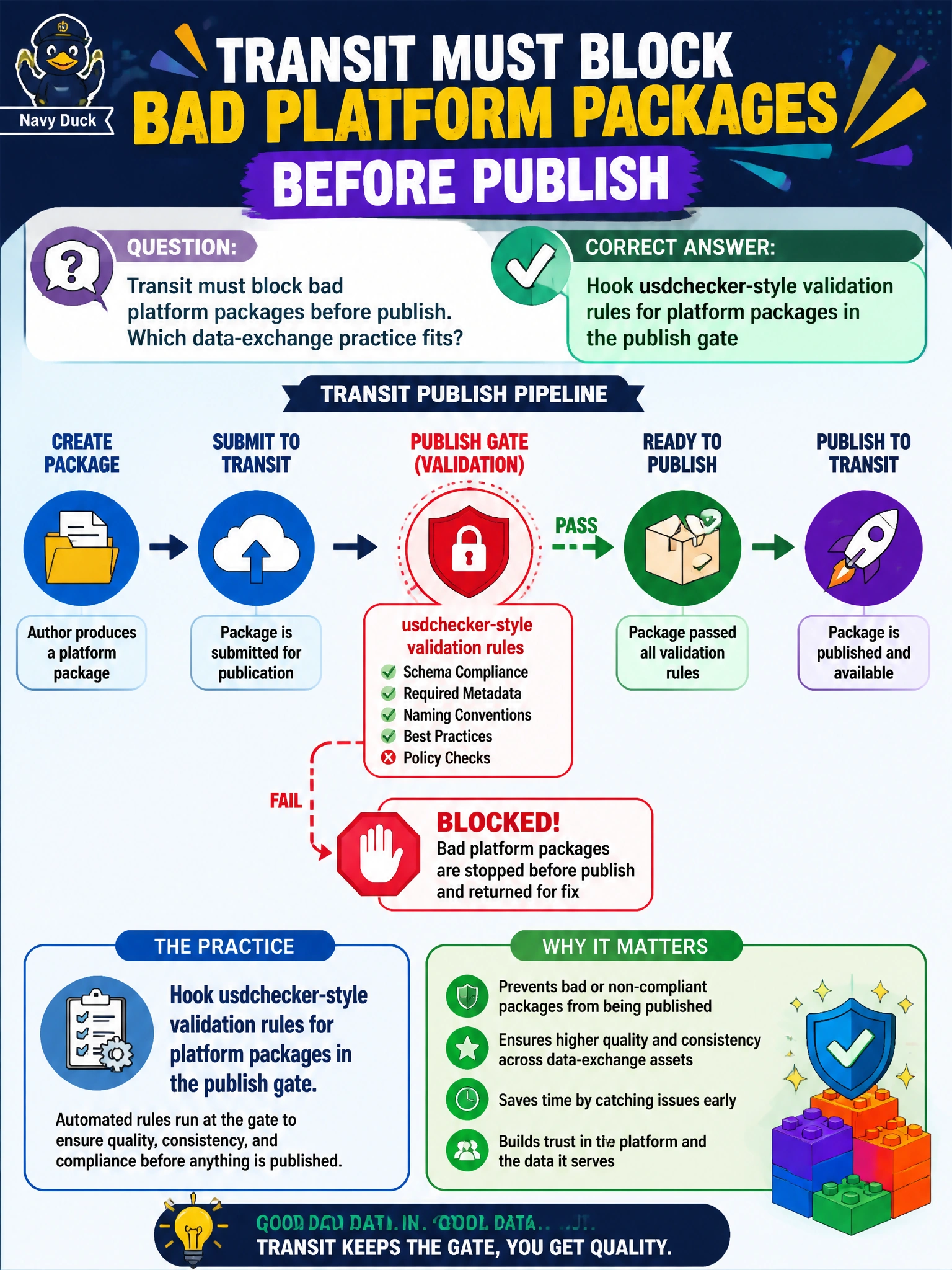
Transit must block bad platform packages before publish. Which data-exchange practice fits?
Select an answer to reveal the explanation.
Short Explanation
Put the checklist before the publish button. Hooking usdchecker-style rules on platform packages catches broken twins before they leave the station.
Full Explanation
Transit should block bad platform packages before publish by hooking usdchecker-style validation rules into the publish gate. Automated schema and structural checks catch missing required fields, broken references, incorrect kinds, and common stage errors while the package is still fixable—before riders, kiosks, or station systems consume a bad twin.
Publishing every export immediately and fixing failures only after riders complain externalizes QA onto the public and increases operational risk. Disabling all validators because DCC exports are “always schema-perfect” is an unsafe assumption; DCC round-trips routinely drop metadata or distort structure. Replacing validation with a manual screenshot gallery stored offline may catch some visual issues but misses structural and schema failures that screenshots cannot prove, and it does not scale to nightly platform publishes.
Exam caveat: Extend stock usdchecker rules with transit-specific requirements (platform naming, clearance metadata, required kind or type patterns, metersPerUnit) so the gate matches agency policy, not only generic USD hygiene.
Operational check: Attempt to publish a deliberately invalid platform package and confirm the gate blocks it with actionable rule output; publish a clean package and confirm validators pass with logged results retained for audit and incident review.