
Zoning visualization leads are debugging hearing-exhibit stages and want a plain-language rule for LIVERPS before chasing layer timestamps. What should they emphasize?
Select an answer to reveal the explanation.
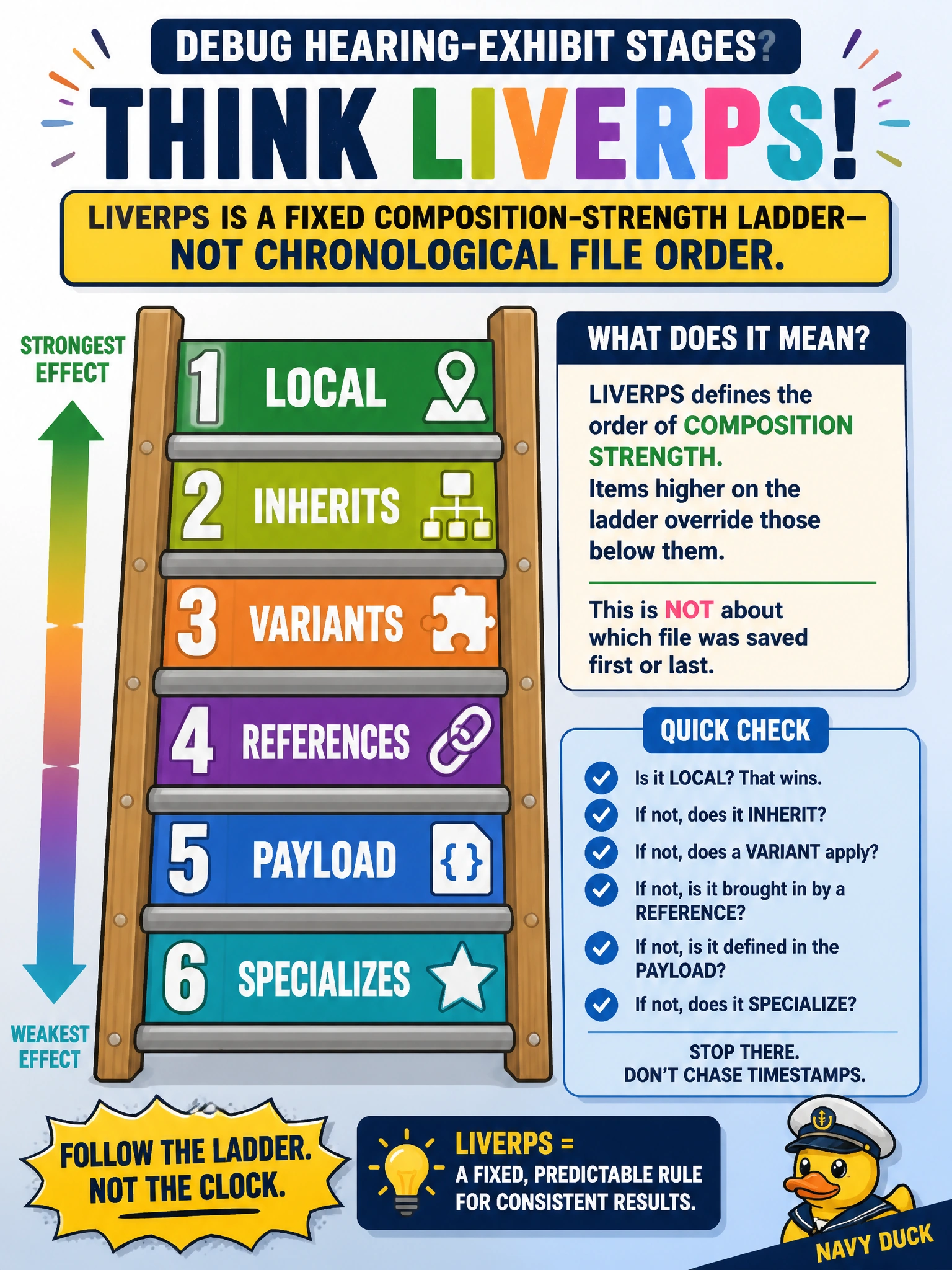
Short Explanation
Picture LIVERPS like a city org chart of who can overrule whom—not a time stamp on the filing cabinet. Local opinions sit at the top of that strength ladder, then Inherits, Variants, References, Payload, and Specializes. Newer file dates do not climb the ladder by themselves.
Full Explanation
LIVERPS is OpenUSD’s fixed composition-strength order: Local, Inherits, Variants, References, Payload, Specializes. When zoning visualization leads debug hearing-exhibit stages, they must treat that ladder as the plain-language rule for which opinion wins when arcs disagree—not the filesystem mtime of a USDA file. Chronological save order is not a strength mechanism; a newer but weaker arc does not outrank an older stronger one. Emphasizing the ladder first prevents wasted chases through layer timestamps that cannot explain composed results.
Calling LIVERPS “mere disk save order” fails because composition strength is defined by arc type and LayerStack contribution, not by when a file was written. Claiming LIVERPS only applies to pointInstancers fails because the same strength rules govern zoning overlays, hearing exhibits, and any other composed municipal stage—instancing is orthogonal. Asserting that muted layers still contribute equally fails because mute (or non-contribution) removes opinions from the composed result; LIVERPS orders contributing opinions and does not resurrect silenced layers.
Exam caveat: within the same strength class, stronger layers in the LayerStack still matter, and time-sampled values follow their own rules—but neither replaces LIVERPS nor makes “newest file wins” correct. Operational check: on a hearing-exhibit stage, identify the conflicting arcs on the disputed property, classify each under LIVERPS, confirm layers are unmuted and contributing, then predict the winner before inspecting timestamps. If prediction matches the composed stage, the rule is understood; if not, look for empty local blockers, wrong edit targets, or muted contribution before blaming save times.