
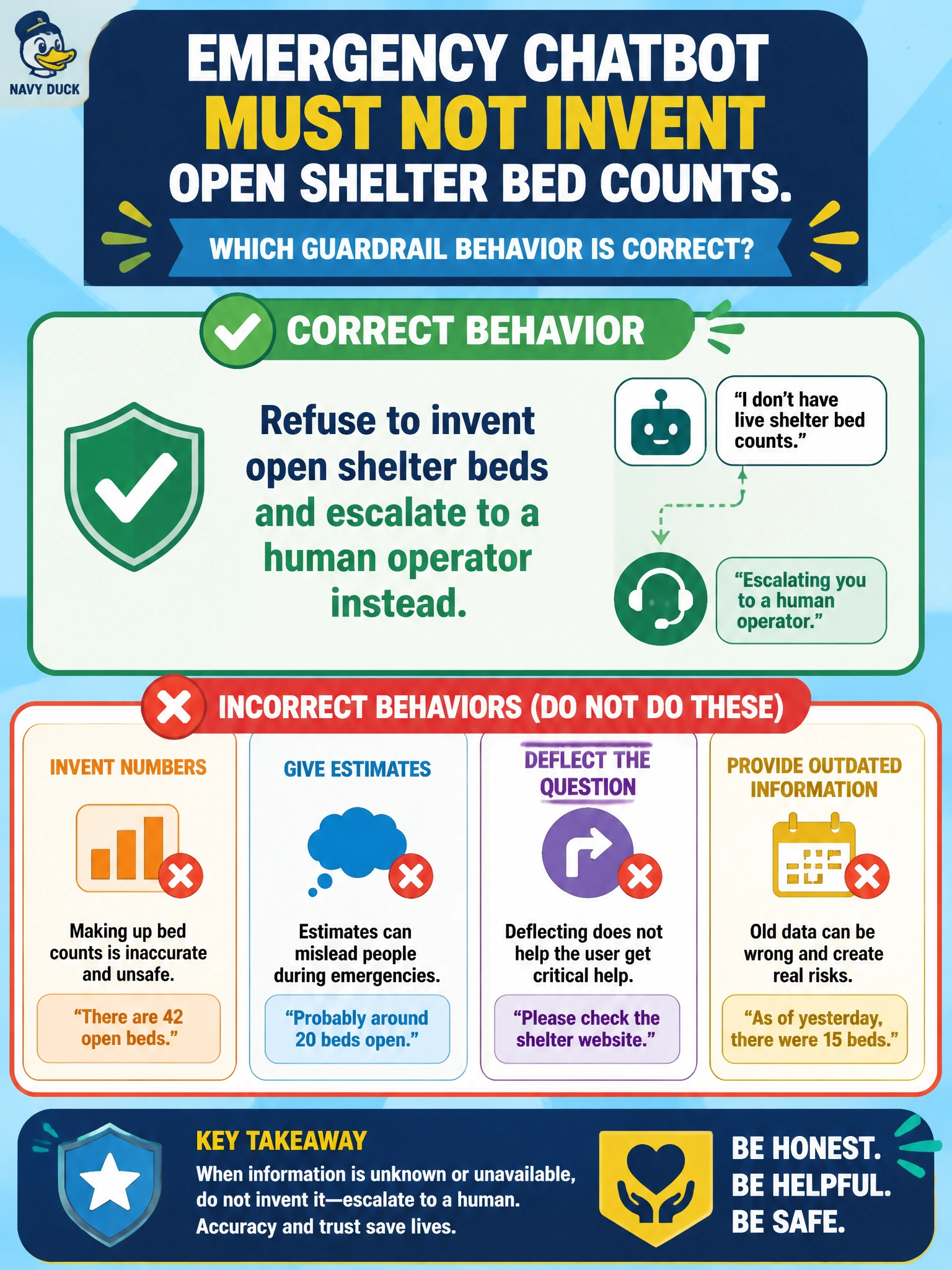
An emergency chatbot must not invent open shelter bed counts. Which guardrail behavior is correct?
Select an answer to reveal the explanation.
Short Explanation
You need a verified count before sharing how many shelter beds are open. If the chatbot cannot verify one, it should refuse to guess and escalate to a human operator who can help.
Full Explanation
The correct guardrail is to refuse to invent open shelter beds and escalate to a human operator instead. Shelter capacity can change rapidly, and an unsupported count may send families to a full facility or leave them relying on false information. A human handoff is safer than presenting a fluent guess as fact. Estimating available beds from recent trends and reporting the figure confidently fails because trends do not verify current capacity; confidence does not make an estimate reliable. Guessing capacity from last year’s brochure without saying so also fails: an old figure is not evidence of current openings, and concealing its source misleads callers. Disabling escalation so the model always answers with a number removes the safety route and pressures the chatbot to invent information whenever it lacks a verified count. Exam caveat: a count should be treated as answerable only when it is verified and current; if that verification is missing or stale, the chatbot should refuse and escalate rather than guess. Practical check: test whether bed-count requests trigger a verified-source check, a refusal and human routing when the count cannot be confirmed, and an audit for unsupported numeric claims in chatbot responses.