
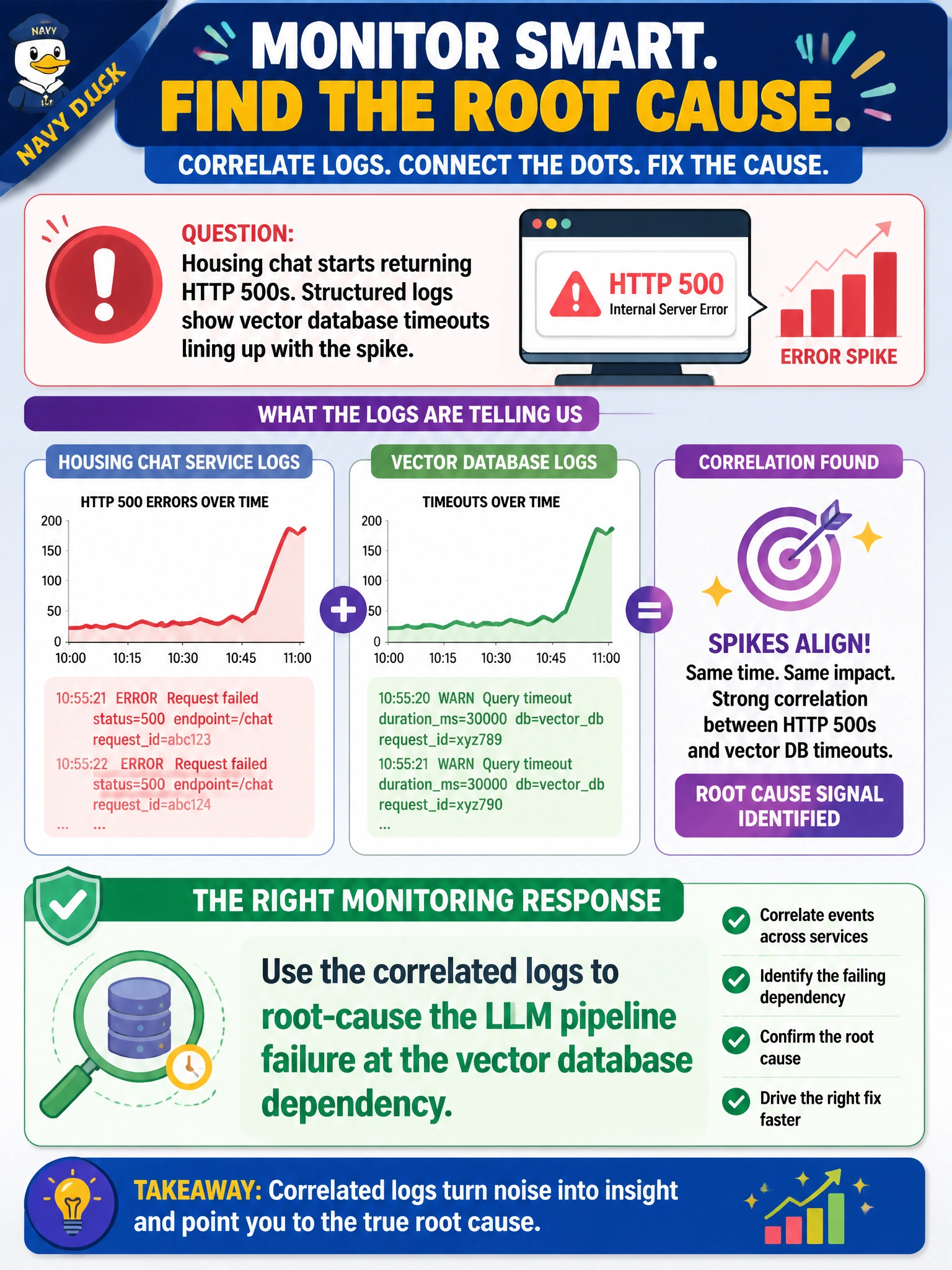
Housing chat starts returning HTTP 500s. Structured logs show vector database timeouts lining up with the spike. What is the right monitoring response?
Select an answer to reveal the explanation.
Short Explanation
When 500s and vector DB timeouts line up in the logs, follow that trail—the chatbot is choking on retrieval, not mysterious GPU ghosts. Structured logs turn a housing outage into a diagnosable dependency failure.
Full Explanation
When housing chat starts returning HTTP 500s and structured logs show vector database timeouts lining up with the spike, the right monitoring response is to use those correlated logs to root-cause the LLM pipeline failure at the vector database dependency. RAG-style housing assistants typically retrieve from a vector store before generation; timeouts there produce cascading 500s even if GPU hosts look idle. Correlated timestamps, request IDs, and dependency error codes turn a vague outage into a diagnosable retrieval failure the housing team can fix (pool sizing, query latency, network path, or circuit breakers). Ignoring logs and rebooting every GPU host without inspecting timeouts wastes time on the wrong tier and can worsen blast radius. Blaming residents for typing long questions and disabling logging destroys the evidence path and does not address dependency health. Deleting historical error logs so the dashboard looks green is concealment, not remediation, and breaks municipal incident postmortems. Exam caveat: correlation is not automatic proof of sole cause—confirm with dependency SLIs, recent deploys, and synthetic retrieval probes—but it is the correct first diagnostic move versus blind GPU reboots. Operational check: retain structured logs with request IDs across chatbot and vector DB layers, dashboard timeout rate beside HTTP 500 rate, run a retrieval health probe, and restore housing chat only after vector dependency latency and error budgets recover.