
An emergency-alert rewriter sometimes inserts phone numbers that are not on the approved contact list. What should the wrapping module do before send?
Select an answer to reveal the explanation.
Short Explanation
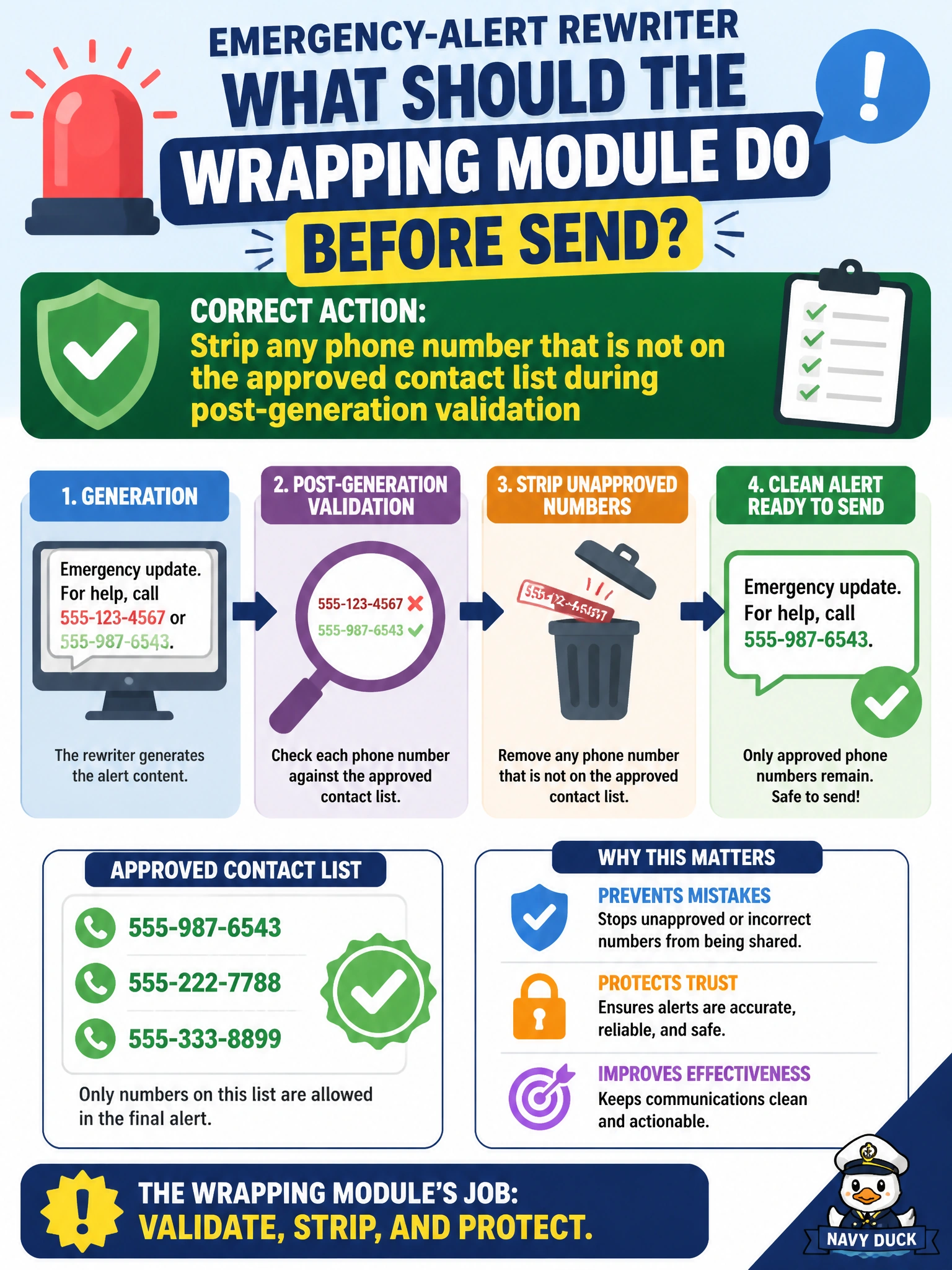
You’re right to treat an unapproved hotline as a serious risk: it can misdirect people and create confusion. Before sending, use post-generation validation to remove every number that is not on the approved contact list.
Full Explanation
The wrapping module should strip phone numbers that are not on the approved contact list during post-generation validation, before the alert is sent. Emergency communications need authoritative contacts; unapproved numbers can misdirect calls, create liability, and confuse the public. Checking the generated draft against the approved list removes unsafe content even when the model proposes it. Broadcasting every generated number for residents to crowdsource corrections would turn an alert into an unverified rumor surface when accuracy matters most. Encouraging the model to fabricate backup hotlines would invent contacts that may not be staffed and undermine official messaging. Disabling contact-list checks during multi-county incidents would remove safeguards when cross-jurisdiction confusion and hallucinated numbers are especially risky. Exam caveat: stripping unapproved numbers is necessary but not sufficient; verify that at least one approved contact remains, or fail closed to human review rather than sending a numberless or incomplete notice. Practical check: maintain a signed approved-contact list for each jurisdiction, validate drafts to redact non-members, and run a drill message that attempts to inject fake hotlines to confirm they never leave the wrapper.