
Library branches need light CV inference; heavy training stays downtown. What architecture split fits?
Select an answer to reveal the explanation.
Short Explanation
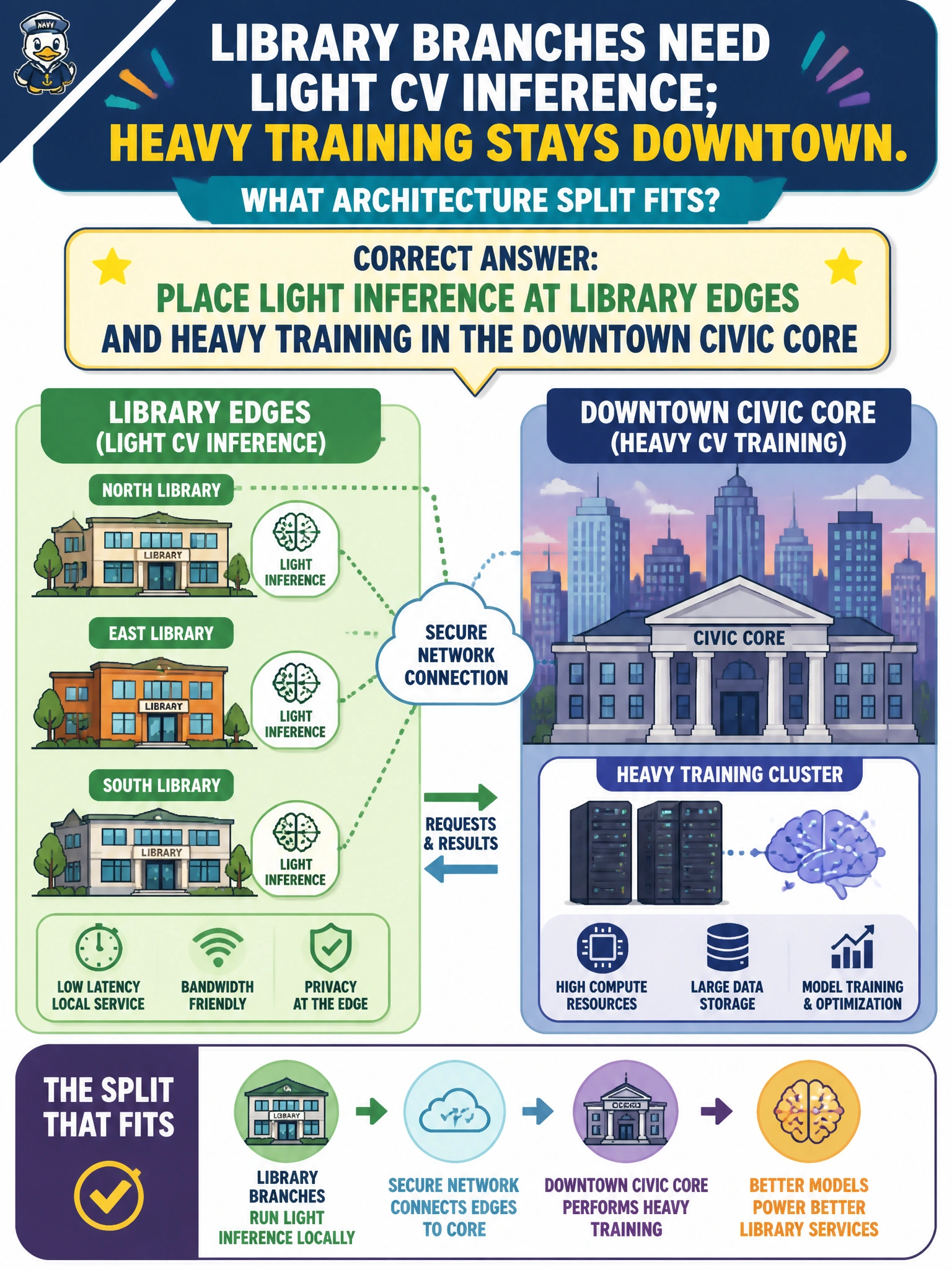
Light eyes at the branches, heavy lifting downtown—classic edge/core split for library CV. Training on kiosks or parking all GPUs in rural cabinets misses the placement. Batch-only downtown for every branch frame adds lag.
Full Explanation
Library branches typically need light computer-vision inference close to patrons and scanners, while heavy multi-node training belongs in the downtown civic core with dense GPUs and fabric. The fitting architecture split places light inference at library edges and concentrates heavy training downtown so branch sites stay responsive without hosting cluster-scale training hardware. Training multi-node models only on underpowered branch kiosks will thrash weak CPUs/GPUs and networks. Forcing all branch inference through overnight downtown batch only adds latency unsuitable for interactive branch CV. Putting every training GPU exclusively at unmanned rural cabinets misplaces power, cooling, and operations away from the civic core that can support them. Exam caveat: edge inference still needs secure model distribution and monitoring back to downtown—edge placement is not 'set and forget' unmanaged appliances. Operational check: deploy a small inference service at a branch, confirm local latency targets, keep training jobs scheduled only on downtown dense nodes, and verify models promote from core to edge through the approved pipeline. Downtown civic cores usually concentrate power, liquid cooling options, and skilled platform staff that branch libraries lack; edge sites should run slim inference runtimes with signed models and remote observability rather than attempting multi-node training under branch electrical and HVAC constraints. That split keeps patron-facing CV snappy while heavyweight catalog or research training stays where the fabric lives.